Cell Biology Group, Department of Experimental and Health Sciences, Pompeu Fabra University (UPF), CIBER on Neurodegenerative diseases (CIBERNED), E-08003 Barcelona, Spain.
Institució Catalana de Recerca i Estudis Avançats (ICREA), Barcelona, Spain.
Skelet Muscle. 2011 May 4;1(1):21. doi: 10.1186/2044-5040-1-21.
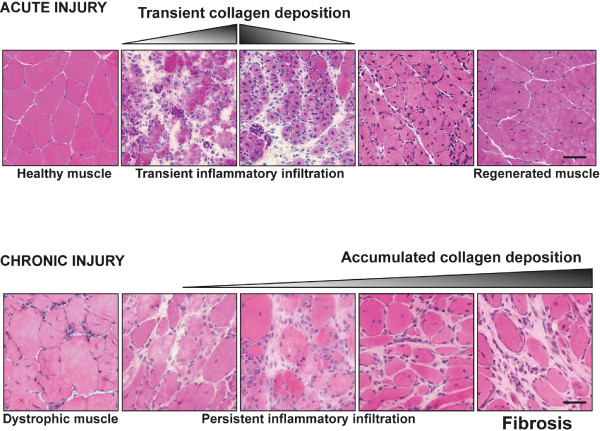
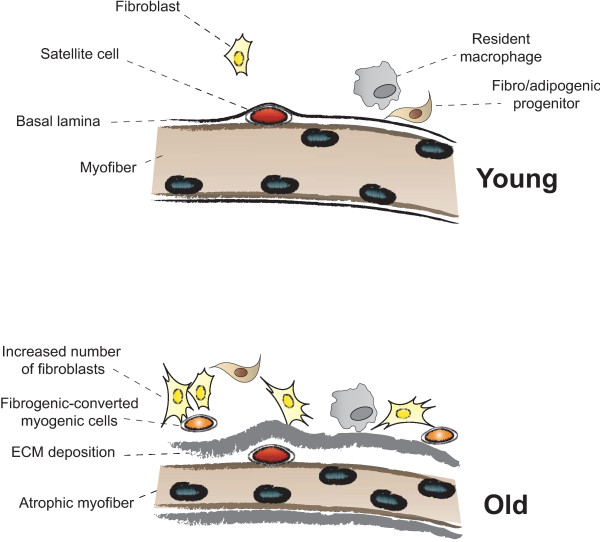
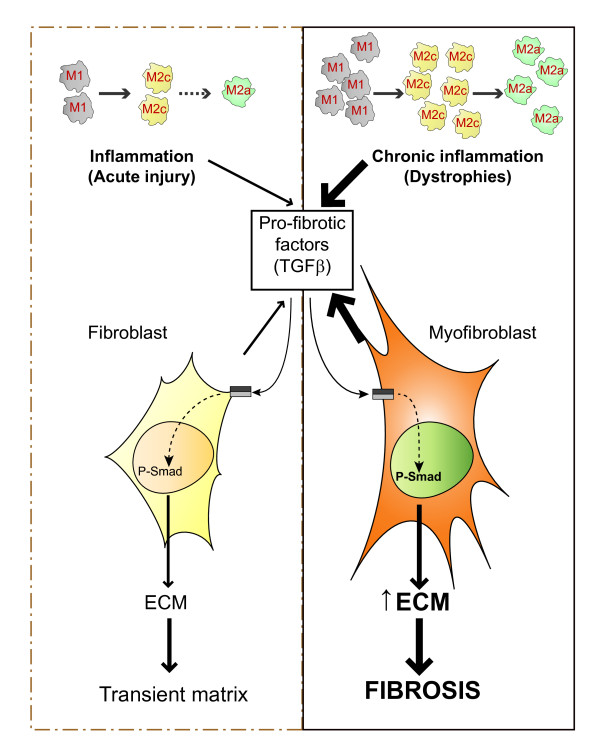
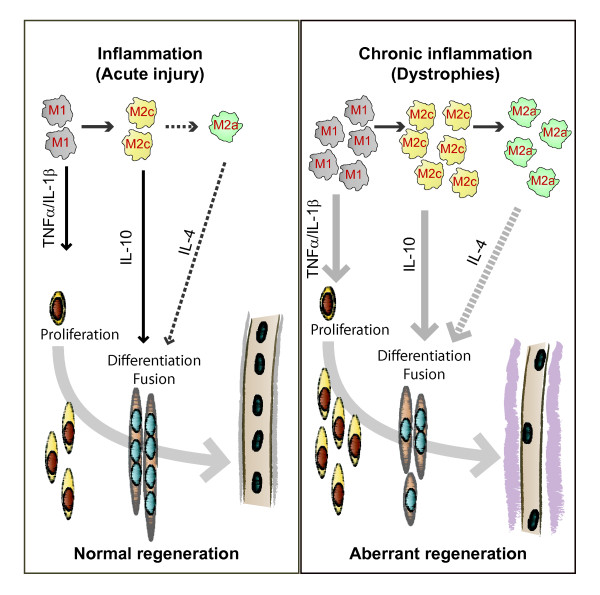
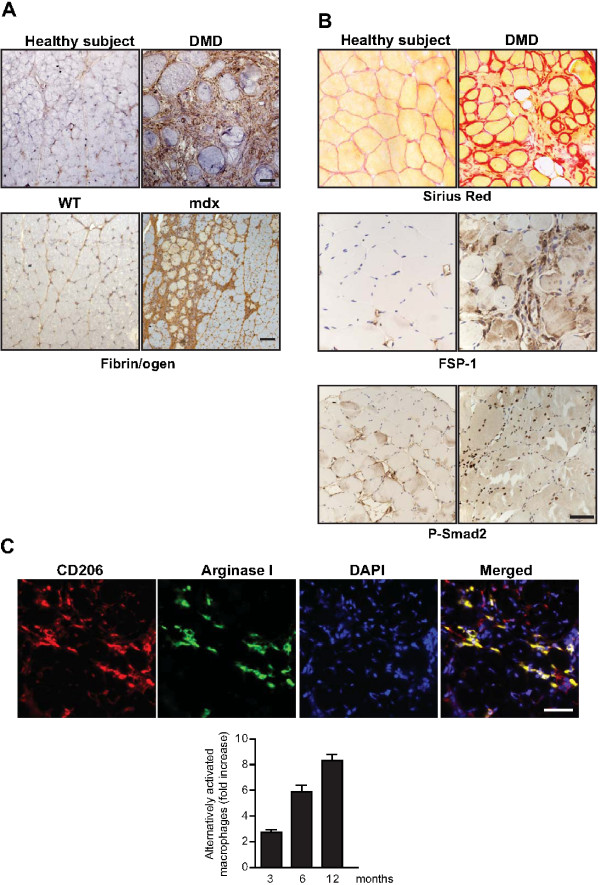
The repair process of damaged tissue involves the coordinated activities of several cell types in response to local and systemic signals. Following acute tissue injury, infiltrating inflammatory cells and resident stem cells orchestrate their activities to restore tissue homeostasis. However, during chronic tissue damage, such as in muscular dystrophies, the inflammatory-cell infiltration and fibroblast activation persists, while the reparative capacity of stem cells (satellite cells) is attenuated. Abnormal dystrophic muscle repair and its end stage, fibrosis, represent the final common pathway of virtually all chronic neurodegenerative muscular diseases. As our understanding of the pathogenesis of muscle fibrosis has progressed, it has become evident that the muscle provides a useful model for the regulation of tissue repair by the local microenvironment, showing interplay among muscle-specific stem cells, inflammatory cells, fibroblasts and extracellular matrix components of the mammalian wound-healing response. This article reviews the emerging findings of the mechanisms that underlie normal versus aberrant muscle-tissue repair.
受损组织的修复过程涉及几种细胞类型对局部和全身信号的协调活动。在急性组织损伤后,浸润的炎症细胞和驻留的干细胞协调它们的活动以恢复组织内稳态。然而,在慢性组织损伤中,如在肌肉营养不良中,炎症细胞浸润和成纤维细胞激活持续存在,而干细胞(卫星细胞)的修复能力减弱。异常的肌肉营养不良修复及其终末阶段纤维化,代表了几乎所有慢性神经退行性肌肉疾病的最终共同途径。随着我们对肌肉纤维化发病机制的理解的进展,很明显,肌肉为局部微环境调节组织修复提供了一个有用的模型,显示了肌肉特异性干细胞、炎症细胞、成纤维细胞和哺乳动物伤口愈合反应的细胞外基质成分之间的相互作用。本文综述了正常与异常肌肉组织修复的潜在机制的新发现。