Department of Surgery, University of Pittsburgh, Pittsburgh, PA 15213, USA.
J Crit Care. 2012 Jun;27(3):314.e1-11. doi: 10.1016/j.jcrc.2011.05.025. Epub 2011 Jul 27.
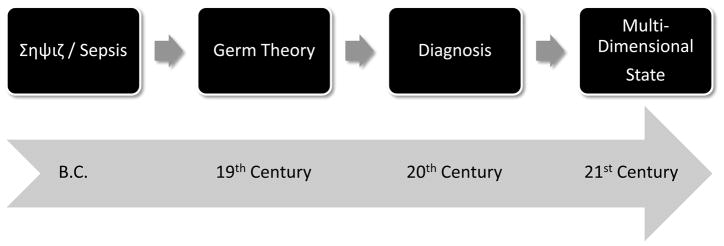
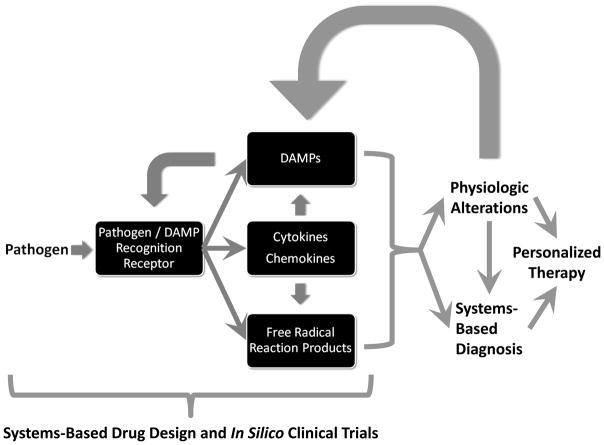
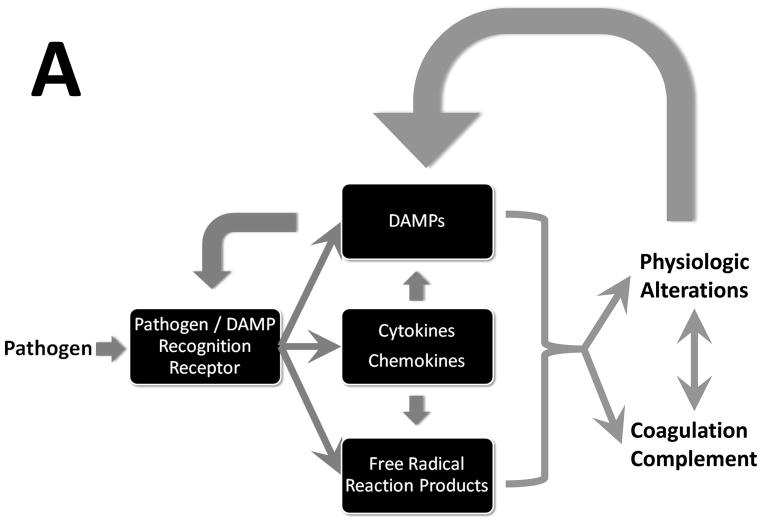
Sepsis is a clinical syndrome characterized by a multisystem response to a microbial pathogenic insult consisting of a mosaic of interconnected biochemical, cellular, and organ-organ interaction networks. A central thread that connects these responses is inflammation that, while attempting to defend the body and prevent further harm, causes further damage through the feed-forward, proinflammatory effects of damage-associated molecular pattern molecules. In this review, we address the epidemiology and current definitions of sepsis and focus specifically on the biologic cascades that comprise the inflammatory response to sepsis. We suggest that attempts to improve clinical outcomes by targeting specific components of this network have been unsuccessful due to the lack of an integrative, predictive, and individualized systems-based approach to define the time-varying, multidimensional state of the patient. We highlight the translational impact of computational modeling and other complex systems approaches as applied to sepsis, including in silico clinical trials, patient-specific models, and complexity-based assessments of physiology.
脓毒症是一种临床综合征,其特征是对微生物病原体侵袭的多系统反应,由相互关联的生化、细胞和器官-器官相互作用网络组成。连接这些反应的一个核心线索是炎症,尽管炎症试图保护身体并防止进一步的伤害,但通过损伤相关分子模式分子的正向、促炎作用造成了进一步的伤害。在这篇综述中,我们讨论了脓毒症的流行病学和当前定义,并特别关注了构成脓毒症炎症反应的生物学级联。我们认为,由于缺乏一种综合的、可预测的、个体化的基于系统的方法来定义患者的时变、多维状态,因此针对该网络的特定成分来改善临床结果的尝试都没有成功。我们强调了计算建模和其他复杂系统方法在脓毒症中的转化应用,包括计算机临床试验、患者特异性模型和基于复杂性的生理学评估。