Centre for Complementary Medicine Research, University of Western Sydney, New South Wales, Australia.
Evid Based Complement Alternat Med. 2011;2011:612464. doi: 10.1093/ecam/nep239. Epub 2011 Mar 20.
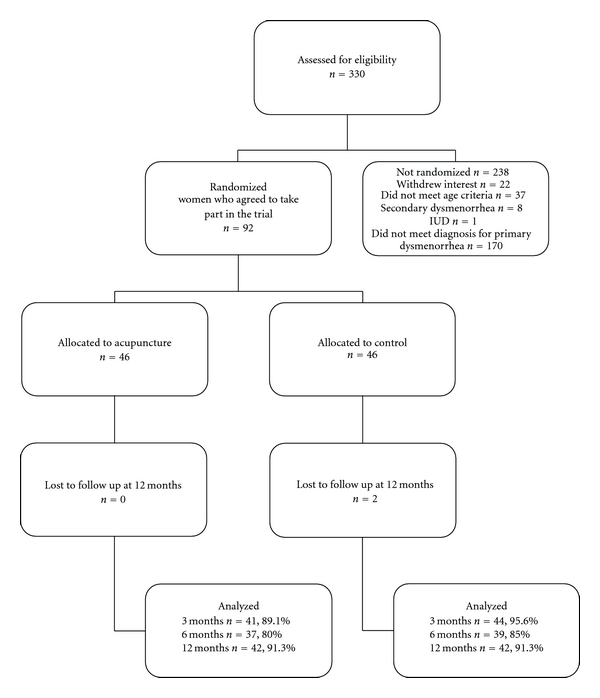
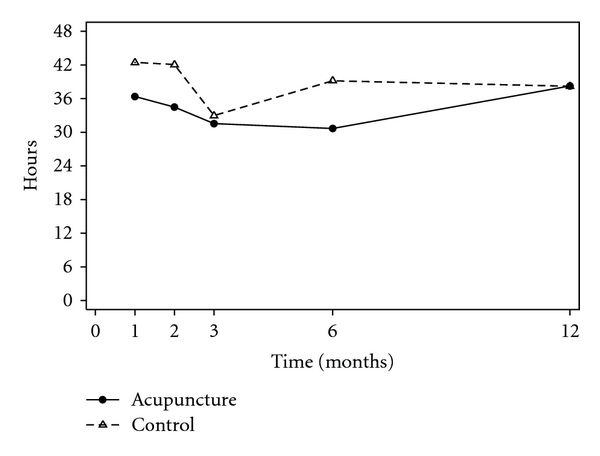
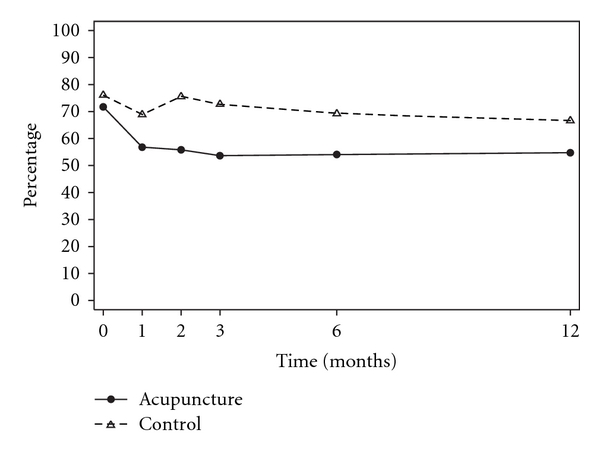
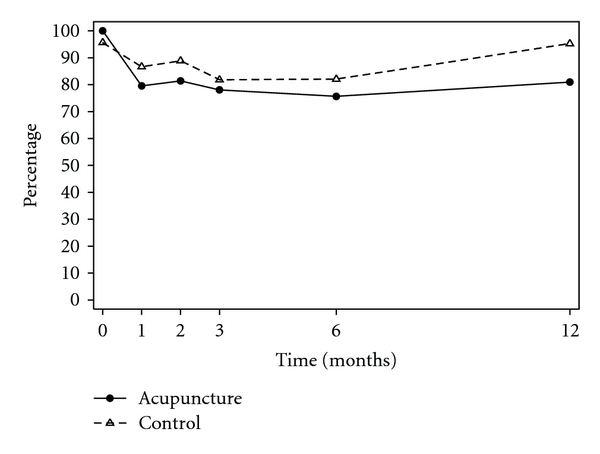
We examined the effectiveness of acupuncture to reduce the severity and intensity of primary dysmenorrhea. A randomized controlled trial compared acupuncture with control acupuncture using a placebo needle. Eligible women were aged 14-25 years with a diagnosis of primary dysmenorrhea. Women received nine sessions of the study treatment over 3 months. The primary outcomes were menstrual pain intensity and duration, overall improvement in dysmenorrhea symptoms and reduced need for additional analgesia, measured at 3, 6 and 12 months from trial entry. A total of 92 women were randomly assigned to the intervention (acupuncture n = 46 and control n = 46). At 3 months although pain outcomes were lower for women in the acupuncture group compared with the control group, there was no significant difference between groups. Women receiving acupuncture reported a small reduction in mood changes compared with the control group, relative risk (RR) 0.72, 95% confidence interval (CI) 0.53-1.00, P = .05. Follow-up at 6 months found a significant reduction in the duration of menstrual pain in the acupuncture group compared with the control group, mean difference -9.6, 95% CI -18.9 to -0.3, P = .04, and the need for additional analgesia was significantly lower in the acupuncture group compared with the control group, RR 0.69, 95% CI 0.49-0.96, P = .03, but the follow-up at 12 months found lack of treatment effect. To conclude, although acupuncture improved menstrual mood symptoms in women with primary dysmenorrhea during the treatment phase, the trend in the improvement of symptoms during the active phase of treatment, and at 6 and 12 months was non-significant, indicating that a small treatment effect from acupuncture on dysmenorrhea may exist. In the study, acupuncture was acceptable and safe, but further appropriately powered trials are needed before recommendations for clinical practice can be made.
我们研究了针刺疗法减轻原发性痛经严重程度和强度的效果。一项随机对照试验比较了针刺与使用安慰剂针的对照针刺。符合条件的女性年龄在 14-25 岁之间,诊断为原发性痛经。女性在 3 个月内接受 9 次研究治疗。主要结局是月经疼痛强度和持续时间、痛经症状整体改善和减少对额外镇痛的需求,在试验开始后 3、6 和 12 个月测量。共有 92 名女性被随机分配到干预组(针刺组 n = 46 人,对照组 n = 46 人)。在 3 个月时,尽管针刺组女性的疼痛结局低于对照组,但两组之间没有显著差异。与对照组相比,接受针刺的女性报告情绪变化略有减少,相对风险(RR)0.72,95%置信区间(CI)0.53-1.00,P =.05。6 个月的随访发现,针刺组与对照组相比,月经疼痛持续时间明显缩短,平均差异-9.6,95%CI-18.9 至-0.3,P =.04,针刺组需要额外镇痛的情况明显低于对照组,RR 0.69,95%CI 0.49-0.96,P =.03,但 12 个月的随访发现治疗效果不佳。总之,尽管针刺在原发性痛经女性的治疗阶段改善了月经情绪症状,但在治疗阶段、6 个月和 12 个月时症状改善的趋势并不显著,这表明针刺对痛经可能存在较小的治疗效果。在这项研究中,针刺是可以接受且安全的,但需要进一步进行适当的大规模试验,才能对其推荐用于临床实践提出建议。