Department of Dental Medicine, Karolinska Institutet, Stockholm, Sweden.
PLoS One. 2011;6(8):e23045. doi: 10.1371/journal.pone.0023045. Epub 2011 Aug 1.
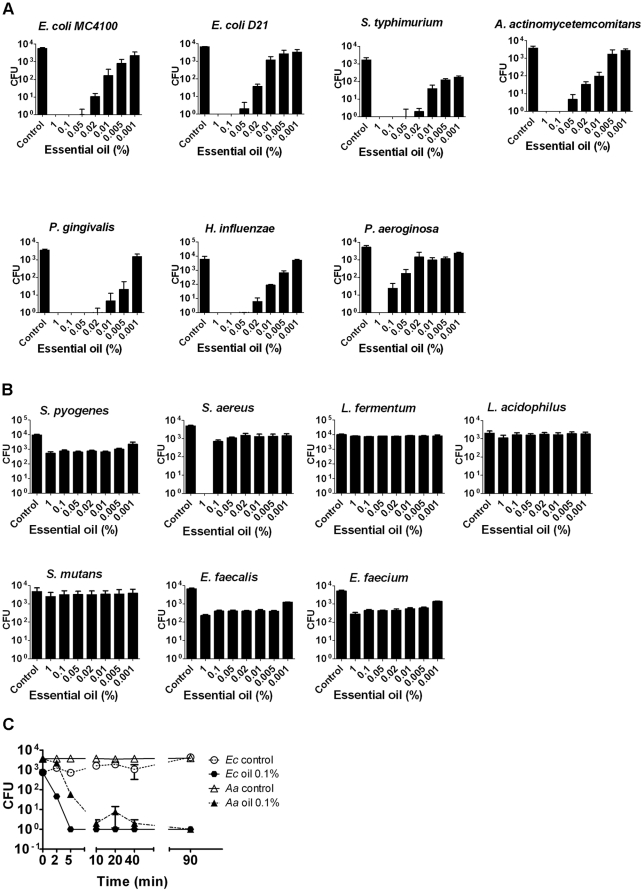
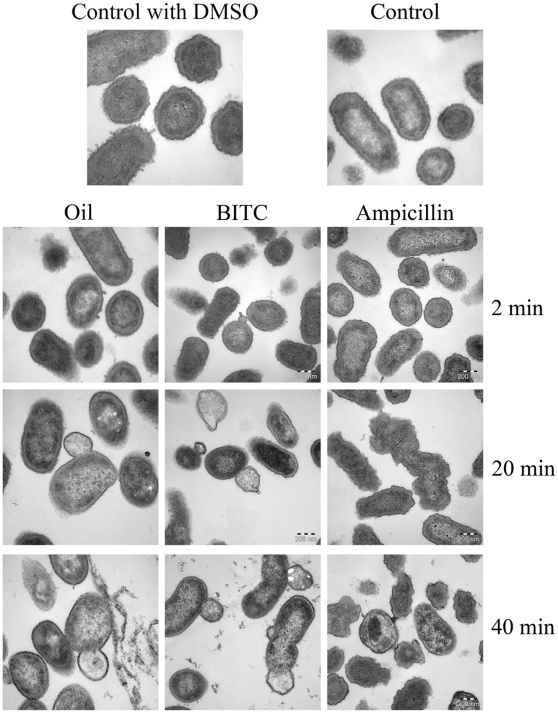
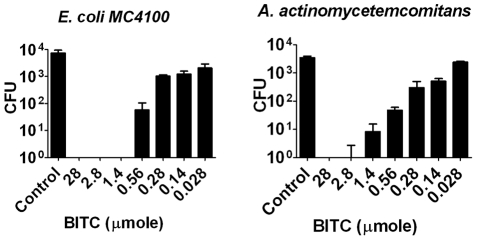
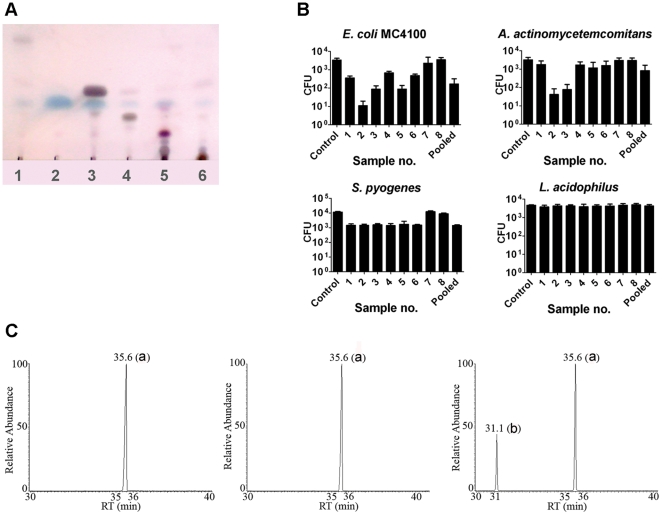
Plants produce a number of antimicrobial substances and the roots of the shrub Salvadora persica have been demonstrated to possess antimicrobial activity. Sticks from the roots of S. persica, Miswak sticks, have been used for centuries as a traditional method of cleaning teeth. Diverging reports on the chemical nature and antimicrobial repertoire of the chewing sticks from S. persica led us to explore its antibacterial properties against a panel of pathogenic or commensal bacteria and to identify the antibacterial component/s by methodical chemical characterization. S. persica root essential oil was prepared by steam distillation and solid-phase microextraction was used to sample volatiles released from fresh root. The active compound was identified by gas chromatography-mass spectrometry and antibacterial assays. The antibacterial compound was isolated using medium-pressure liquid chromatography. Transmission electron microscopy was used to visualize the effect on bacterial cells. The main antibacterial component of both S. persica root extracts and volatiles was benzyl isothiocyanate. Root extracts as well as commercial synthetic benzyl isothiocyanate exhibited rapid and strong bactericidal effect against oral pathogens involved in periodontal disease as well as against other Gram-negative bacteria, while Gram-positive bacteria mainly displayed growth inhibition or remained unaffected. The short exposure needed to obtain bactericidal effect implies that the chewing sticks and the essential oil may have a specific role in treatment of periodontal disease in reducing Gram-negative periodontal pathogens. Our results indicate the need for further investigation into the mechanism of the specific killing of Gram-negative bacteria by S. persica root stick extracts and its active component benzyl isothiocyanate.
植物会产生多种抗菌物质,已证实沙柳树(Salvadora persica)的根具有抗菌活性。沙柳树的根制成的咀嚼棒,即 Miswak 棒,已被几个世纪以来用作传统的洁牙方法。有关沙柳树咀嚼棒的化学成分和抗菌特性的报告大相径庭,这促使我们研究其对一系列病原菌或共生菌的抗菌特性,并通过系统的化学特性鉴定来确定其抗菌成分。采用水蒸气蒸馏法制备沙柳树根精油,采用固相微萃取法采集新鲜根释放的挥发性物质。通过气相色谱-质谱联用分析鉴定活性化合物,并采用中压液相色谱法进行分离。利用透射电子显微镜观察对细菌细胞的影响。沙柳树根提取物和挥发性物质的主要抗菌成分均为苄基异硫氰酸酯。根提取物和商业合成的苄基异硫氰酸酯对牙周病相关的口腔病原菌以及其他革兰氏阴性菌均表现出快速且强大的杀菌作用,而革兰氏阳性菌主要表现出生长抑制或不受影响。获得杀菌效果所需的短暴露时间表明,咀嚼棒和精油在减少牙周病中的革兰氏阴性牙周病原菌方面可能具有特定作用。我们的研究结果表明,需要进一步研究沙柳树根棒提取物及其活性成分苄基异硫氰酸酯特异性杀死革兰氏阴性菌的机制。