Department of Psychology, University of Utah, UT 84112-0251, USA.
Health Psychol. 2012 Mar;31(2):217-25. doi: 10.1037/a0025187. Epub 2011 Aug 15.
The quality of one's personal relationships has been reliably linked to important physical health outcomes, perhaps through the mechanism of physiological stress responses. Most studies of this mechanism have focused on whether more conscious interpersonal transactions influence cardiovascular reactivity. However, whether such relationships can be automatically activated in memory to influence physiological processes has not been determined. The primary aims of this study were to examine whether subliminal activation of relationships could influence health-relevant physiological processes and to examine this question in the context of a more general relationship model that incorporates both positive and negative dimensions.
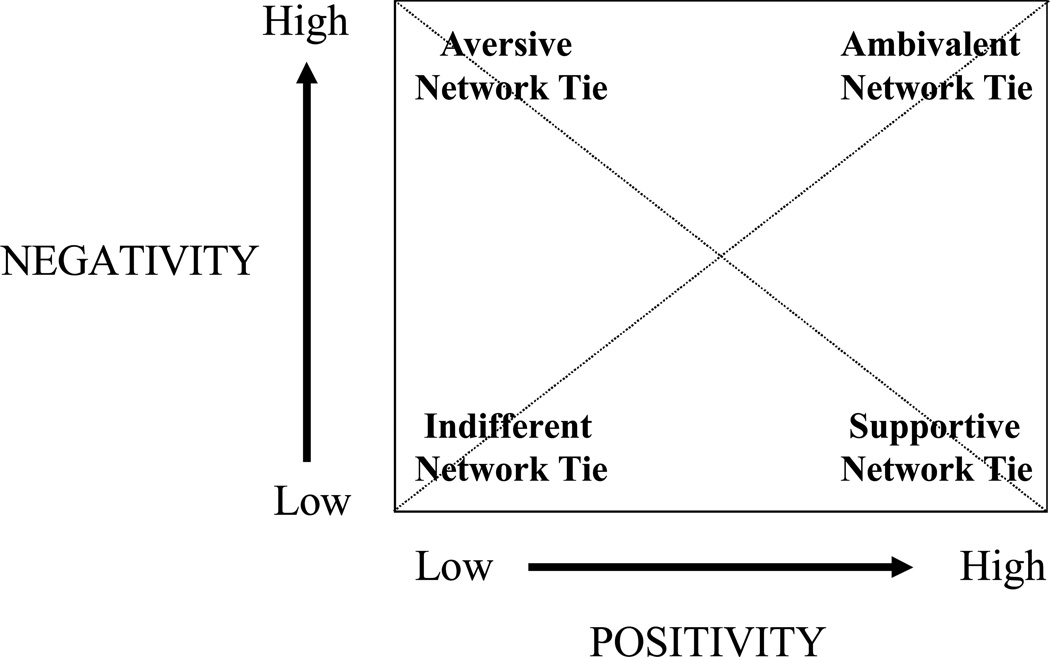
We randomly assigned participants to be subliminally primed with existing relationships that varied in their underlying positivity and negativity (i.e., indifferent, supportive, aversive, ambivalent). They then performed acute psychological stressors while cardiovascular and self-report measures were assessed.
Priming negative relationships was associated with greater threat, lower feelings of control, and higher diastolic blood pressure reactivity during stress. Moreover, priming relationships high in positivity and negativity (ambivalent ties) was associated with the highest heart rate reactivity and greatest respiratory sinus arrhythmia decreases during stress. Exploratory analyses during the priming task itself suggested that the effects of negative primes on biological measures were prevalent across tasks, whereas the links to ambivalent ties was specific to the subsequent stressor task.
These data highlight novel mechanisms by which social ties may impact cardiovascular health, and further suggest the importance of incorporating both positivity and negativity in the study of relationships and physical health.
人际关系的质量与重要的身体健康结果可靠相关,这可能是通过生理应激反应的机制。大多数关于这一机制的研究都集中在更有意识的人际交易是否会影响心血管反应性上。然而,这种关系是否可以在记忆中自动激活来影响生理过程还没有确定。本研究的主要目的是检验关系的潜意识激活是否会影响与健康相关的生理过程,并在更普遍的关系模型的背景下检验这一问题,该模型包含积极和消极两个维度。
我们随机分配参与者接受现有关系的潜意识启动,这些关系在其潜在的积极和消极方面存在差异(即漠不关心、支持、厌恶、矛盾)。然后,他们在进行急性心理压力源的同时评估心血管和自我报告的测量。
对消极关系的潜意识启动与应激期间更大的威胁、更低的控制感和更高的舒张压反应性相关。此外,高度积极和消极(矛盾关系)的潜意识启动与心率反应性最高和应激期间最大的呼吸窦性心律失常降低相关。在潜意识启动任务本身的探索性分析中,消极启动对生物测量的影响普遍存在于所有任务中,而与矛盾关系的联系仅存在于随后的应激任务中。
这些数据突出了社会关系可能影响心血管健康的新机制,并进一步表明在关系和身体健康研究中纳入积极和消极两个方面的重要性。