Department of Medicine, Division of Pulmonary and Critical Care Medicine, Eastern Virginia Medical School, Norfolk, VA, USA.
Ann Intensive Care. 2011 Mar 21;1(1):1. doi: 10.1186/2110-5820-1-1.
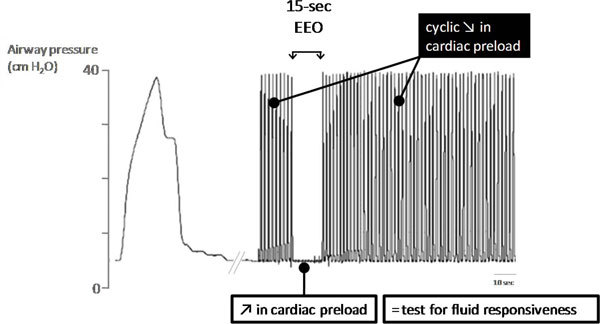
The clinical determination of the intravascular volume can be extremely difficult in critically ill and injured patients as well as those undergoing major surgery. This is problematic because fluid loading is considered the first step in the resuscitation of hemodynamically unstable patients. Yet, multiple studies have demonstrated that only approximately 50% of hemodynamically unstable patients in the intensive care unit and operating room respond to a fluid challenge. Whereas under-resuscitation results in inadequate organ perfusion, accumulating data suggest that over-resuscitation increases the morbidity and mortality of critically ill patients. Cardiac filling pressures, including the central venous pressure and pulmonary artery occlusion pressure, have been traditionally used to guide fluid management. However, studies performed during the past 30 years have demonstrated that cardiac filling pressures are unable to predict fluid responsiveness. During the past decade, a number of dynamic tests of volume responsiveness have been reported. These tests dynamically monitor the change in stroke volume after a maneuver that increases or decreases venous return (preload) and challenges the patients' Frank-Starling curve. These dynamic tests use the change in stroke volume during mechanical ventilation or after a passive leg raising maneuver to assess fluid responsiveness. The stroke volume is measured continuously and in real-time by minimally invasive or noninvasive technologies, including Doppler methods, pulse contour analysis, and bioreactance.
在危重病患者和接受大手术的患者中,临床确定血管内容量可能极其困难。这是有问题的,因为液体负荷被认为是不稳定血流动力学患者复苏的第一步。然而,多项研究表明,在重症监护病房和手术室中,只有约 50%的血流动力学不稳定患者对液体挑战有反应。而液体复苏不足会导致器官灌注不足,越来越多的数据表明,过度液体复苏会增加危重病患者的发病率和死亡率。心脏充盈压,包括中心静脉压和肺动脉闭塞压,传统上用于指导液体管理。然而,在过去 30 年进行的研究表明,心脏充盈压无法预测液体反应性。在过去的十年中,已经报道了许多容量反应性的动态测试。这些测试动态监测在增加或减少静脉回流(前负荷)的操作后,心搏量的变化,并挑战患者的 Frank-Starling 曲线。这些动态测试使用机械通气期间或被动抬腿操作后心搏量的变化来评估液体反应性。通过微创或非侵入性技术,包括多普勒方法、脉搏轮廓分析和生物电阻抗,连续实时测量心搏量。