Division of Plant Sciences, University of Missouri, Columbia, MO 65211, USA.
J Exp Bot. 2012 Jan;63(1):163-75. doi: 10.1093/jxb/err258. Epub 2011 Sep 16.
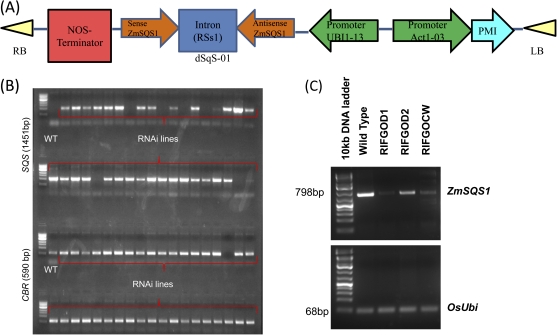
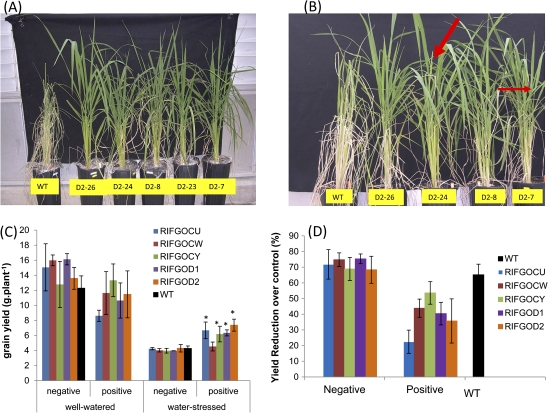
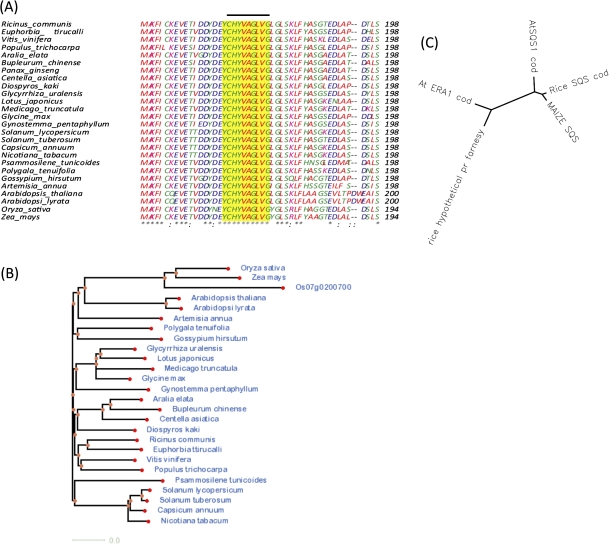
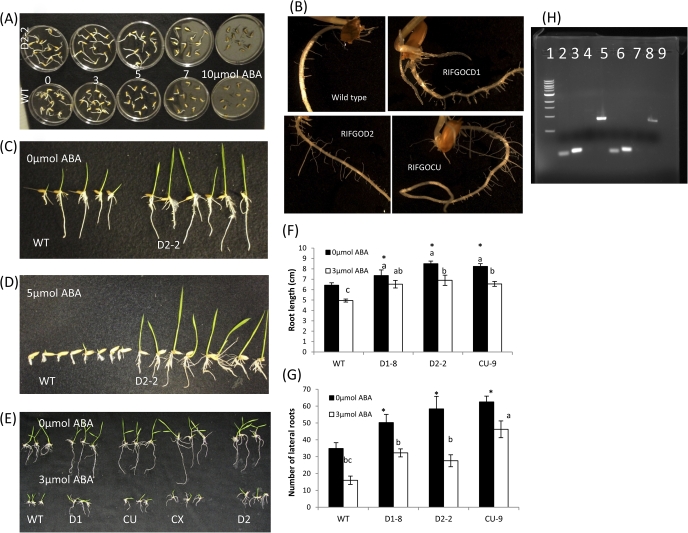
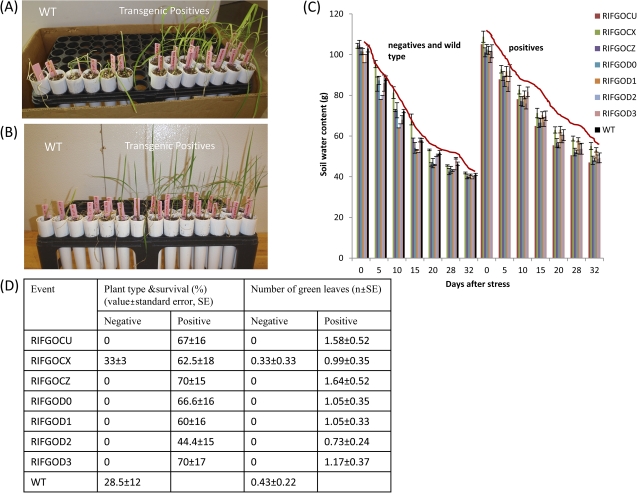
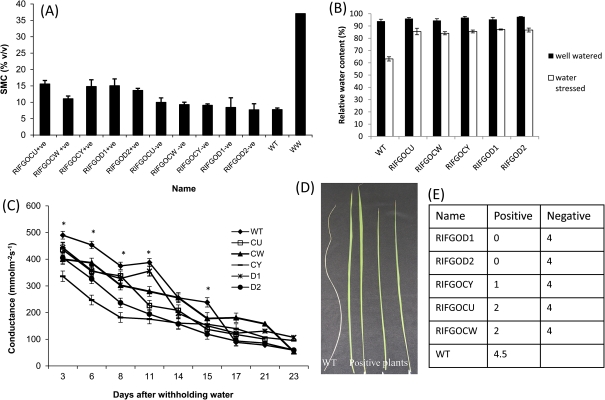
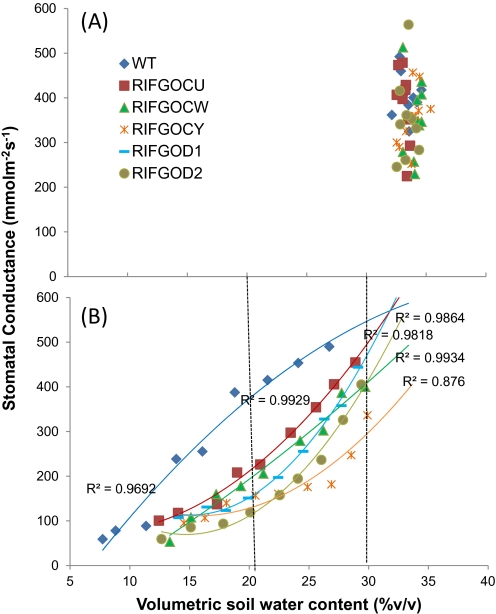
About one-third of the world's rice area is in rain-fed lowlands and most are prone to water shortage. The identification of genes imparting tolerance to drought in the model cereal plant, rice, is an attractive strategy to engineer improved drought tolerance not only rice but other cereals as well. It is demonstrated that RNAi-mediated disruption of a rice farnesyltransferase/squalene synthase (SQS) by maize squalene synthase improves drought tolerance at both the vegetative and reproductive stages. Twenty-day-old seedlings of wild type (Nipponbare) and seven independent events of transgenic RNAi lines showed no difference in morphology. When subjected to water stress for a period of 32 d under growth chamber conditions, transgenic positives showed delayed wilting, conserved more soil water, and improved recovery. When five independent events along with wild-type plants were subjected to drought at the reproductive stage under greenhouse conditions, the transgenic plants lost water more slowly compared with the wild type, through reduced stomatal conductance and the retention of high leaf relative water content (RWC). After 28 d of slow progressive soil drying, transgenic plants recovered better and flowered earlier than wild-type plants. The yield of water-stressed transgenic positive plants ranged from 14-39% higher than wild-type plants. When grown in plates with Yoshida's nutrient solution with 1.2% agar, transgenic positives from three independent events showed increased root length and an enhanced number of lateral roots. The RNAi-mediated inactivation produced reduced stomatal conductance and subsequent drought tolerance.
世界上约三分之一的水稻种植在雨养低地,其中大部分地区容易遭受水资源短缺的影响。在模式谷物作物水稻中鉴定赋予耐旱性的基因,是一种很有吸引力的策略,可以设计出不仅在水稻而且在其他谷物中具有提高耐旱性的改良品种。研究表明,通过玉米鲨烯合酶对水稻法呢基转移酶/角鲨烯合酶(SQS)进行 RNAi 介导的破坏,可在营养生长和生殖生长阶段提高耐旱性。20 天大的野生型(日本晴)和七个独立的 RNAi 转基因系的幼苗在形态上没有差异。当在生长室条件下进行为期 32 天的水分胁迫时,转基因阳性植株表现出延迟萎蔫、保持更多的土壤水分和更好的恢复。当五个独立的事件以及野生型植物在温室条件下的生殖阶段受到干旱胁迫时,与野生型相比,转基因植物通过降低气孔导度和保持较高的叶片相对含水量(RWC),失水速度更慢。在 28 天的缓慢渐进土壤干燥后,转基因植物的恢复情况要好于野生型植物,开花时间也更早。受水分胁迫的转基因阳性植株的产量比野生型植株高出 14-39%。当在含有 1.2%琼脂的 Yoshida 营养液板上生长时,来自三个独立事件的转基因阳性植株表现出更长的根长和更多的侧根。RNAi 介导的失活导致气孔导度降低,进而提高耐旱性。