Department of Nutrition, Gillings School of Global Public Health, University of North Carolina at Chapel Hill, Chapel Hill, North Carolina, USA.
Nutr J. 2011 Oct 2;10:103. doi: 10.1186/1475-2891-10-103.
High intake of sugar-sweetened beverages in childhood is linked to increased risk of obesity and type II diabetes later in life. Using three nationally representative surveys of dietary intake, we investigated beverage patterns and trends among US school-aged children from 1989/91 to 2007/08.
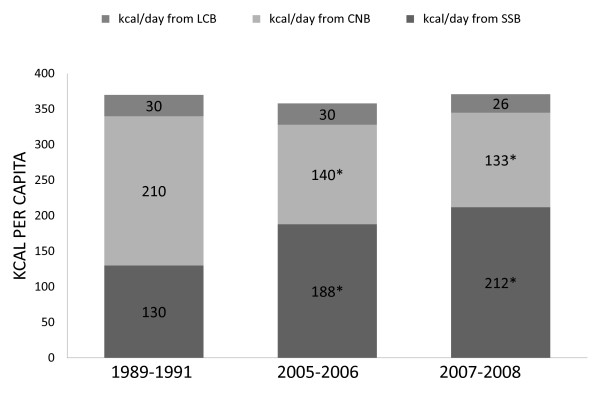
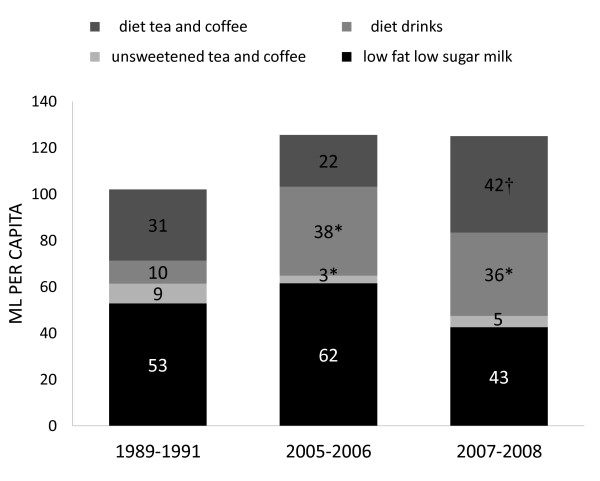
3, 583 participants ages 6-11 y old were included. We reported per capita trends in beverage consumption, percent consuming, and amount per consumer for the following categories of beverages: sugar-sweetened beverages (SSB), caloric nutritional beverages (CNB) and low calorie beverages (LCB). Statistically significant differences were tested using the Student's t test in Stata 11.
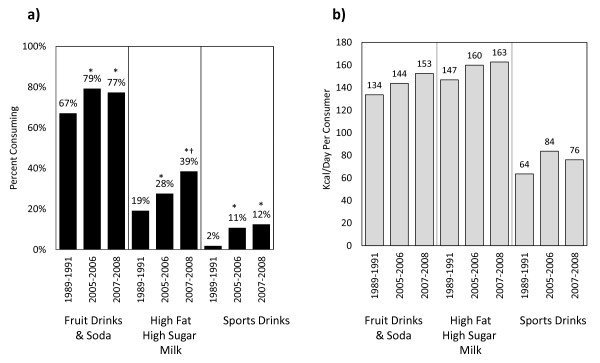
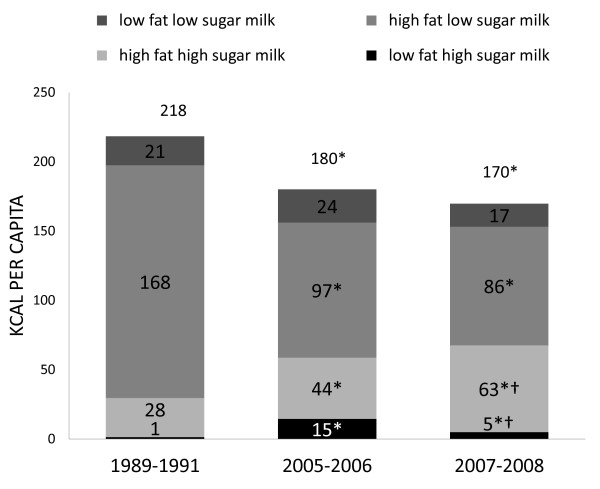
While per capita kcal contribution from total beverages remained constant over the study period, per capita consumption of SSBs increased and CNBs decreased in similar magnitude. The substantial increase in consumption of certain SSBs, such as fruit drinks and soda, high fat high sugar milk, and sports drinks, coupled with the decrease in consumption of high fat low sugar milk was responsible for this shift. The percent consuming SSBs as well as the amount per consumer increased significantly over time. Per capita intake of total milk declined, but the caloric contribution from high fat high sugar milk increased substantially. Among ethnicities, important differences in consumption trends of certain SSBs and 100% juice indicate the complexity in determining strategies for children's beverage calorie reduction.
As upward trends of SSB consumption parallel increases in childhood obesity, educational and policy interventions should be considered.
儿童时期高糖饮料的摄入与成年后患肥胖症和 2 型糖尿病的风险增加有关。本研究利用三次全国代表性的饮食摄入调查,调查了 1989/91 年至 2007/08 年期间美国学龄儿童的饮料模式和趋势。
共纳入 3,583 名 6-11 岁儿童。我们报告了以下几类饮料的人均消费趋势、消费比例和人均消费数量:含糖饮料(SSB)、含热量营养饮料(CNB)和低热量饮料(LCB)。使用 Stata 11 中的学生 t 检验测试统计学差异。
虽然研究期间总饮料的人均热量贡献保持不变,但 SSB 的人均消费增加,CNB 的人均消费减少,幅度相似。某些 SSB(如水果饮料和苏打水、高脂肪高糖牛奶和运动饮料)的消费大幅增加,而高脂肪低糖牛奶的消费减少,导致了这种变化。SSB 的消费比例以及人均消费量均显著增加。总牛奶摄入量下降,但高脂肪高糖牛奶的热量贡献大幅增加。在不同种族中,某些 SSB 和 100%果汁的消费趋势存在重要差异,这表明确定儿童饮料热量减少策略的复杂性。
随着 SSB 消费的上升趋势与儿童肥胖症的增加平行,应考虑采取教育和政策干预措施。