Fujimura Masato, Nakatsuji Yoshinobu, Fujiwara Subaru, Rème Christophe, Gatto Hugues
Fujimura Animal Allergy Hospital, Aomatanihigashi 5-10-26, Minou-shi, Osaka 562-0022, Japan.
Vet Med Int. 2011;2011:281846. doi: 10.4061/2011/281846. Epub 2011 Sep 29.
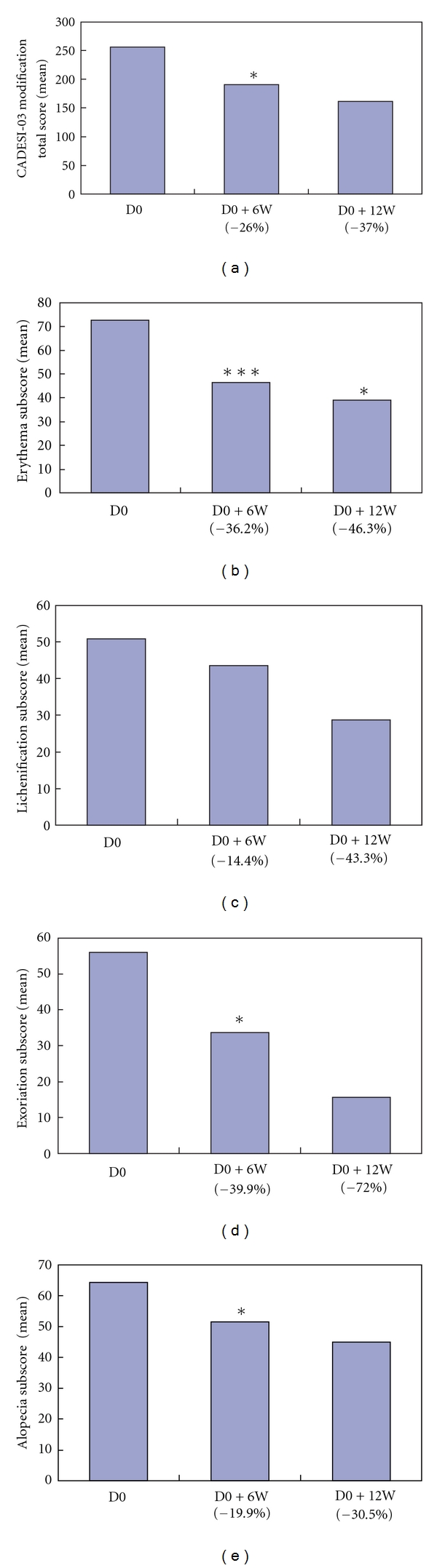
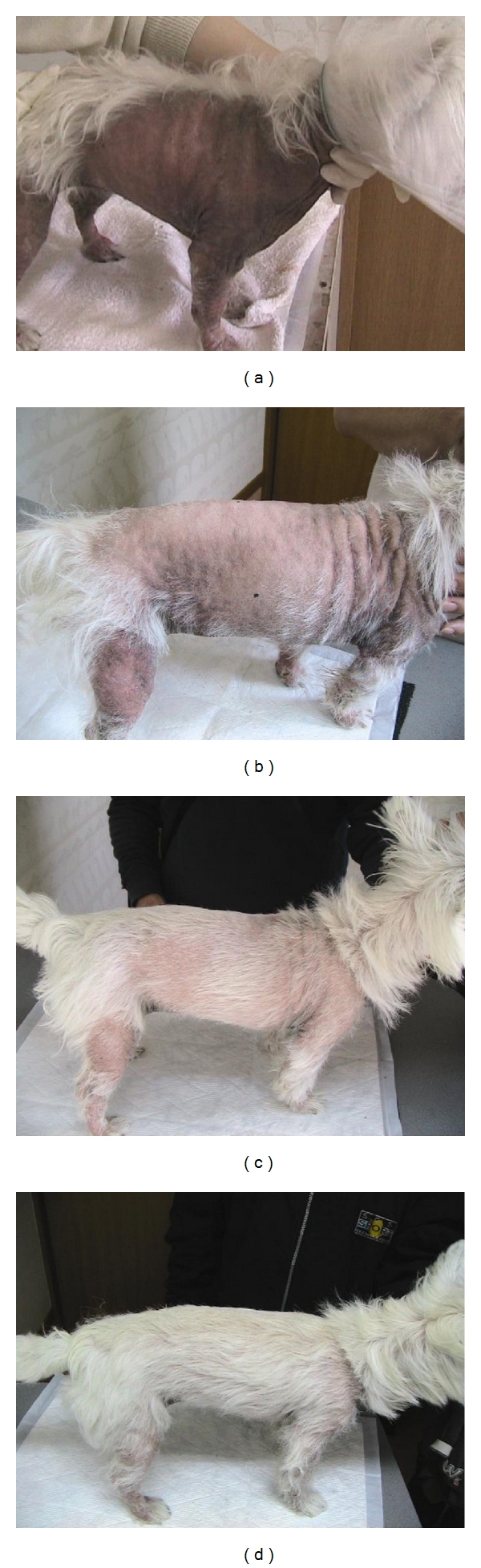
The purpose of this paper was to evaluate the efficacy of topical skin lipid complex (SLC) in canine atopic dermatitis (AD). Eight dogs with chronic AD and no improvement of main therapy in symptoms, erythema, lichenification, excoriation, and alopecia in the previous month were treated with SLC topically as adjunct therapy at lesion sites twice weekly for 12 weeks. A statistically significant reduction (26.0%, P < 0.05) in the third version of the Canine Atopic Dermatitis Extent and Severity Index (CADESI-03) modification from baseline was recorded 6 weeks after treatment, with marked reduction in the erythema subscore (36.2%, P < 0.005). A significant reduction in excoriation and alopecia subscores was observed 6 weeks after treatment (39.9%, P < 0.05 and 19.9%, P < 0.05, resp.). However, the lichenification subscore was not reduced significantly at 6 or 12 weeks. These findings suggest that topical SLC may have therapeutic and clinical benefits in dogs with AD.
本文旨在评估局部皮肤脂质复合物(SLC)对犬特应性皮炎(AD)的疗效。8只患有慢性AD且前一个月主要治疗在症状、红斑、苔藓化、抓痕和脱毛方面无改善的犬,在病变部位接受SLC局部辅助治疗,每周两次,共12周。治疗6周后,犬特应性皮炎范围和严重程度指数(CADESI - 03)第三版较基线有统计学显著降低(26.0%,P < 0.05),红斑子评分显著降低(36.2%,P < 0.005)。治疗6周后观察到抓痕和脱毛子评分显著降低(分别为39.9%,P < 0.05和19.9%,P < 0.05)。然而,在6周或12周时,苔藓化子评分未显著降低。这些发现表明,局部SLC可能对患有AD的犬具有治疗和临床益处。