Biosciences, CSIR, PO Box 395, Pretoria, 0001, South Africa.
Malar J. 2011 Oct 11;10:295. doi: 10.1186/1475-2875-10-295.
Anti-malarial drug resistance threatens to undermine efforts to eliminate this deadly disease. The resulting omnipresent requirement for drugs with novel modes of action prompted a national consortium initiative to discover new anti-plasmodial agents from South African medicinal plants. One of the plants selected for investigation was Dicoma anomala subsp. gerrardii, based on its ethnomedicinal profile.
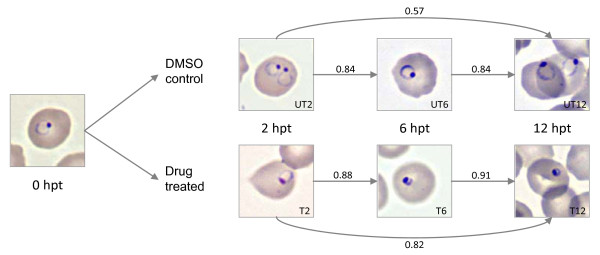
Standard phytochemical analysis techniques, including solvent-solvent extraction, thin-layer- and column chromatography, were used to isolate the main active constituent of Dicoma anomala subsp. gerrardii. The crystallized pure compound was identified using nuclear magnetic resonance spectroscopy, mass spectrometry and X-ray crystallography. The compound was tested in vitro on Plasmodium falciparum cultures using the parasite lactate dehydrogenase (pLDH) assay and was found to have anti-malarial activity. To determine the functional groups responsible for the activity, a small collection of synthetic analogues was generated - the aim being to vary features proposed as likely to be related to the anti-malarial activity and to quantify the effect of the modifications in vitro using the pLDH assay. The effects of the pure compound on the P. falciparum transcriptome were subsequently investigated by treating ring-stage parasites (alongside untreated controls), followed by oligonucleotide microarray- and data analysis.
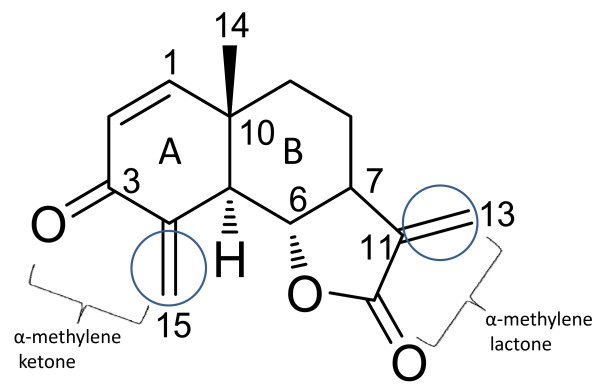
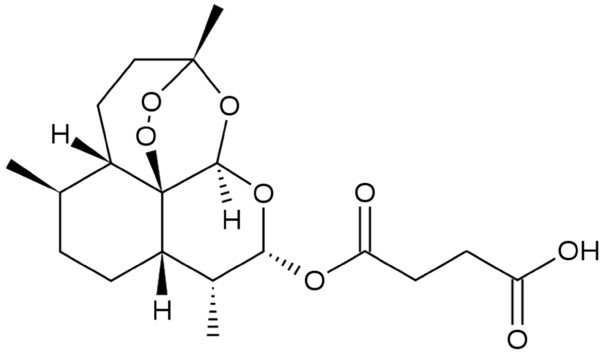
The main active constituent was identified as dehydrobrachylaenolide, a eudesmanolide-type sesquiterpene lactone. The compound demonstrated an in vitro IC50 of 1.865 μM against a chloroquine-sensitive strain (D10) of P. falciparum. Synthetic analogues of the compound confirmed an absolute requirement that the α-methylene lactone be present in the eudesmanolide before significant anti-malarial activity was observed. This feature is absent in the artemisinins and suggests a different mode of action. Microarray data analysis identified 572 unique genes that were differentially expressed as a result of the treatment and gene ontology analysis identified various biological processes and molecular functions that were significantly affected. Comparison of the dehydrobrachylaenolide treatment transcriptional dataset with a published artesunate (also a sesquiterpene lactone) dataset revealed little overlap. These results strengthen the notion that the isolated compound and the artemisinins have differentiated modes of action.
The novel mode of action of dehydrobrachylaenolide, detected during these studies, will play an ongoing role in advancing anti-plasmodial drug discovery efforts.
抗疟药物耐药性威胁着消除这种致命疾病的努力。由此产生的对具有新型作用模式的药物的普遍需求促使南非开展了一项国家财团倡议,旨在从南非药用植物中发现新的抗疟药物。选择 Dicoma anomala subsp. gerrardii 进行研究的原因之一是基于其民族医学特征。
采用标准的植物化学分析技术,包括溶剂-溶剂萃取、薄层和柱层析,从 Dicoma anomala subsp. gerrardii 中分离出主要的活性成分。通过核磁共振波谱、质谱和 X 射线晶体学鉴定结晶纯化合物的结构。该化合物在体外对恶性疟原虫培养物进行了测试,使用寄生虫乳酸脱氢酶(pLDH)测定法发现其具有抗疟活性。为了确定负责活性的功能基团,生成了一小部分合成类似物-目的是改变可能与抗疟活性相关的特征,并使用 pLDH 测定法在体外定量评估修饰的效果。随后,通过用未处理的对照物处理环期寄生虫,用纯化合物处理环期寄生虫,对其对恶性疟原虫转录组的影响进行了研究,随后进行了寡核苷酸微阵列分析和数据分析。
鉴定出的主要活性成分为去氢 brachylaenolide,一种倍半萜内酯。该化合物在体外对氯喹敏感株(D10)的 IC50 为 1.865 μM。该化合物的合成类似物证实,只有当倍半萜内酯中存在α-亚甲基内酯时,才会观察到显著的抗疟活性。青蒿素类药物中不存在这一特征,这表明它们具有不同的作用模式。微阵列数据分析确定了 572 个因处理而表达不同的独特基因,基因本体分析确定了受影响的各种生物过程和分子功能。将去氢 brachylaenolide 处理的转录数据集与已发表的青蒿琥酯(也是一种倍半萜内酯)数据集进行比较,发现几乎没有重叠。这些结果进一步证实了所分离的化合物和青蒿素类药物具有不同的作用模式。
在这些研究中发现的去氢 brachylaenolide 的新型作用模式将在推进抗疟药物发现工作中发挥持续作用。