Department of Virology, Division of Infectious Disease, St. Mary's Campus, Imperial College, London, United Kingdom.
PLoS One. 2011;6(10):e25755. doi: 10.1371/journal.pone.0025755. Epub 2011 Oct 5.
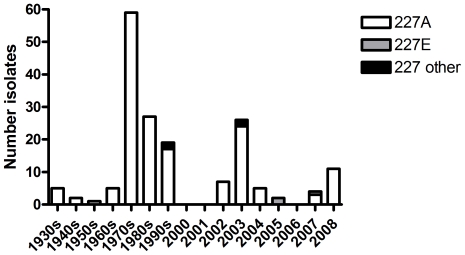
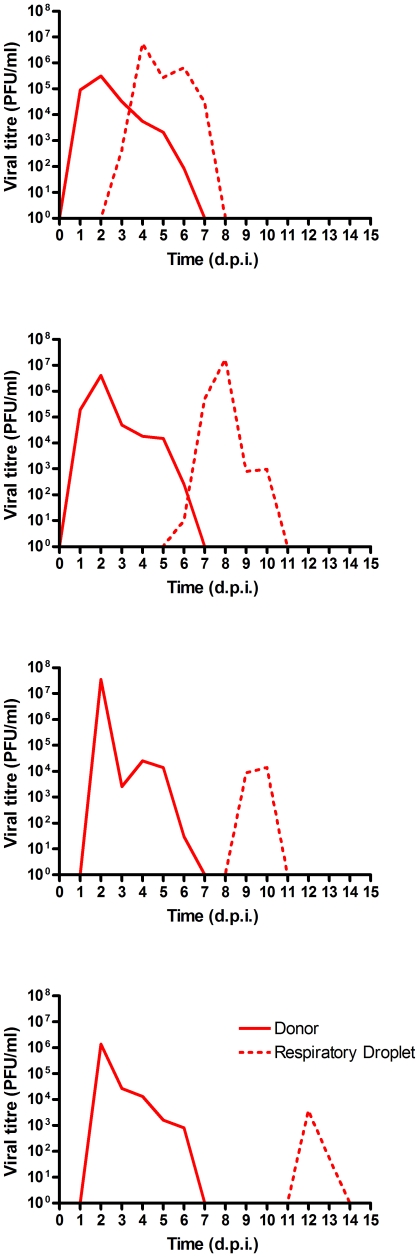
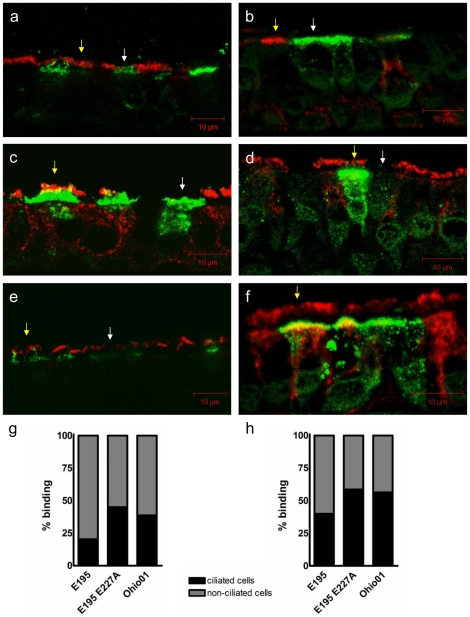
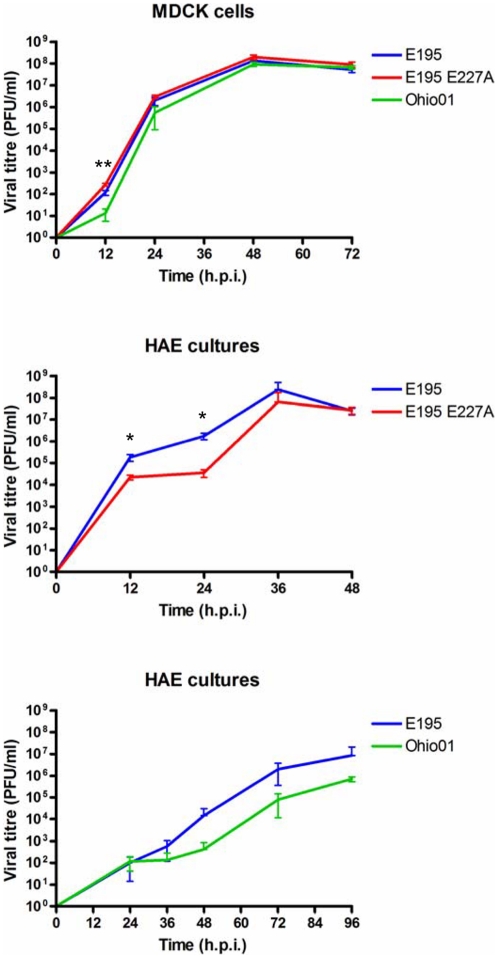
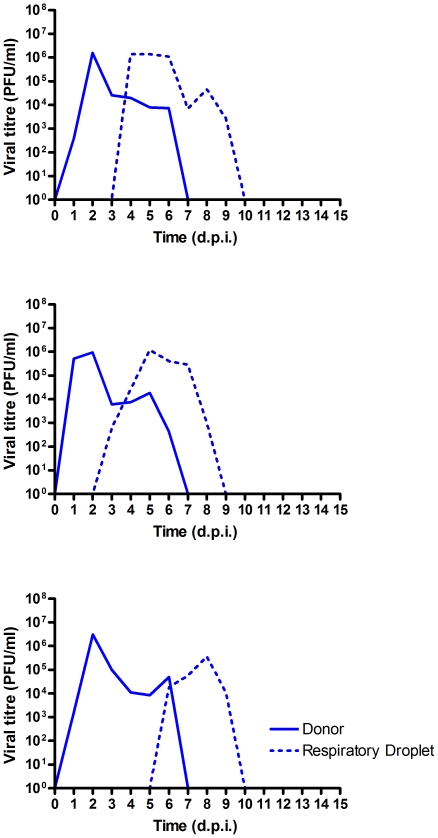
The first pandemic of the 21(st) century, pandemic H1N1 2009 (pH1N1 2009), emerged from a swine-origin source. Although human infections with swine-origin influenza have been reported previously, none went on to cause a pandemic or indeed any sustained human transmission. In previous pandemics, specific residues in the receptor binding site of the haemagglutinin (HA) protein of influenza have been associated with the ability of the virus to transmit between humans. In the present study we investigated the effect of residue 227 in HA on cell tropism and transmission of pH1N1 2009. In pH1N1 2009 and recent seasonal H1N1 viruses this residue is glutamic acid, whereas in swine influenza it is alanine. Using human airway epithelium, we show a differential cell tropism of pH1N1 2009 compared to pH1N1 2009 E227A and swine influenza suggesting this residue may alter the sialic acid conformer binding preference of the HA. Furthermore, both pH1N1 2009 E227A and swine influenza multi-cycle viral growth was found to be attenuated in comparison to pH1N1 2009 in human airway epithelium. However this altered tropism and viral growth in human airway epithelium did not abrogate respiratory droplet transmission of pH1N1 2009 E227A in ferrets. Thus, acquisition of E at residue 227 was not solely responsible for the ability of pH1N1 2009 to transmit between humans.
21 世纪的第一次大流行,即 2009 年甲型 H1N1 流感(pH1N1 2009),源自猪源。尽管此前曾有过人类感染猪源流感的报告,但没有一种病毒导致大流行或实际上导致持续的人际传播。在以前的大流行中,流感血凝素(HA)蛋白受体结合部位的特定残基与病毒在人与人之间传播的能力有关。在本研究中,我们研究了 HA 中 227 位残基对 pH1N1 2009 的细胞嗜性和传播的影响。在 pH1N1 2009 和最近的季节性 H1N1 病毒中,该残基为谷氨酸,而在猪流感中为丙氨酸。使用人呼吸道上皮细胞,我们发现 pH1N1 2009 的细胞嗜性与 pH1N1 2009 E227A 和猪流感不同,这表明该残基可能改变了 HA 对唾液酸构象的结合偏好。此外,与 pH1N1 2009 相比,pH1N1 2009 E227A 和猪流感在人呼吸道上皮细胞中的多轮病毒生长均减弱。然而,这种在人呼吸道上皮细胞中的改变的嗜性和病毒生长并没有消除 pH1N1 2009 E227A 在雪貂中的呼吸道飞沫传播。因此,在 227 位获得 E 并不是 pH1N1 2009 能够在人与人之间传播的唯一原因。