Division of Infectious Diseases, Department of Pediatrics, Research Division of Immunology, Department of Biomedical Sciences, and the Immunobiology Research Institute, Cedars-Sinai Medical Center, Los Angeles, California, United States of America.
PLoS One. 2011;6(10):e25880. doi: 10.1371/journal.pone.0025880. Epub 2011 Oct 5.
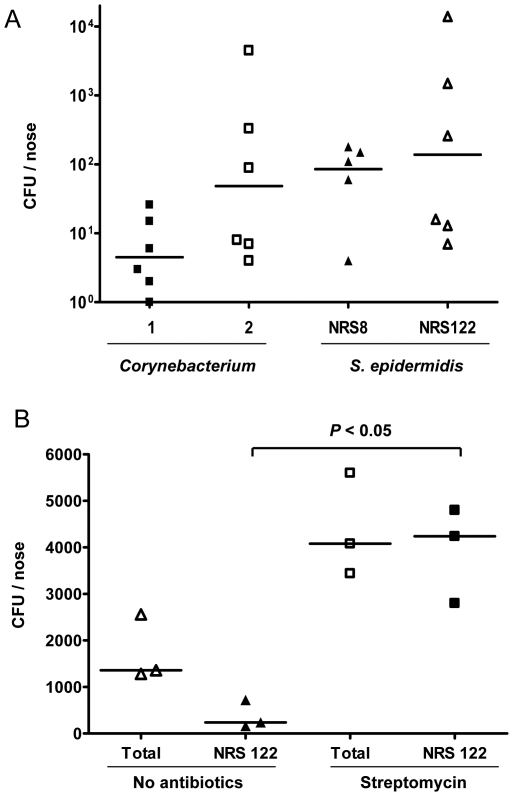
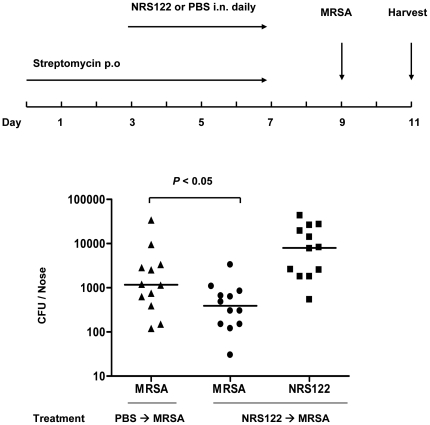
Methicillin-resistant S. aureus emerged in recent decades to become a leading cause of infection worldwide. Colonization with MRSA predisposes to infection and facilitates transmission of the pathogen; however, available regimens are ineffective at preventing MRSA colonization. Studies of human nasal flora suggest that resident bacteria play a critical role in limiting S. aureus growth, and prompted us to query whether application of commensal resident bacteria could prevent nasal colonization with MRSA. We established a murine model system to study this question, and showed that mice nasally pre-colonized with S. epidermidis became more resistant to colonization with MRSA. Our study suggests that application of commensal bacteria with antibiotics could represent a more effective strategy to prevent MRSA colonization.
耐甲氧西林金黄色葡萄球菌(MRSA)在近几十年来出现,成为全球感染的主要原因。MRSA 定植可导致感染,并促进病原体的传播;然而,现有的治疗方案并不能有效预防 MRSA 定植。对人类鼻腔菌群的研究表明,常驻细菌在限制金黄色葡萄球菌生长方面发挥着关键作用,这促使我们质疑应用共生常驻细菌是否可以预防 MRSA 鼻腔定植。我们建立了一个小鼠模型系统来研究这个问题,并表明经表皮葡萄球菌预先定植鼻腔的小鼠对耐甲氧西林金黄色葡萄球菌的定植更具抵抗力。我们的研究表明,应用抗生素共生细菌可能代表着预防 MRSA 定植的更有效策略。