Anand Vijay G, Kannan M, Thavamani A, Bridgit Merlin J
Department of Anesthesiology and Critical Care, Tirunelveli Medical College, Tirunelveli, Tamil Nadu, India.
Indian J Anaesth. 2011 Jul;55(4):340-6. doi: 10.4103/0019-5049.84835.
The objectives of this study were to compare the effects of caudal dexmedetomidine combined with ropivacaine to provide postoperative analgesia in children and also to establish its safety in the paediatric population.
In a randomised, prospective, parallel group, double-blinded study, 60 children were recruited and allocated into two groups: Group RD (n=30) received 0.25% ropivacaine 1 ml/kg with dexmedetomidine 2 μg/kg, making the volume to 0.5 ml and Group R (n=30) received 0.25% ropivacaine 1 ml/kg + 0.5 ml normal saline. Induction of anaesthesia was achieved with 50% N(2)O and 8% sevoflurane in oxygen in spontaneous ventilation. An appropriate-sized LMA was then inserted and a caudal block performed in all patients. Behaviour during emergence was rated with a 4-point scale, sedation with Ramsay's sedation scale, and pain assessed with face, legs, activity, cry, consolability (FLACC) pain score.
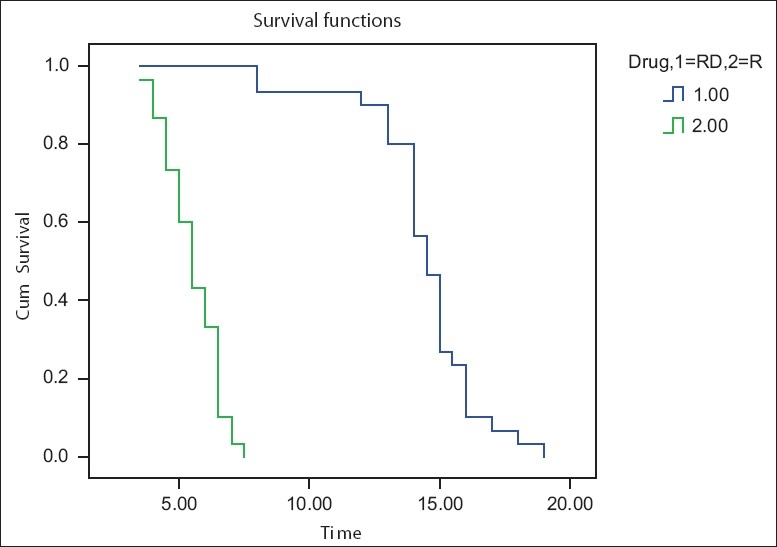
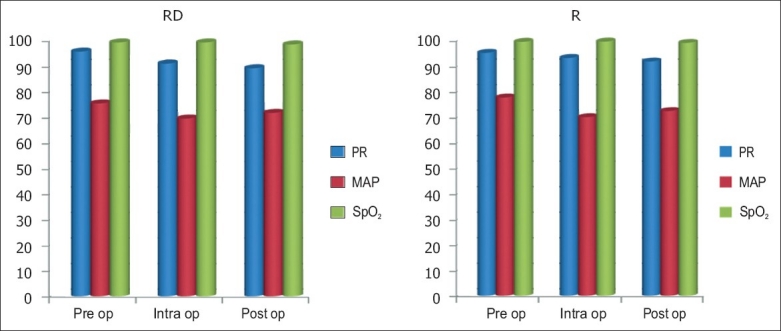
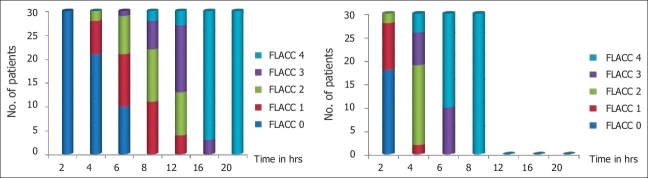
The duration of postoperative analgesia recorded a median of 5.5 hours in Group R compared with 14.5 hours in Group RD, with a P value of <0.001. Group R patients achieved a statistically significant higher FLACC score compared with Group RD patients. The difference between the means of mean sedation score, emergence behaviour score, mean emergence time was statistically highly significant (P<0.001). The peri-operative haemodynamics were stable among both the groups.
Caudal dexmedetomidine (2 μg/kg) with 0.25% ropivacaine (1 ml/kg) for paediatric lower abdominal surgeries achieved significant postoperative pain relief that resulted in a better quality of sleep and a prolonged duration of arousable sedation and produced less incidence of emergence agitation following sevoflurane anaesthesia.
本研究的目的是比较尾侧注射右美托咪定联合罗哌卡因用于小儿术后镇痛的效果,并确定其在儿科人群中的安全性。
在一项随机、前瞻性、平行组、双盲研究中,招募了60名儿童并将其分为两组:RD组(n = 30)接受0.25%罗哌卡因1 ml/kg加右美托咪定2 μg/kg,配制成0.5 ml;R组(n = 30)接受0.25%罗哌卡因1 ml/kg + 0.5 ml生理盐水。采用50%氧化亚氮和8%七氟醚在氧气中进行自主通气诱导麻醉。然后插入合适尺寸的喉罩,并对所有患者进行骶管阻滞。采用4分制评估苏醒期行为,用Ramsay镇静评分评估镇静程度,用面部、腿部、活动、哭闹、安慰度(FLACC)疼痛评分评估疼痛。
R组术后镇痛持续时间中位数为5.5小时,而RD组为14.5小时,P值<0.001。与RD组患者相比,R组患者的FLACC评分在统计学上显著更高。平均镇静评分、苏醒行为评分、平均苏醒时间的均值差异在统计学上具有高度显著性(P<0.001)。两组围手术期血流动力学均稳定。
对于小儿下腹部手术,尾侧注射右美托咪定(2 μg/kg)联合0.25%罗哌卡因(1 ml/kg)可显著减轻术后疼痛,从而提高睡眠质量,延长可唤醒镇静时间,并减少七氟醚麻醉后苏醒期躁动的发生率。