Raha Somik
Independent Researcher, California, USA .
J Ayurveda Integr Med. 2011 Jul;2(3):105-14. doi: 10.4103/0975-9476.85548.
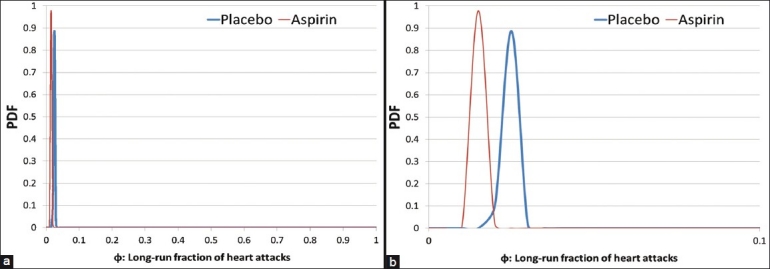
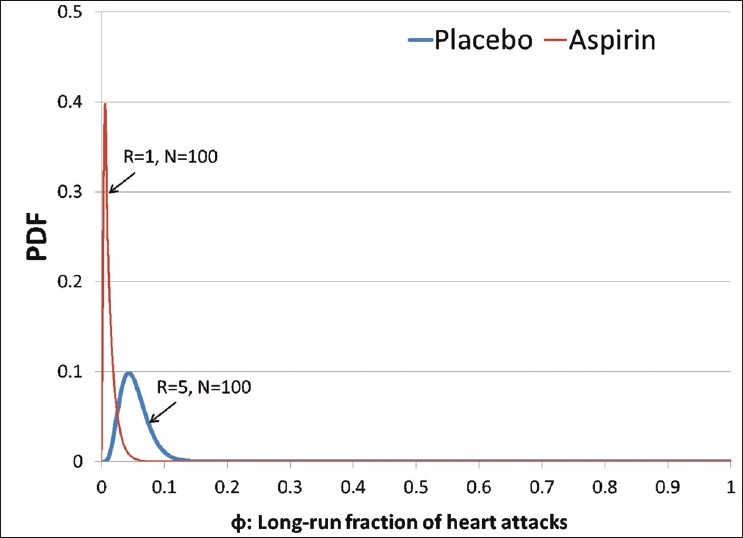
Many have documented the difficulty of using the current paradigm of Randomized Controlled Trials (RCTs) to test and validate the effectiveness of alternative medical systems such as Ayurveda. This paper critiques the applicability of RCTs for all clinical knowledge-seeking endeavors, of which Ayurveda research is a part. This is done by examining statistical hypothesis testing, the underlying foundation of RCTs, from a practical and philosophical perspective. In the philosophical critique, the two main worldviews of probability are that of the Bayesian and the frequentist. The frequentist worldview is a special case of the Bayesian worldview requiring the unrealistic assumptions of knowing nothing about the universe and believing that all observations are unrelated to each other. Many have claimed that the first belief is necessary for science, and this claim is debunked by comparing variations in learning with different prior beliefs. Moving beyond the Bayesian and frequentist worldviews, the notion of hypothesis testing itself is challenged on the grounds that a hypothesis is an unclear distinction, and assigning a probability on an unclear distinction is an exercise that does not lead to clarity of action. This critique is of the theory itself and not any particular application of statistical hypothesis testing. A decision-making frame is proposed as a way of both addressing this critique and transcending ideological debates on probability. An example of a Bayesian decision-making approach is shown as an alternative to statistical hypothesis testing, utilizing data from a past clinical trial that studied the effect of Aspirin on heart attacks in a sample population of doctors. As a big reason for the prevalence of RCTs in academia is legislation requiring it, the ethics of legislating the use of statistical methods for clinical research is also examined.
许多人都记录了使用当前随机对照试验(RCT)范式来测试和验证阿育吠陀等替代医学系统有效性的困难。本文批评了RCT在所有临床知识探索活动中的适用性,阿育吠陀研究就是其中一部分。这是通过从实践和哲学角度审视统计假设检验(RCT的基础)来完成的。在哲学批判中,概率的两种主要世界观是贝叶斯主义和频率主义。频率主义世界观是贝叶斯主义世界观的一个特例,它需要一些不切实际的假设,即对宇宙一无所知,并且认为所有观察结果彼此无关。许多人声称第一种信念对科学是必要的,而通过比较不同先验信念下的学习差异,这一说法被驳斥了。超越贝叶斯主义和频率主义世界观,假设检验的概念本身也受到了挑战,理由是假设是一种不清晰的区分,对不清晰的区分赋予概率是一种无法带来行动清晰性的做法。这种批判针对的是理论本身,而非统计假设检验的任何特定应用。本文提出了一个决策框架,作为解决这一批判以及超越关于概率的意识形态争论的一种方式。文中展示了一个贝叶斯决策方法的例子,作为统计假设检验的替代方法,该例子利用了一项过去临床试验的数据,该试验研究了阿司匹林对一组医生样本中心脏病发作的影响。由于RCT在学术界盛行的一个重要原因是立法要求如此,因此本文还审视了为临床研究立法规定使用统计方法的伦理问题。