Laboratory of Biological Modeling, National Institute of Diabetes and Digestive and Kidney Diseases, National Institutes of Health, DHHS, Bethesda, Maryland 20892, USA.
J Comput Chem. 2012 Feb 15;33(5):561-72. doi: 10.1002/jcc.22893. Epub 2011 Dec 14.
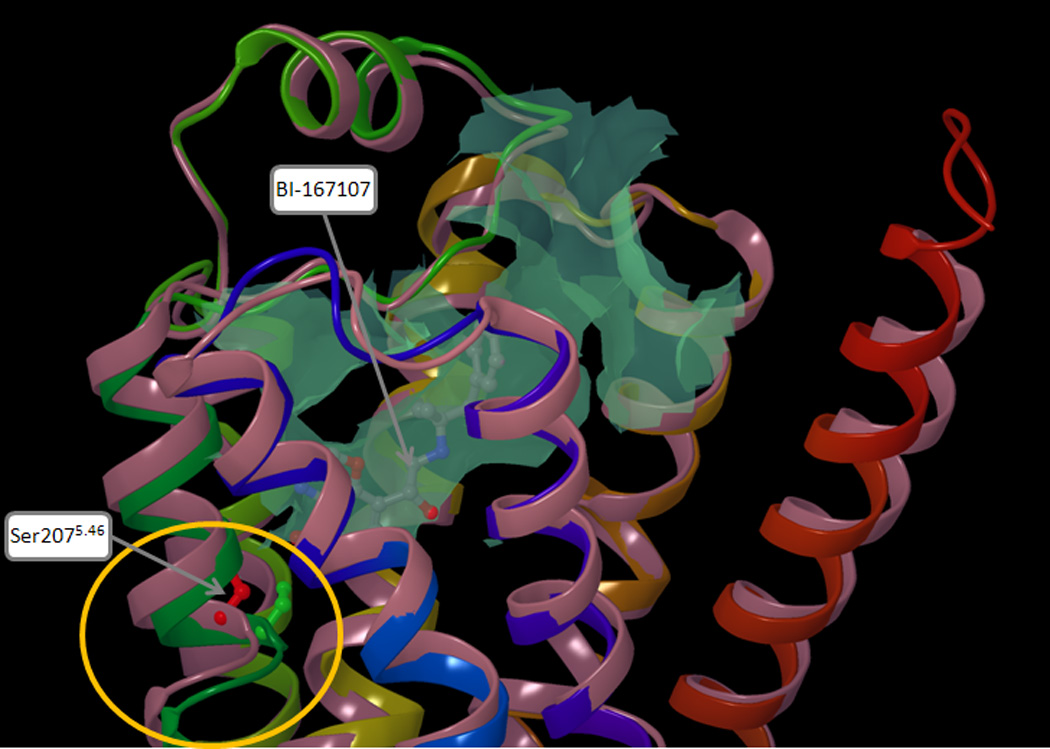
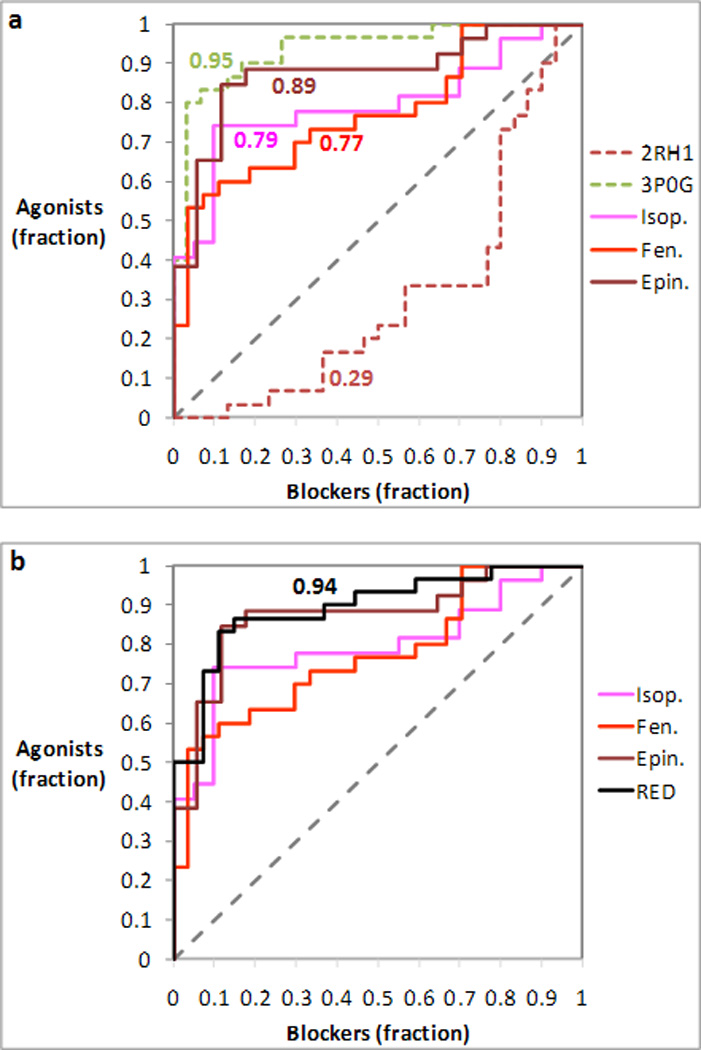
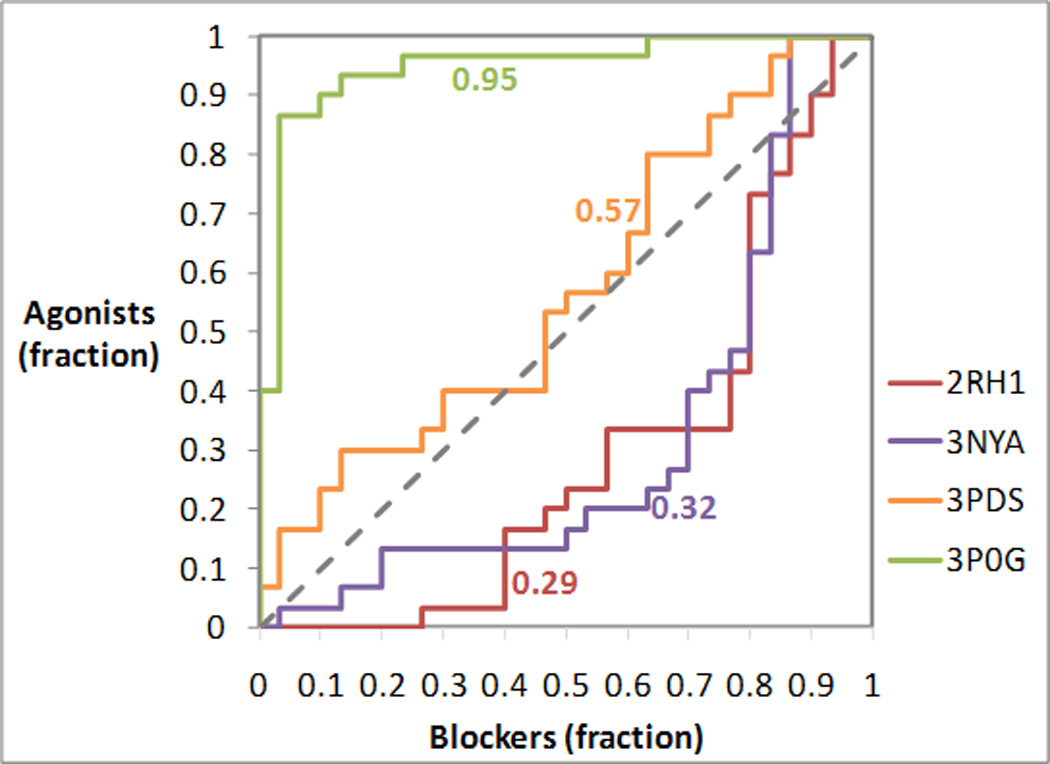
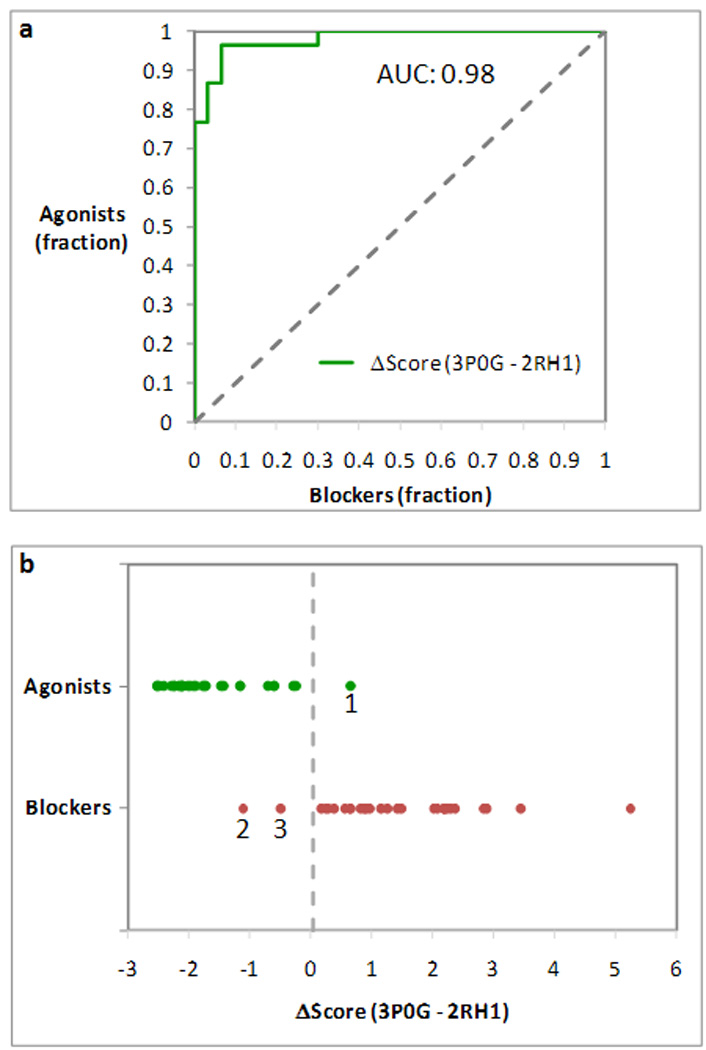
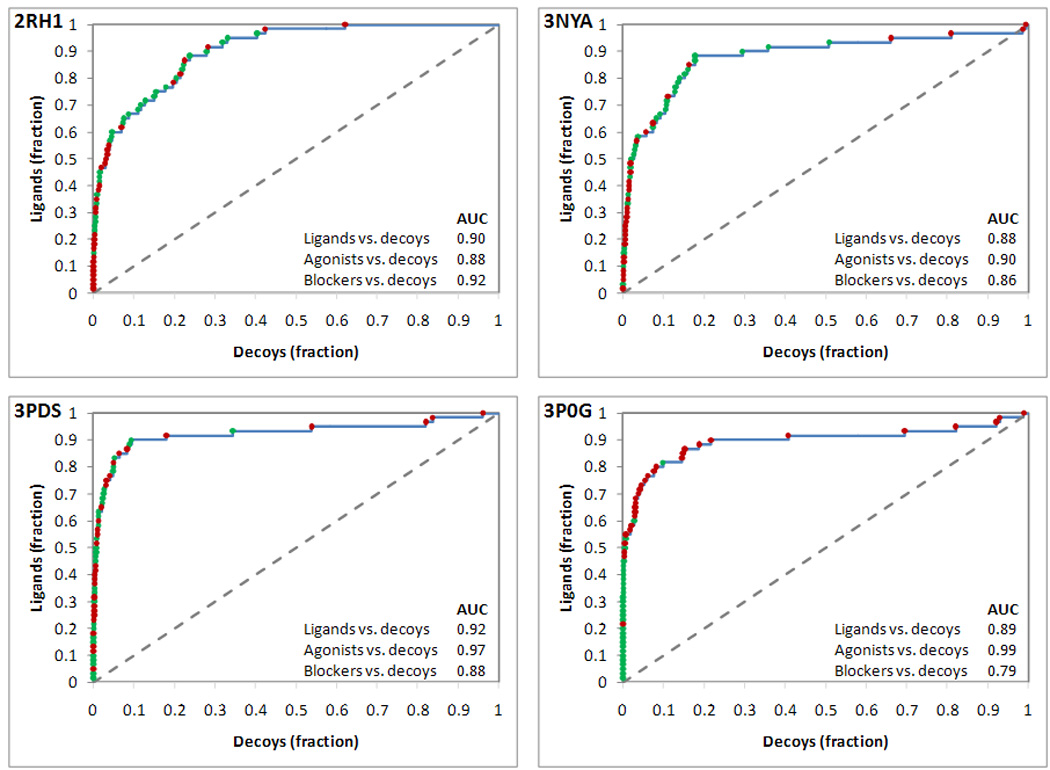
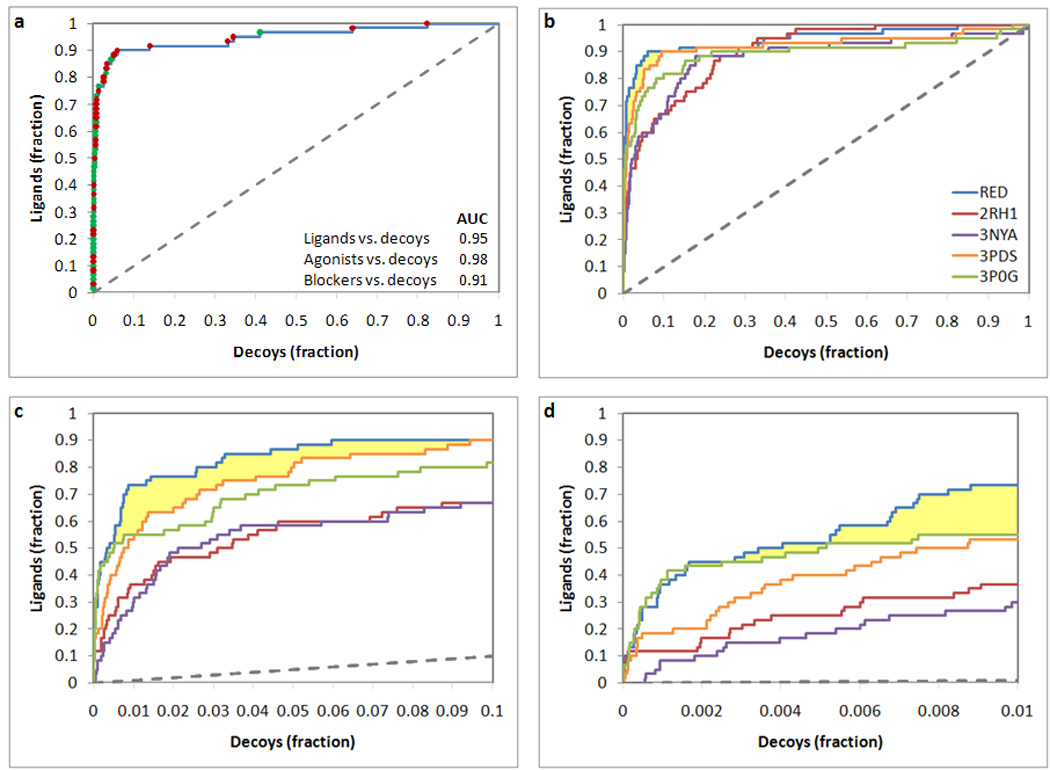
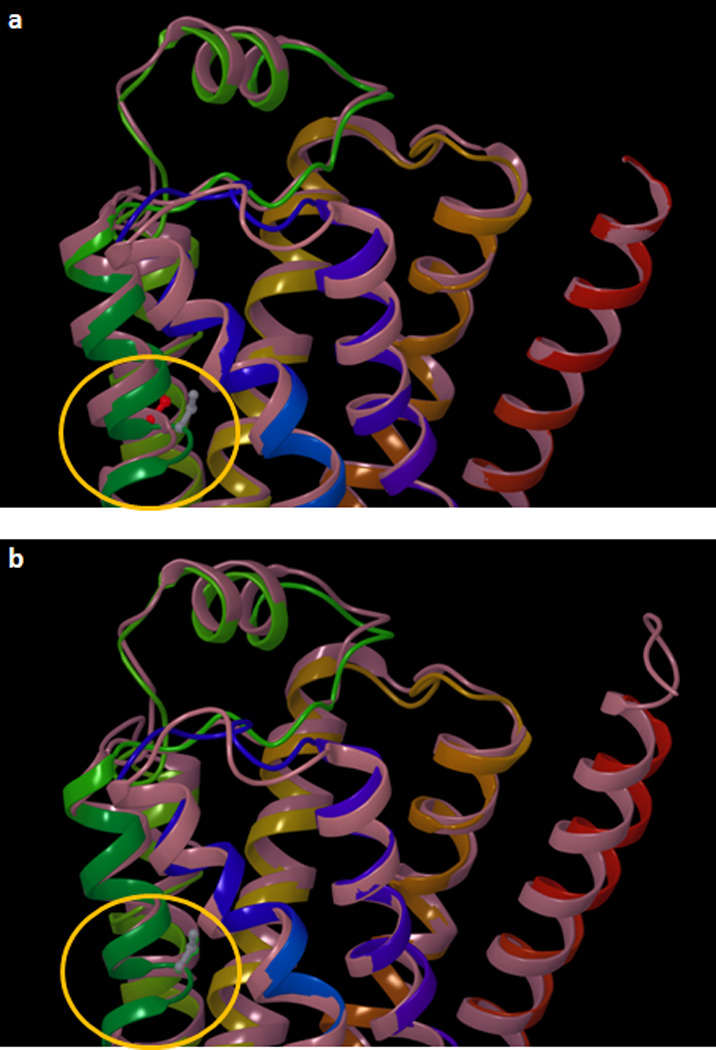
Ten crystal structures of the β(2) adrenergic receptor have been published, reflecting different signaling states. Here, through controlled-docking experiments, we examined the implications of using inactive or activated structures on the in silico screening for agonists and blockers of the receptor. Specifically, we targeted the crystal structures solved in complex with carazolol (2RH1), the neutral antagonist alprenalol, the irreversible agonist FAUC50 (3PDS), and the full agonist BI-167017 (3P0G). Our results indicate that activated structures favor agonists over blockers, whereas inactive structures favor blockers over agonists. This tendency is more marked for activated than for inactive structures. Additionally, agonists tend to receive more favorable docking scores when docked at activated rather than inactive structures, while blockers do the opposite. Hence, the difference between the docking scores attained with an activated and an inactive structure is an excellent means for the classification of ligands into agonists and blockers as we determined through receiver operating characteristic curves and linear discriminant analysis. With respect to virtual screening, all structures prioritized well agonists and blockers over nonbinders. However, inactive structures worked better for blockers and activated structures worked better for agonists, respectively. Notably, the combination of individual docking experiments through receptor ensemble docking resulted in an excellent performance in the retrieval of both agonists and blockers. Finally, we demonstrated that the induced-fit docking of agonists is a viable way of modifying an inactive crystal structure and bias it toward the in silico recognition of agonists rather than blockers.
已有十个β(2)肾上腺素能受体的晶体结构被发表,反映了不同的信号状态。在这里,我们通过控制对接实验,研究了使用非激活或激活结构对受体激动剂和阻滞剂的计算机筛选的影响。具体来说,我们针对与卡唑洛尔(2RH1)、中性拮抗剂阿普洛尔、不可逆激动剂 FAUC50(3PDS)和完全激动剂 BI-167017(3P0G)复合的晶体结构进行了靶向研究。我们的结果表明,激活结构有利于激动剂而非阻滞剂,而非激活结构则有利于阻滞剂而非激动剂。这种趋势在激活结构中比非激活结构更为明显。此外,当激动剂在激活结构而不是非激活结构中对接时,它们往往会获得更有利的对接评分,而阻滞剂则相反。因此,通过激活和非激活结构获得的对接评分之间的差异是我们通过接收者操作特征曲线和线性判别分析确定的将配体分类为激动剂和阻滞剂的极好方法。就虚拟筛选而言,所有结构都能很好地区分激动剂和阻滞剂与非配体。然而,非激活结构更适合于阻滞剂,而激活结构更适合于激动剂。值得注意的是,通过受体整体对接进行个体对接实验的组合导致在检索激动剂和阻滞剂方面具有出色的性能。最后,我们证明了激动剂的诱导契合对接是一种可行的方法,可以修改非激活晶体结构,并使其偏向于激动剂而不是阻滞剂的计算机识别。