Department of Pharmacology, Universiti Kebangsaan Malaysia, Kuala Lumpur, Malaysia.
Clinics (Sao Paulo). 2011;66(12):2125-32. doi: 10.1590/s1807-59322011001200020.
The goal of this study was to determine the possible mechanism that is involved in the blood pressure-raising effect of heated vegetable oils.
Adult male Sprague-Dawley rats were divided into 11 groups; the control group was fed with rat chow, and the other groups were fed with chow that was mixed with 15% weight/weight palm or soy oils, which were either in a fresh form or heated once, twice, five, or ten times. Blood pressures were measured at the baseline and throughout the 24-week study. Plasma nitric oxide levels were assessed prior to treatment and at the end of the study. Following 24 weeks, the rats were sacrificed to investigate their vascular reactivity using the thoracic aorta.
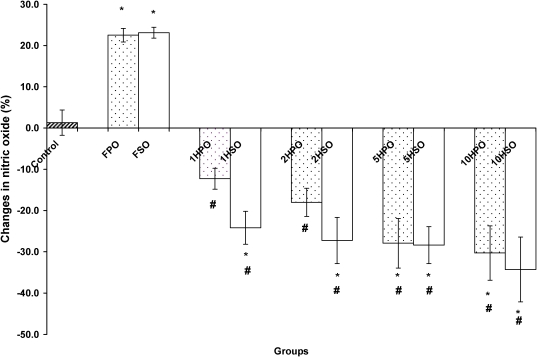
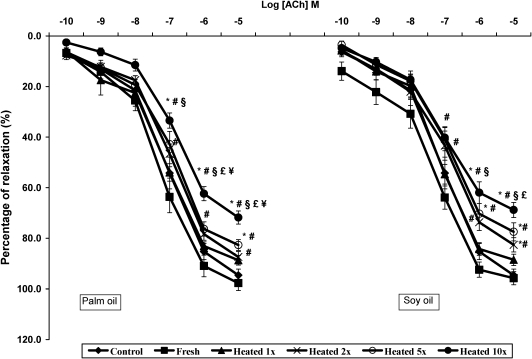
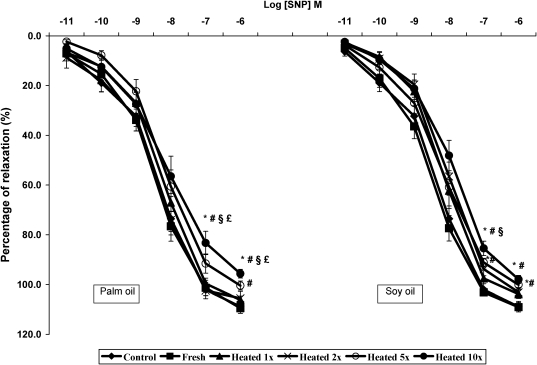
Palm and soy oils had no detrimental effects on blood pressure, and they significantly elevated the nitric oxide contents and reduced the contractile responses to phenylephrine. However, trials using palm and soy oils that were repeatedly heated showed an increase in blood pressure, enhanced phenylephrine-induced contractions, reduced acetylcholine- and sodium nitroprusside-induced relaxations relative to the control and rats that were fed fresh vegetable oils.
The blood pressure-raising effect of the heated vegetable cooking oils is associated with increased vascular reactivity and a reduction in nitric oxide levels. The chronic consumption of heated vegetable oils leads to disturbances in endogenous vascular regulatory substances, such as nitric oxide. The thermal oxidation of the cooking oils promotes the generation of free radicals and may play an important contributory role in the pathogenesis of hypertension in rats.
本研究旨在确定加热植物油升高血压效应所涉及的可能机制。
将成年雄性 Sprague-Dawley 大鼠分为 11 组;对照组给予大鼠饲料,其余各组给予混合 15%重量/重量棕榈油或豆油的饲料,无论是新鲜形式还是加热一次、两次、五次或十次。在基线和整个 24 周研究期间测量血压。在治疗前和研究结束时评估血浆一氧化氮水平。24 周后,用胸主动脉研究大鼠的血管反应性。
棕榈油和豆油对血压没有不良影响,它们显著升高了一氧化氮含量,降低了对苯肾上腺素的收缩反应。然而,反复加热棕榈油和豆油的试验显示血压升高,苯肾上腺素诱导的收缩增强,与对照组和给予新鲜植物油的大鼠相比,乙酰胆碱和硝普钠诱导的舒张减少。
加热植物油的升压作用与血管反应性增加和一氧化氮水平降低有关。长期食用加热的植物油会导致内源性血管调节物质(如一氧化氮)紊乱。烹饪油的热氧化促进自由基的产生,可能在大鼠高血压的发病机制中起重要作用。