The Miami Project to Cure Paralysis, Miller School of Medicine, University of Miami, Miami, Florida, United States of America.
PLoS One. 2012;7(1):e30417. doi: 10.1371/journal.pone.0030417. Epub 2012 Jan 17.
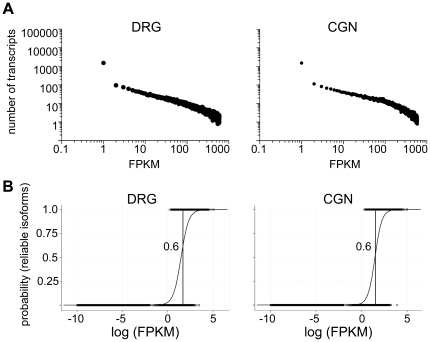
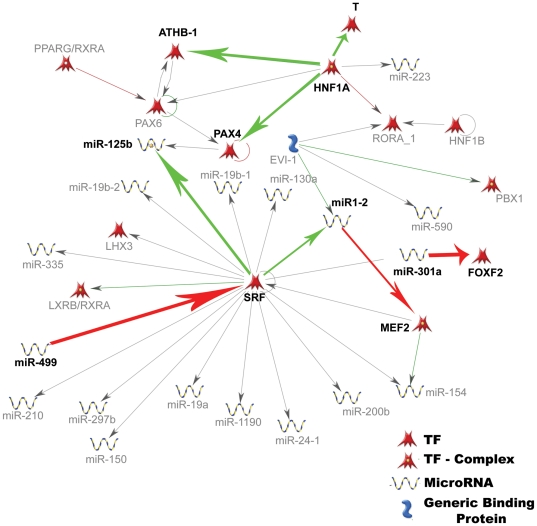
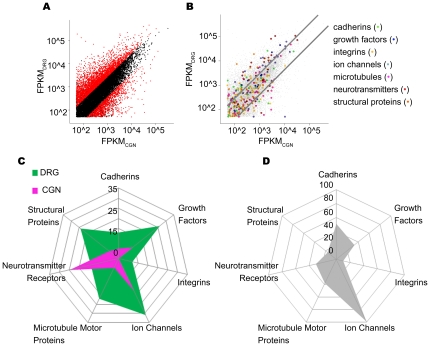
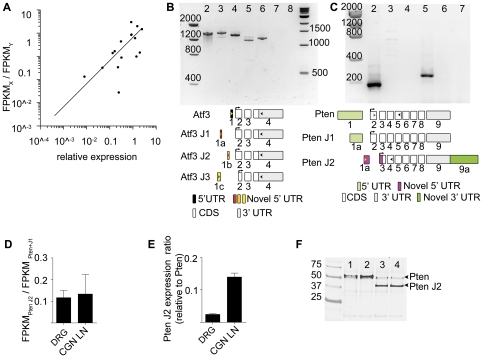
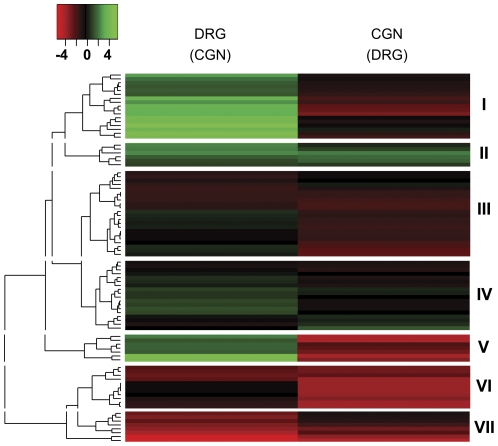
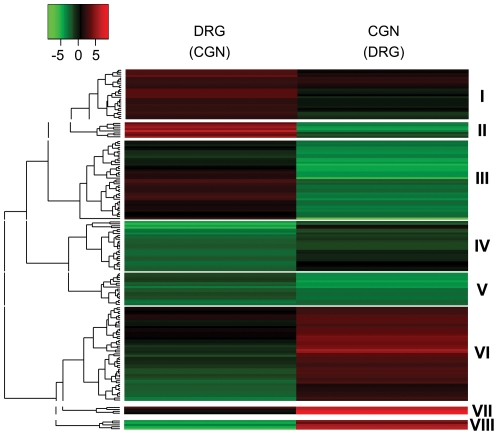
To fully understand cell type identity and function in the nervous system there is a need to understand neuronal gene expression at the level of isoform diversity. Here we applied Next Generation Sequencing of the transcriptome (RNA-Seq) to purified sensory neurons and cerebellar granular neurons (CGNs) grown on an axonal growth permissive substrate. The goal of the analysis was to uncover neuronal type specific isoforms as a prelude to understanding patterns of gene expression underlying their intrinsic growth abilities. Global gene expression patterns were comparable to those found for other cell types, in that a vast majority of genes were expressed at low abundance. Nearly 18% of gene loci produced more than one transcript. More than 8000 isoforms were differentially expressed, either to different degrees in different neuronal types or uniquely expressed in one or the other. Sensory neurons expressed a larger number of genes and gene isoforms than did CGNs. To begin to understand the mechanisms responsible for the differential gene/isoform expression we identified transcription factor binding sites present specifically in the upstream genomic sequences of differentially expressed isoforms, and analyzed the 3' untranslated regions (3' UTRs) for microRNA (miRNA) target sites. Our analysis defines isoform diversity for two neuronal types with diverse axon growth capabilities and begins to elucidate the complex transcriptional landscape in two neuronal populations.
为了全面了解神经系统中的细胞类型特征和功能,我们需要了解神经元基因表达的异构体多样性。在这里,我们应用转录组的新一代测序(RNA-Seq)方法,对在轴突生长允许的基质上培养的感觉神经元和小脑颗粒神经元(CGNs)进行分析。该分析的目的是揭示神经元类型特异性的异构体,作为理解其内在生长能力相关基因表达模式的前奏。总的来说,基因表达模式与其他细胞类型相似,即绝大多数基因的表达丰度较低。近 18%的基因座产生了不止一个转录本。超过 8000 个异构体在不同程度上在不同的神经元类型中差异表达,或者在一种神经元类型中特异性表达。感觉神经元表达的基因和基因异构体数量多于 CGNs。为了开始理解导致差异基因/异构体表达的机制,我们鉴定了在差异表达异构体的上游基因组序列中特异性存在的转录因子结合位点,并分析了 3'非翻译区(3'UTR)中的 microRNA(miRNA)靶位点。我们的分析为两种具有不同轴突生长能力的神经元类型定义了异构体多样性,并开始阐明两种神经元群体中复杂的转录景观。