University of Southern California, Los Angeles, California, USA.
mBio. 2012 Jan 24;3(1):e00279-11. doi: 10.1128/mBio.00279-11. Print 2012.
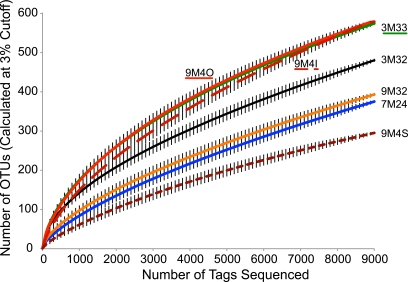
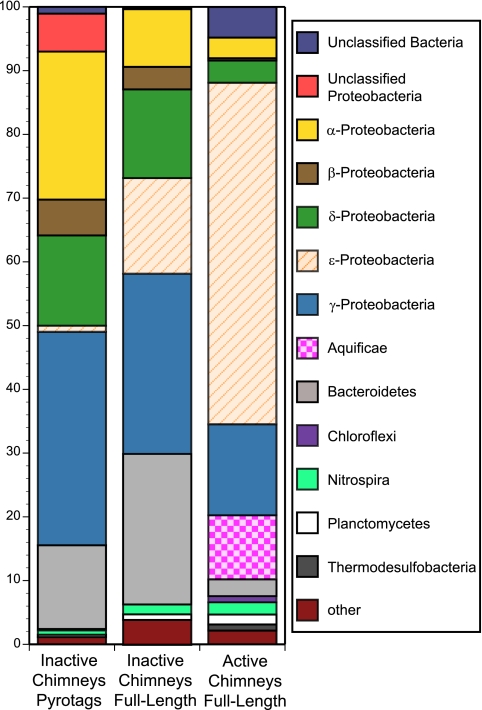
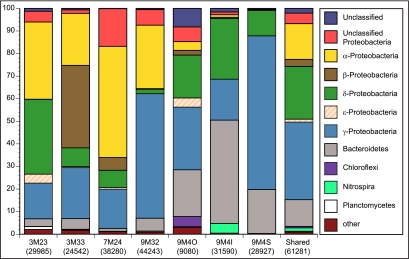
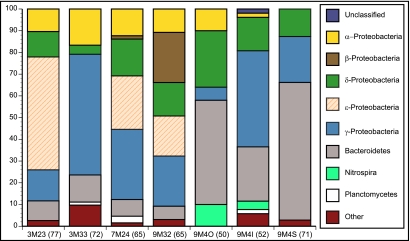
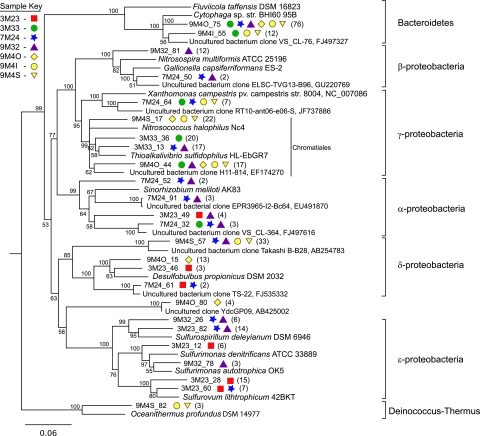
Hydrothermal chimneys are a globally dispersed habitat on the seafloor associated with mid-ocean ridge (MOR) spreading centers. Active, hot, venting sulfide structures from MORs have been examined for microbial diversity and ecology since their discovery in the mid-1970s, and recent work has also begun to explore the microbiology of inactive sulfides--structures that persist for decades to millennia and form moderate to massive deposits at and below the seafloor. Here we used tag pyrosequencing of the V6 region of the 16S rRNA and full-length 16S rRNA sequencing on inactive hydrothermal sulfide chimney samples from 9°N on the East Pacific Rise to learn their bacterial composition, metabolic potential, and succession from venting to nonventing (inactive) regimes. Alpha-, beta-, delta-, and gammaproteobacteria and members of the phylum Bacteroidetes dominate all inactive sulfides. Greater than 26% of the V6 tags obtained are closely related to lineages involved in sulfur, nitrogen, iron, and methane cycling. Epsilonproteobacteria represent <4% of the V6 tags recovered from inactive sulfides and 15% of the full-length clones, despite their high abundance in active chimneys. Members of the phylum Aquificae, which are common in active vents, were absent from both the V6 tags and full-length 16S rRNA data sets. In both analyses, the proportions of alphaproteobacteria, betaproteobacteria, and members of the phylum Bacteroidetes were greater than those found on active hydrothermal sulfides. These shifts in bacterial population structure on inactive chimneys reveal ecological succession following cessation of venting and also imply a potential shift in microbial activity and metabolic guilds on hydrothermal sulfides, the dominant biome that results from seafloor venting.
热液烟囱是一种全球分布的海底栖息地,与大洋中脊(MOR)扩张中心有关。自 20 世纪 70 年代中期发现以来,人们一直在研究 MOR 活跃、高温、喷口硫化物结构中的微生物多样性和生态学,最近的工作也开始探索不活跃硫化物的微生物学——这些结构可以持续数十年到数千年,并在海底和海底以下形成中等至大规模的沉积物。在这里,我们使用 V6 区的标签焦磷酸测序 16S rRNA 和全长 16S rRNA 对东太平洋脊 9°N 处不活跃的热液硫化物烟囱样本进行测序,以了解其细菌组成、代谢潜力以及从喷口到非喷口(不活跃)状态的演替。α-、β-、δ-和γ-变形菌以及拟杆菌门的成员是所有不活跃硫化物的主要成分。获得的 V6 标签中有超过 26%与参与硫、氮、铁和甲烷循环的谱系密切相关。尽管在活跃的烟囱中丰度很高,但ε变形菌代表从不活跃的硫化物中回收的 V6 标签的<4%和全长克隆的 15%。在活跃的喷口很常见的 Aquificae 门的成员在 V6 标签和全长 16S rRNA 数据集都不存在。在这两种分析中,α变形菌、β变形菌和拟杆菌门成员的比例都高于在活跃的热液硫化物中发现的比例。不活跃烟囱中细菌种群结构的这些变化揭示了喷口停止后生态演替,也意味着热液硫化物微生物活性和代谢群的潜在变化,热液硫化物是海底喷口产生的主要生物群落。