Department of Oncology, Zhongda Hospital, Medical School, Southeast University, Nanjing, People's Republic of China.
Int J Nanomedicine. 2012;7:235-42. doi: 10.2147/IJN.S27722. Epub 2012 Jan 12.
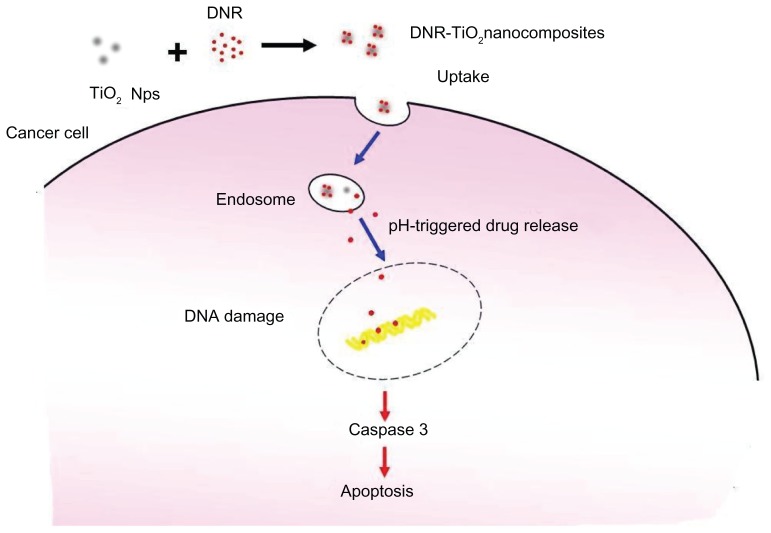
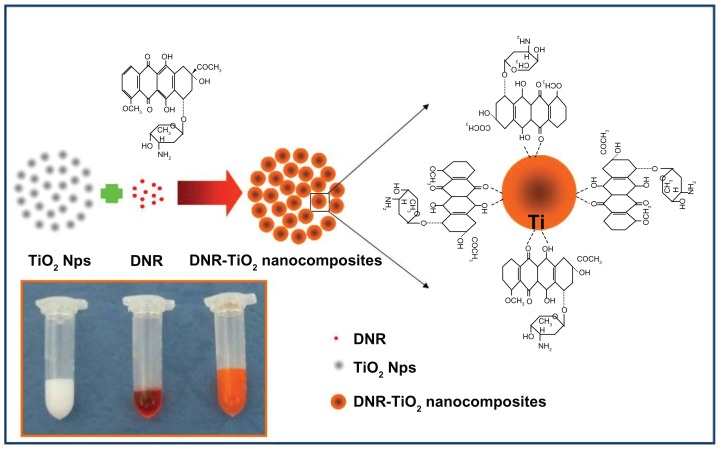
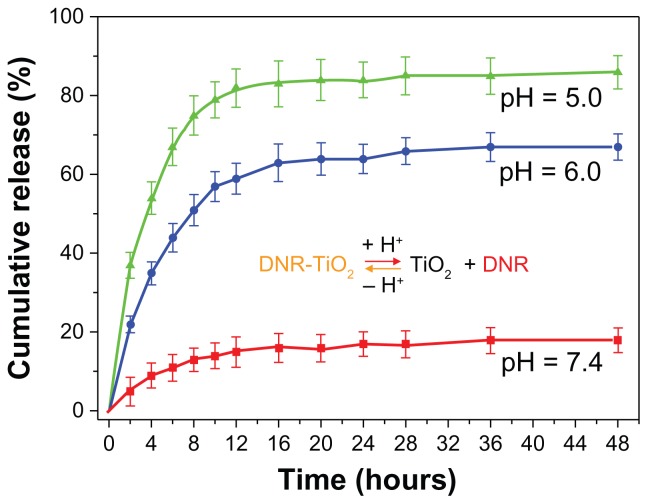
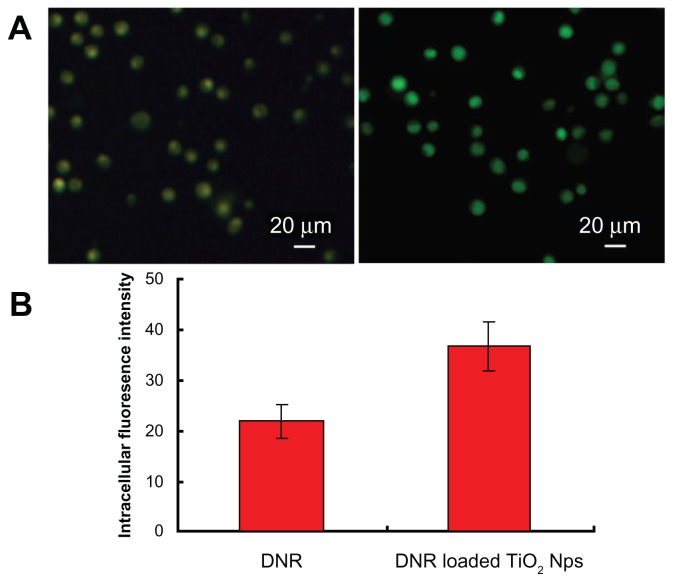
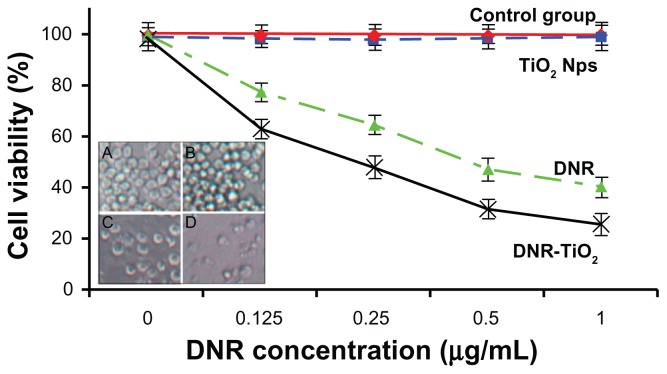
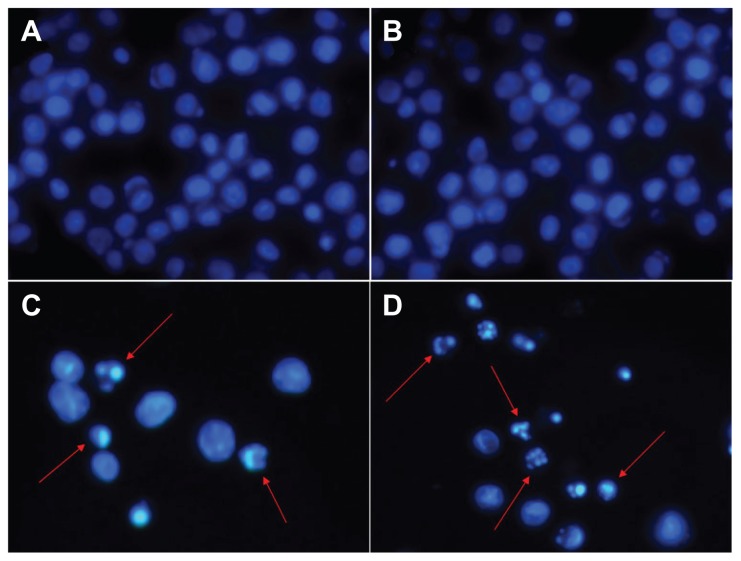
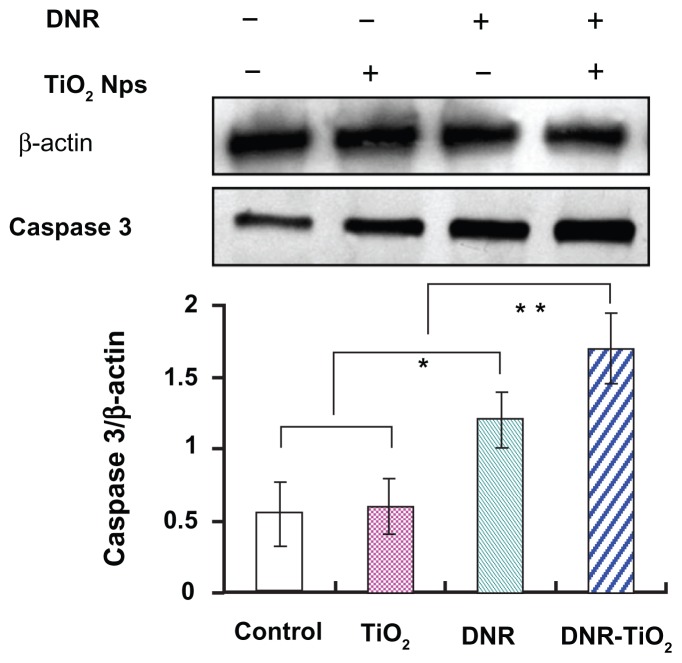
Daunorubicin (DNR) has a broad spectrum of anticancer activity, but is limited in clinical application due to its serious side effects. The aim of this study was to explore a novel "smart" pH-responsive drug delivery system (DDS) based on titanium dioxide (TiO(2)) nanoparticles for its potential in enabling more intelligent controlled release and enhancing chemotherapeutic efficiency of DNR. DNR was loaded onto TiO(2) nanoparticles by forming complexes with transition metal titanium to construct DNR-TiO(2) nanocomposites as a DDS. DNR was released from the DDS much more rapidly at pH 5.0 and 6.0 than at pH 7.4, which is a desirable characteristic for tumor-targeted drug delivery. DNR-TiO(2) nanocomposites induced remarkable improvement in anticancer activity, as demonstrated by flow cytometry, 3-(4,5-dimethylthiazol-2-yl)-2,5-diphenyltetrazolium bromide assay, and nuclear 4',6-diamidino- 2-phenylindole staining. Furthermore, the possible signaling pathway was explored by western blot. For instance, in human leukemia K562 cells, it was demonstrated that DNR-TiO(2) nanocomposites increase intracellular concentration of DNR and enhance its anticancer efficiency by inducing apoptosis in a caspase-dependent manner, indicating that DNR-TiO(2) nanocomposites could act as an efficient DDS importing DNR into target cancer cells. These findings suggest that "smart" DNR delivery strategy is a promising approach to cancer therapy.
柔红霉素(DNR)具有广谱的抗癌活性,但由于其严重的副作用,在临床应用中受到限制。本研究旨在探索一种新型基于二氧化钛(TiO(2))纳米粒子的“智能”pH 响应药物传递系统(DDS),以期实现更智能的控制释放,并提高 DNR 的化疗效率。通过与过渡金属钛形成配合物,将 DNR 负载到 TiO(2)纳米粒子上,构建 DNR-TiO(2)纳米复合材料作为 DDS。与 pH 7.4 相比,在 pH 5.0 和 6.0 时,DNR 从 DDS 中更快地释放出来,这是肿瘤靶向药物传递的理想特征。通过流式细胞术、3-(4,5-二甲基噻唑-2-基)-2,5-二苯基四氮唑溴盐测定法和核 4',6-二脒基-2-苯基吲哚染色,证实 DNR-TiO(2)纳米复合材料显著提高了抗癌活性。此外,通过 Western blot 探索了可能的信号通路。例如,在人白血病 K562 细胞中,DNR-TiO(2)纳米复合材料通过诱导 caspase 依赖性细胞凋亡,增加细胞内 DNR 浓度并增强其抗癌效率,表明 DNR-TiO(2)纳米复合材料可以作为一种有效的 DDS,将 DNR 导入靶癌细胞。这些发现表明,“智能”DNR 传递策略是癌症治疗的一种有前途的方法。