Departamento de Farmacología, Facultad de Veterinaria, Universidad de Santiago de Compostela, Campus Universitario, 27002 Lugo, Spain; E-Mails:
Sensors (Basel). 2009;9(11):9414-43. doi: 10.3390/s91109414. Epub 2009 Nov 24.
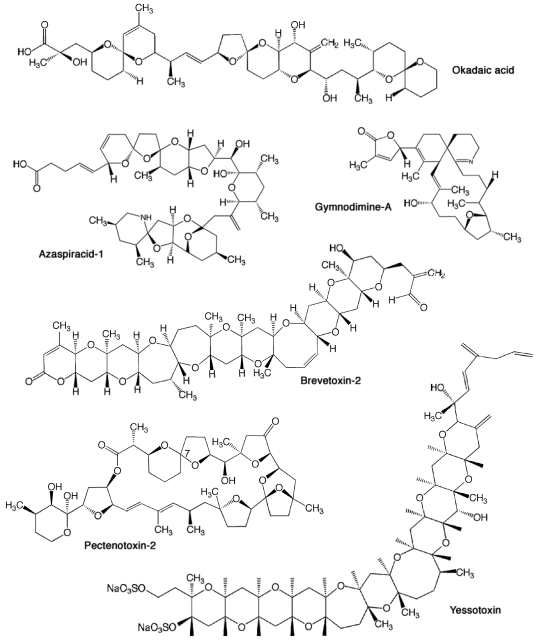
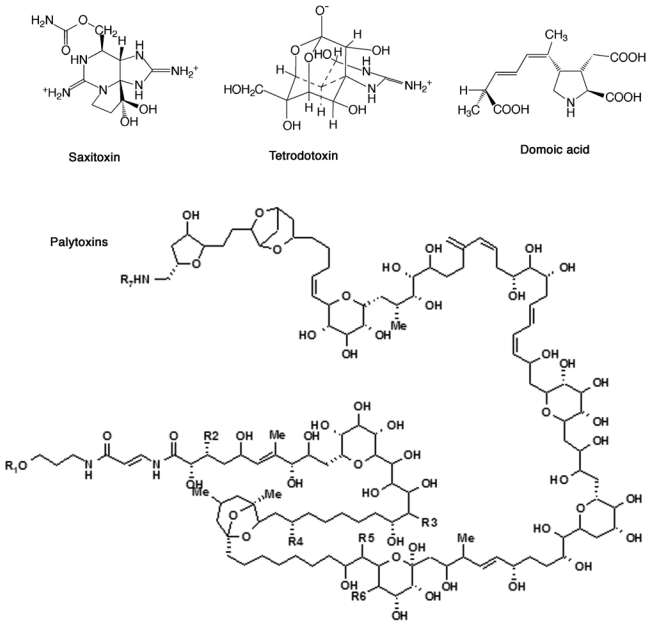
Marine toxins are currently monitored by means of a bioassay that requires the use of many mice, which poses a technical and ethical problem in many countries. With the exception of domoic acid, there is a legal requirement for the presence of other toxins (yessotoxin, saxitoxin and analogs, okadaic acid and analogs, pectenotoxins and azaspiracids) in seafood to be controlled by bioassay, but other toxins, such as palytoxin, cyclic imines, ciguatera and tetrodotoxin are potentially present in European food and there are no legal requirements or technical approaches available to identify their presence. The need for alternative methods to the bioassay is clearly important, and biosensors have become in recent years a feasible alternative to animal sacrifice. This review will discuss the advantages and disadvantages of using biosensors as alternatives to animal assays for marine toxins, with particular focus on surface plasmon resonance (SPR) technology.
海洋毒素目前通过生物测定法进行监测,该方法需要使用大量的老鼠,这在许多国家都存在技术和伦理问题。除了软骨藻酸以外,其他毒素(yessotoxin、石房蛤毒素及其类似物、冈田酸及其类似物、扇贝毒素和azaspiracids)在海鲜中的存在也需要通过生物测定法来控制,但是其他毒素,如鲍鱼毒素、环状亚胺、雪卡毒素和河豚毒素,可能存在于欧洲食品中,而目前没有确定其存在的法律要求或技术方法。显然,需要替代生物测定法的方法,而生物传感器近年来已成为替代动物牺牲的可行方法。本文将讨论使用生物传感器替代动物测定法检测海洋毒素的优缺点,特别关注表面等离子体共振(SPR)技术。