Department of Oncology, University Hospital of North Norway, Tromsφ, Norway.
PLoS One. 2012;7(1):e29671. doi: 10.1371/journal.pone.0029671. Epub 2012 Jan 25.
Angiogenesis is regarded as a hallmark in cancer development, and anti-angiogenic treatment is presently used in non-small cell lung cancer (NSCLC) patients. MicroRNAs (miRs) are small non-coding, endogenous, single stranded RNAs that regulate gene expression. In this study we aimed to identify significantly altered miRs related to angiogenesis in NSCLC.
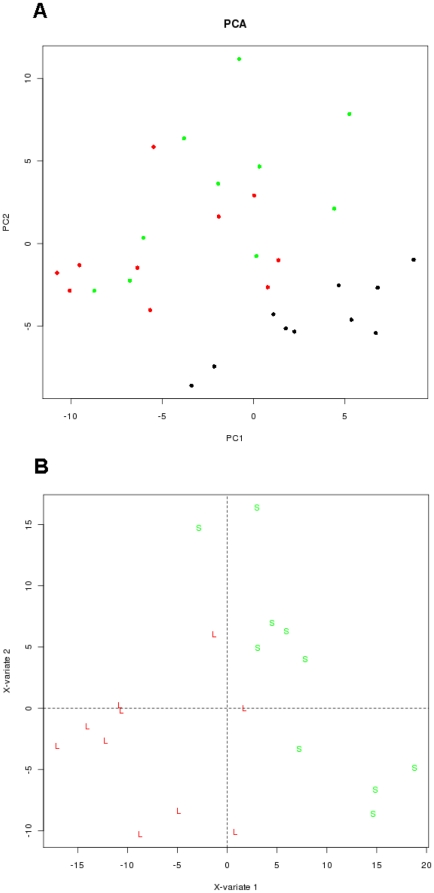
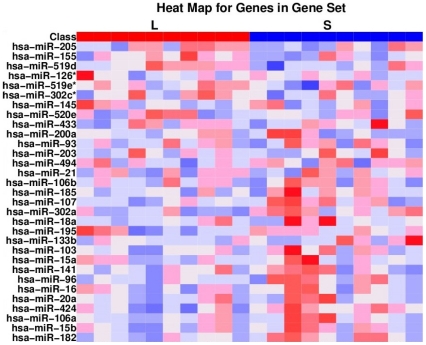
From a large cohort of 335 NSCLC patients, paraffin-embedded samples from 10 patients with a short disease specific survival (DSS), 10 with a long DSS and 10 normal controls were analyzed. The miRs were quantified by microarray hybridization and selected miRs were validated by real-time qPCR. The impacts of different pathways, including angiogenesis, were evaluated by Gene Set Enrichment Analysis (GSEA) derived from Protein ANalysis THrough Evolutionary Relationship (PANTHER). One of the most interesting candidate markers, miR-155, was validated by in situ hybridization (ISH) in the total cohort (n = 335) and correlation analyses with several well-known angiogenic markers were done.
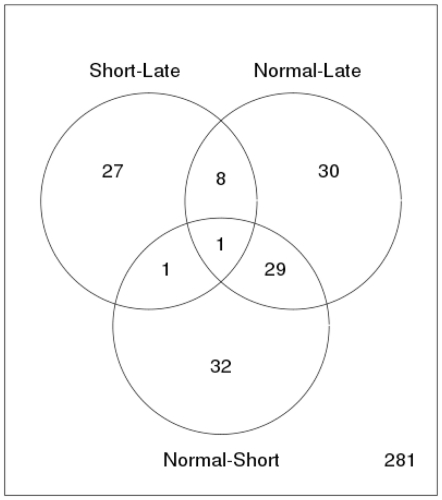
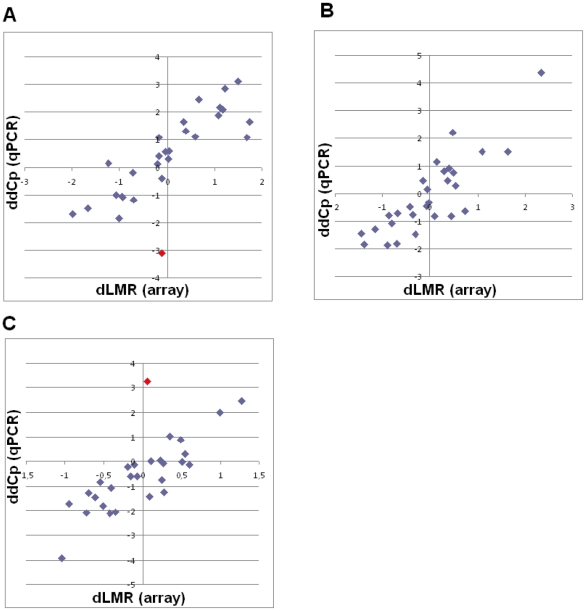
128 miRs were significantly up- or down-regulated; normal versus long DSS (n = 68) and/or normal versus short DSS (n = 63) and/or long versus short DSS (n = 37). The pathway analysis indicates angiogenesis-related miRs to be involved in NSCLC. There were strong significant correlations between the array hybridization and qPCR validation data. The significantly altered angiogenesis-related miRs of high interest were miR-21, miR-106a, miR-126, miR-155, miR-182, miR-210 and miR-424. miR-155 correlated significantly with fibroblast growth factor 2 (FGF2) in the total cohort (r = 0.17, P = 0.002), though most prominent in the subgroup with nodal metastasis (r = 0.34, P<0.001).
Several angiogenesis-related miRs are significantly altered in NSCLC. Further studies to understand their biological functions and explore their clinical relevance are warranted.
血管生成被认为是癌症发展的一个标志,目前在非小细胞肺癌(NSCLC)患者中使用抗血管生成治疗。microRNAs(miRs)是小的非编码、内源性、单链 RNA,可调节基因表达。本研究旨在鉴定与 NSCLC 血管生成相关的显著改变的 miRs。
从 335 例 NSCLC 患者的大队列中,分析了 10 例疾病特异性生存(DSS)较短、10 例 DSS 较长和 10 例正常对照患者的石蜡包埋样本。通过微阵列杂交定量分析 miRs,并通过实时 qPCR 验证选定的 miRs。通过来自蛋白质分析通过进化关系(PANTHER)的基因集富集分析(GSEA)评估不同途径的影响,包括血管生成。一个最有趣的候选标志物,miR-155,通过原位杂交(ISH)在总队列(n=335)中进行验证,并与几个已知的血管生成标志物进行相关性分析。
128 个 miRs 显著上调或下调;正常与长 DSS(n=68)和/或正常与短 DSS(n=63)和/或长与短 DSS(n=37)。通路分析表明血管生成相关的 miRs 参与 NSCLC。阵列杂交和 qPCR 验证数据之间存在很强的显著相关性。高关注的显著改变的血管生成相关 miRs 是 miR-21、miR-106a、miR-126、miR-155、miR-182、miR-210 和 miR-424。miR-155 在总队列中与成纤维细胞生长因子 2(FGF2)显著相关(r=0.17,P=0.002),但在淋巴结转移亚组中最为显著(r=0.34,P<0.001)。
几种与血管生成相关的 miRs 在 NSCLC 中显著改变。需要进一步研究以了解它们的生物学功能并探索它们的临床相关性。