Reczko Martin, Maragkakis Manolis, Alexiou Panagiotis, Papadopoulos Giorgio L, Hatzigeorgiou Artemis G
Institute of Molecular Oncology, Biomedical Sciences Research Center "Alexander Fleming" Vari, Greece.
Front Genet. 2012 Jan 18;2:103. doi: 10.3389/fgene.2011.00103. eCollection 2011.
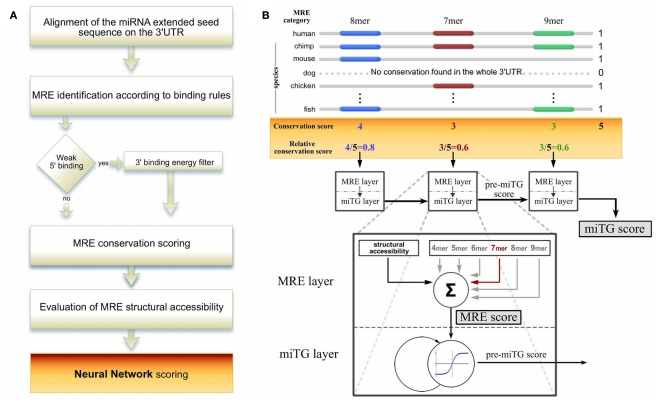
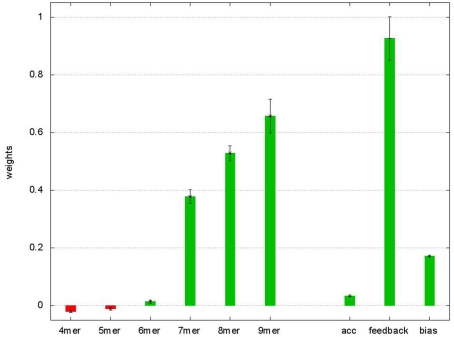
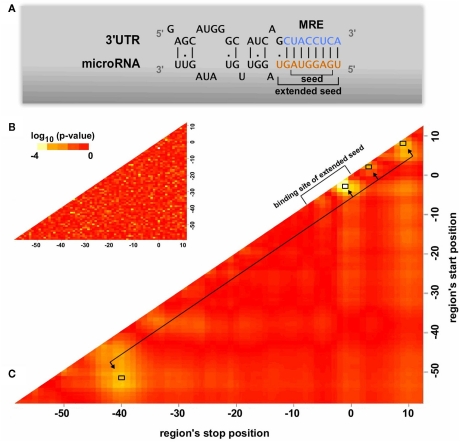
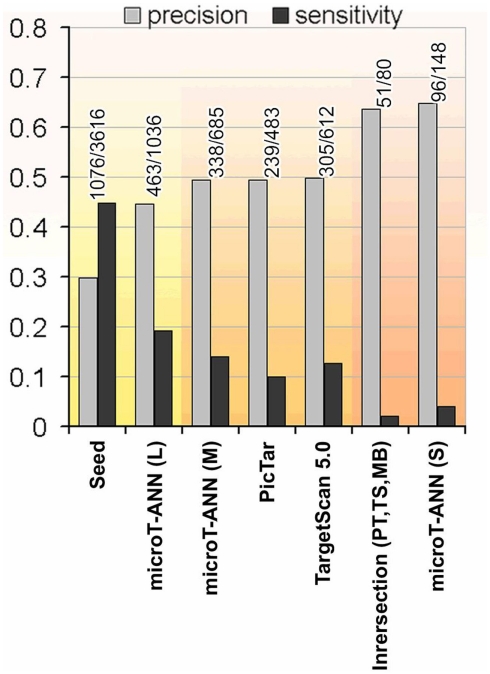
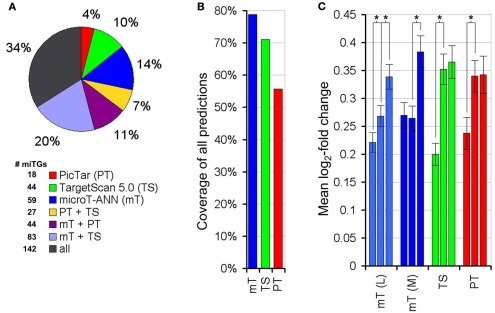
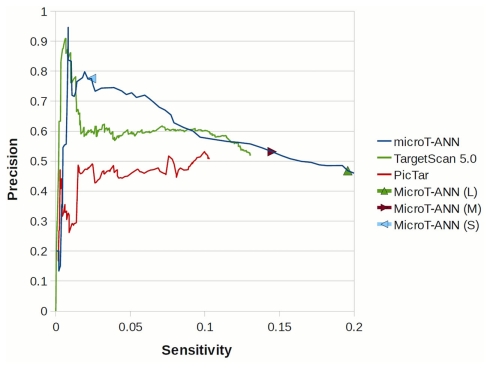
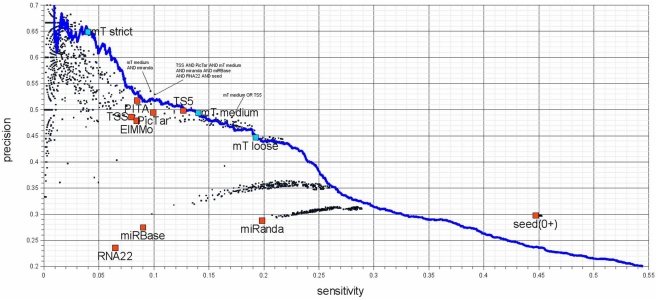
MicroRNAs (miRNAs) are a class of small regulatory genes regulating gene expression by targeting messenger RNA. Though computational methods for miRNA target prediction are the prevailing means to analyze their function, they still miss a large fraction of the targeted genes and additionally predict a large number of false positives. Here we introduce a novel algorithm called DIANA-microT-ANN which combines multiple novel target site features through an artificial neural network (ANN) and is trained using recently published high-throughput data measuring the change of protein levels after miRNA overexpression, providing positive and negative targeting examples. The features characterizing each miRNA recognition element include binding structure, conservation level, and a specific profile of structural accessibility. The ANN is trained to integrate the features of each recognition element along the 3'untranslated region into a targeting score, reproducing the relative repression fold change of the protein. Tested on two different sets the algorithm outperforms other widely used algorithms and also predicts a significant number of unique and reliable targets not predicted by the other methods. For 542 human miRNAs DIANA-microT-ANN predicts 120000 targets not provided by TargetScan 5.0. The algorithm is freely available at http://microrna.gr/microT-ANN.
微小RNA(miRNA)是一类通过靶向信使核糖核酸来调控基因表达的小调控基因。尽管用于miRNA靶标预测的计算方法是分析其功能的主要手段,但它们仍然遗漏了很大一部分靶基因,并且还预测出大量假阳性结果。在此,我们介绍一种名为DIANA-microT-ANN的新算法,该算法通过人工神经网络(ANN)整合多种新的靶位点特征,并使用最近发表的高通量数据进行训练,这些数据测量了miRNA过表达后蛋白质水平的变化,提供了正向和负向靶向实例。表征每个miRNA识别元件的特征包括结合结构、保守水平以及结构可及性的特定概况。训练ANN将沿着3'非翻译区的每个识别元件的特征整合为一个靶向分数,重现蛋白质的相对抑制倍数变化。在两组不同的数据上进行测试时,该算法优于其他广泛使用的算法,并且还预测出大量其他方法未预测到的独特且可靠的靶标。对于542个人类miRNA,DIANA-microT-ANN预测出了TargetScan 5.0未提供的120000个靶标。该算法可在http://microrna.gr/microT-ANN上免费获取。