Department of Aquaculture & Life Science, Shanghai Ocean University, Shanghai, China.
PLoS One. 2012;7(2):e30621. doi: 10.1371/journal.pone.0030621. Epub 2012 Feb 17.
DNA barcoding is one means of establishing a rapid, accurate, and cost-effective system for the identification of species. It involves the use of short, standard gene targets to create sequence profiles of known species against sequences of unknowns that can be matched and subsequently identified. The Fish Barcode of Life (FISH-BOL) campaign has the primary goal of gathering DNA barcode records for all the world's fish species. As a contribution to FISH-BOL, we examined the degree to which DNA barcoding can discriminate marine fishes from the South China Sea.
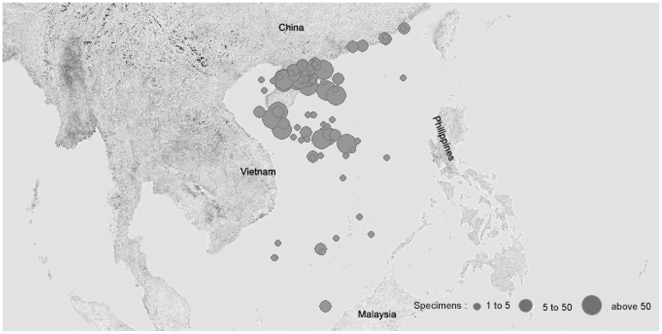
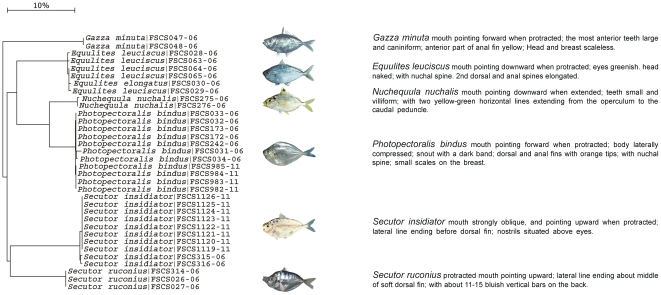
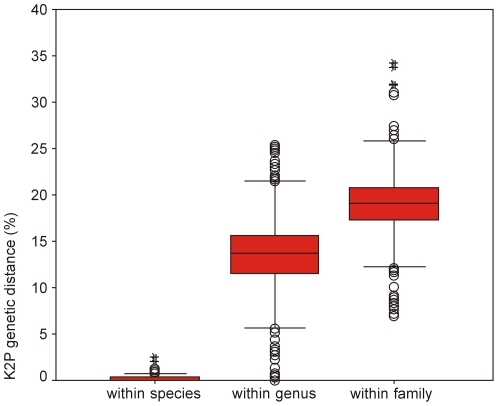
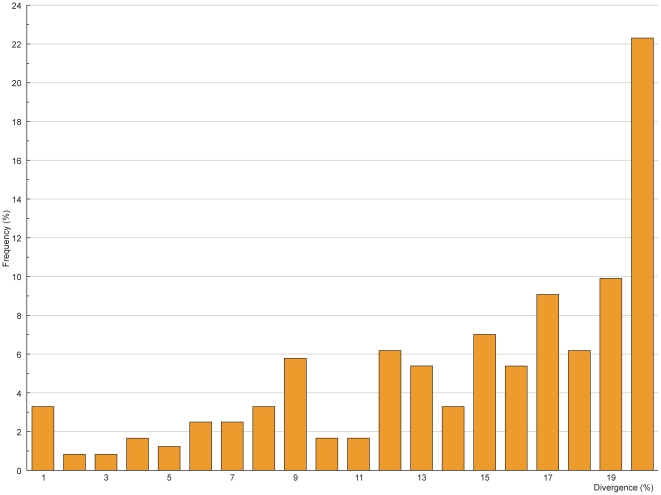
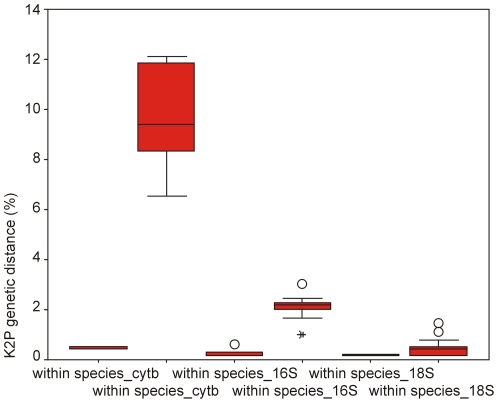
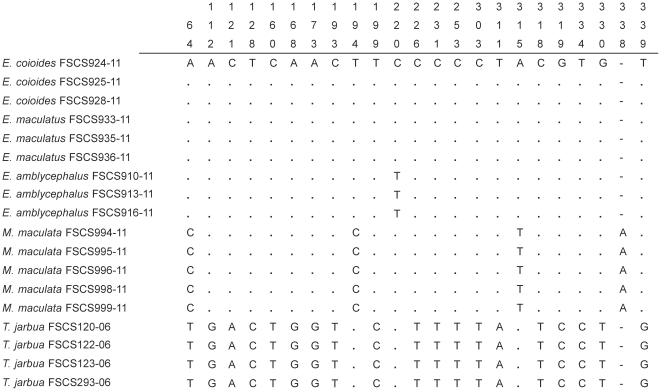
METHODOLOGY/PRINCIPAL FINDINGS: DNA barcodes of cytochrome oxidase subunit I (COI) were characterized using 1336 specimens that belong to 242 species fishes from the South China Sea. All specimen provenance data (including digital specimen images and geospatial coordinates of collection localities) and collateral sequence information were assembled using Barcode of Life Data System (BOLD; www.barcodinglife.org). Small intraspecific and large interspecific differences create distinct genetic boundaries among most species. In addition, the efficiency of two mitochondrial genes, 16S rRNA (16S) and cytochrome b (cytb), and one nuclear ribosomal gene, 18S rRNA (18S), was also evaluated for a few select groups of species.
CONCLUSIONS/SIGNIFICANCE: The present study provides evidence for the effectiveness of DNA barcoding as a tool for monitoring marine biodiversity. Open access data of fishes from the South China Sea can benefit relative applications in ecology and taxonomy.
DNA 条形码是一种建立快速、准确和具有成本效益的物种鉴定系统的方法。它涉及使用短的、标准的基因靶标,为已知物种创建序列图谱,与未知序列进行匹配,并随后进行鉴定。鱼类生命条形码(FISH-BOL)活动的主要目标是收集全球所有鱼类物种的 DNA 条形码记录。作为对 FISH-BOL 的贡献,我们研究了 DNA 条形码在多大程度上可以区分南海的海洋鱼类。
方法/主要发现:使用来自南海的 242 种鱼类的 1336 个标本,对细胞色素氧化酶亚基 I(COI)的 DNA 条形码进行了特征描述。所有标本来源数据(包括数字标本图像和采集地点的地理空间坐标)和旁系序列信息都使用生命条形码数据系统(BOLD;www.barcodinglife.org)进行了组装。小的种内差异和大的种间差异在大多数物种之间形成了明显的遗传界限。此外,还评估了两种线粒体基因 16S rRNA(16S)和细胞色素 b(cytb)以及一种核核糖体基因 18S rRNA(18S)在少数选定物种群中的效率。
结论/意义:本研究为 DNA 条形码作为监测海洋生物多样性的工具的有效性提供了证据。南海鱼类的开放获取数据可以有益于生态学和分类学的相关应用。