• 文献检索
  • 文档翻译
  • 深度研究
  • 学术资讯
  • Suppr Zotero 插件Zotero 插件
  • 邀请有礼
  • 套餐&价格
  • 历史记录
应用&插件
Suppr Zotero 插件Zotero 插件浏览器插件Mac 客户端Windows 客户端微信小程序
定价
高级版会员购买积分包购买API积分包
服务
文献检索文档翻译深度研究API 文档MCP 服务
关于我们
关于 Suppr公司介绍联系我们用户协议隐私条款
关注我们

Suppr 超能文献

核心技术专利:CN118964589B侵权必究
粤ICP备2023148730 号-1Suppr @ 2026

文献检索

告别复杂PubMed语法,用中文像聊天一样搜索,搜遍4000万医学文献。AI智能推荐,让科研检索更轻松。

立即免费搜索

文件翻译

保留排版,准确专业,支持PDF/Word/PPT等文件格式,支持 12+语言互译。

免费翻译文档

深度研究

AI帮你快速写综述,25分钟生成高质量综述,智能提取关键信息,辅助科研写作。

立即免费体验

纳米技术化妆品粉末产生的工程纳米颗粒吸入暴露的可能性。

Potential for inhalation exposure to engineered nanoparticles from nanotechnology-based cosmetic powders.

机构信息

Department of Environmental Sciences, Rutgers University, the State University of New Jersey, New Brunswick, New Jersey 08901, USA.

出版信息

Environ Health Perspect. 2012 Jun;120(6):885-92. doi: 10.1289/ehp.1104350. Epub 2012 Mar 6.

DOI:10.1289/ehp.1104350
PMID:22394622
原文链接:https://pmc.ncbi.nlm.nih.gov/articles/PMC3385434/
Abstract

BACKGROUND

The market of nanotechnology-based consumer products is rapidly expanding, and the lack of scientific evidence describing the accompanying exposure and health risks stalls the discussion regarding its guidance and regulation.

OBJECTIVES

We investigated the potential for human contact and inhalation exposure to nanomaterials when using nanotechnology-based cosmetic powders and compare them with analogous products not marketed as nanotechnology based.

METHODS

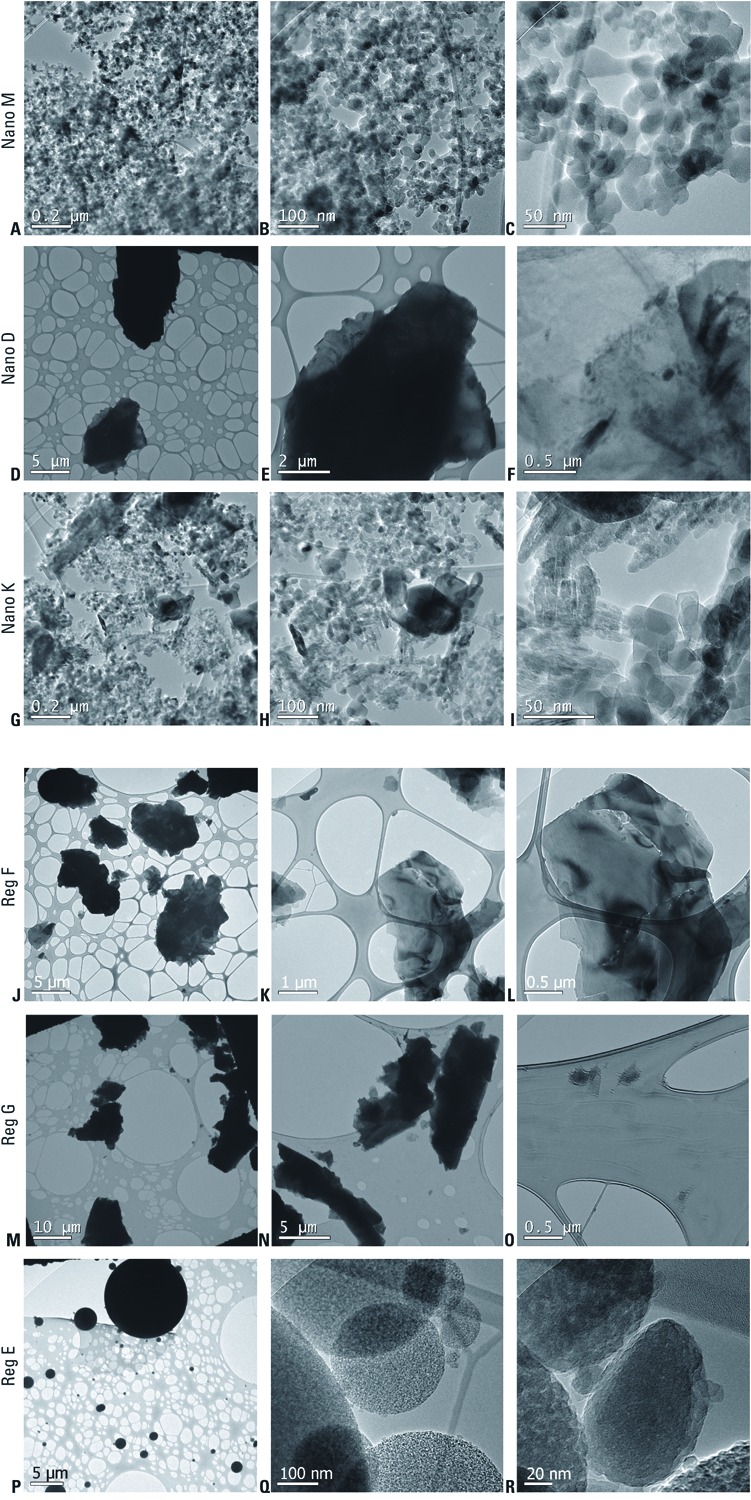
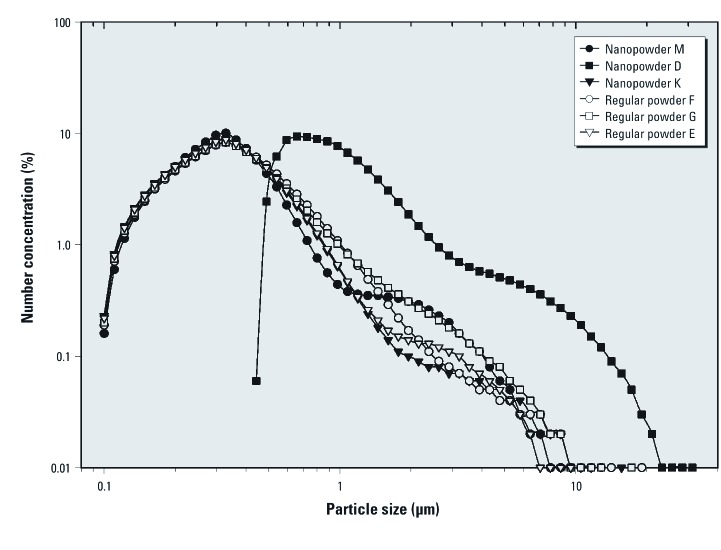
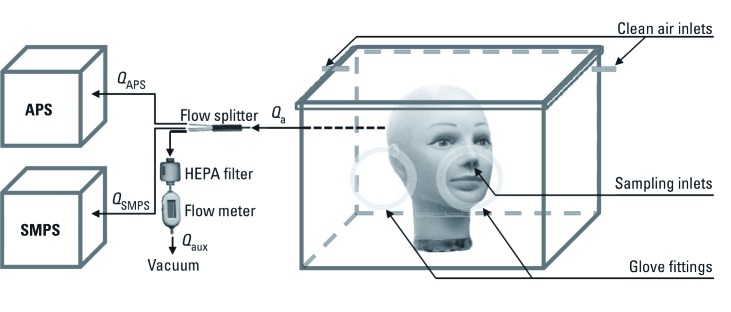
We characterized the products using transmission electron microscopy (TEM) and laser diffraction spectroscopy and found nanoparticles in five of six tested products. TEM photomicrographs showed highly agglomerated states of nanoparticles in the products. We realistically simulated the use of cosmetic powders by applying them to the face of a human mannequin head while simultaneously sampling the released airborne particles through the ports installed in the mannequin's nostrils.

RESULTS

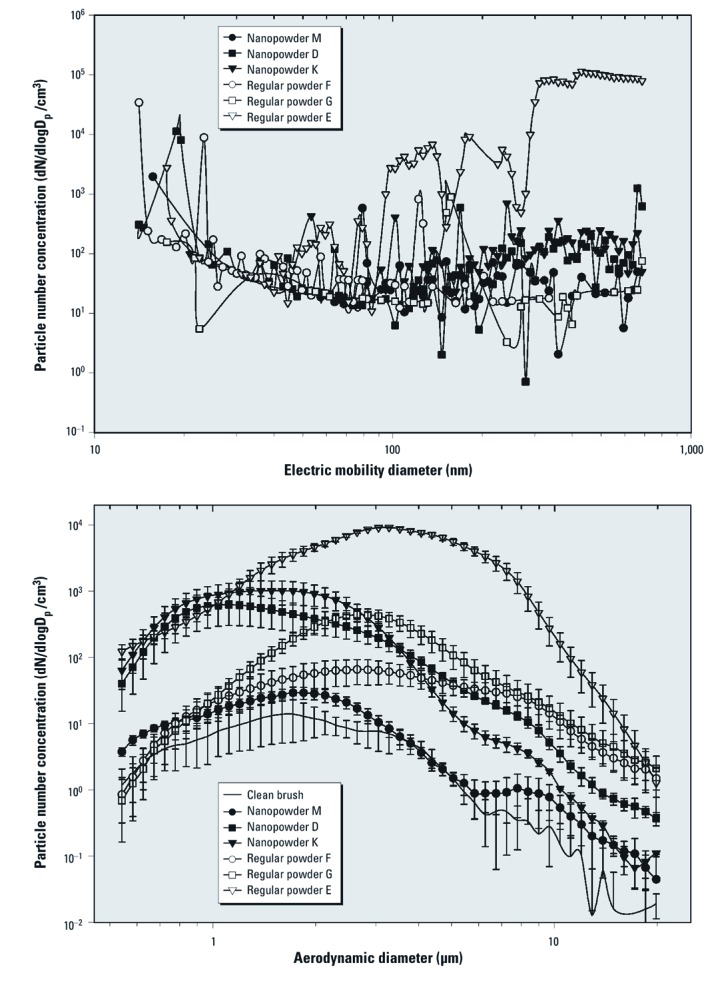
We found that a user would be exposed to nanomaterial predominantly through nanoparticle-containing agglomerates larger than the 1-100-nm aerosol fraction.

CONCLUSIONS

Predominant deposition of nanomaterial(s) will occur in the tracheobronchial and head airways--not in the alveolar region as would be expected based on the size of primary nanoparticles. This could potentially lead to different health effects than expected based on the current understanding of nanoparticle behavior and toxicology studies for the alveolar region.

摘要

背景

基于纳米技术的消费产品市场正在迅速扩张,由于缺乏描述相关暴露和健康风险的科学证据,关于其指导和监管的讨论陷入了僵局。

目的

当使用基于纳米技术的美容粉时,我们研究了人类接触和吸入纳米材料的可能性,并将其与未以纳米技术为卖点的类似产品进行了比较。

方法

我们使用透射电子显微镜(TEM)和激光衍射光谱对产品进行了表征,在六个测试产品中有五个产品中发现了纳米颗粒。TEM 照片显示产品中的纳米颗粒处于高度团聚状态。我们通过将美容粉应用于人体模型头部的面部,并同时通过安装在模型鼻孔中的端口对释放的空气传播颗粒进行采样,逼真地模拟了美容粉的使用。

结果

我们发现,使用者主要会通过大于 1-100nm 气溶胶部分的含有纳米颗粒的团聚体暴露于纳米材料。

结论

纳米材料(s)的主要沉积将发生在气管支气管和头部气道中,而不是肺泡区域,这与基于当前对纳米颗粒行为的理解和肺泡区域的毒理学研究预期的情况不同。这可能会导致与预期不同的健康影响。
https://cdn.ncbi.nlm.nih.gov/pmc/blobs/76fc/3385434/f54e201d94f6/ehp.1104350.g004.jpg
https://cdn.ncbi.nlm.nih.gov/pmc/blobs/76fc/3385434/ca7fa4f7b929/ehp.1104350.g001.jpg
https://cdn.ncbi.nlm.nih.gov/pmc/blobs/76fc/3385434/8e3d2a482988/ehp.1104350.g002.jpg
https://cdn.ncbi.nlm.nih.gov/pmc/blobs/76fc/3385434/b725dfdc4987/ehp.1104350.g003.jpg
https://cdn.ncbi.nlm.nih.gov/pmc/blobs/76fc/3385434/f54e201d94f6/ehp.1104350.g004.jpg
https://cdn.ncbi.nlm.nih.gov/pmc/blobs/76fc/3385434/ca7fa4f7b929/ehp.1104350.g001.jpg
https://cdn.ncbi.nlm.nih.gov/pmc/blobs/76fc/3385434/8e3d2a482988/ehp.1104350.g002.jpg
https://cdn.ncbi.nlm.nih.gov/pmc/blobs/76fc/3385434/b725dfdc4987/ehp.1104350.g003.jpg
https://cdn.ncbi.nlm.nih.gov/pmc/blobs/76fc/3385434/f54e201d94f6/ehp.1104350.g004.jpg

相似文献

1
Potential for inhalation exposure to engineered nanoparticles from nanotechnology-based cosmetic powders.纳米技术化妆品粉末产生的工程纳米颗粒吸入暴露的可能性。
Environ Health Perspect. 2012 Jun;120(6):885-92. doi: 10.1289/ehp.1104350. Epub 2012 Mar 6.
2
Nanomaterial inhalation exposure from nanotechnology-based cosmetic powders: a quantitative assessment.基于纳米技术的化妆品粉末导致的纳米材料吸入暴露:定量评估。
J Nanopart Res. 2012 Nov 1;14(11). doi: 10.1007/s11051-012-1229-2.
3
A compact exposure: estimating inhalation of engineered nanoparticles in cosmetic powders.一次紧密接触:估算化妆品粉末中工程纳米颗粒的吸入量
Environ Health Perspect. 2012 Jun;120(6):A245. doi: 10.1289/ehp.120-a245a.
4
Principles for the safety evaluation of cosmetic powders.化妆品用粉安全性评价原则
Toxicol Lett. 2018 Nov;297:8-18. doi: 10.1016/j.toxlet.2018.08.011. Epub 2018 Aug 17.
5
Potential for exposure to engineered nanoparticles from nanotechnology-based consumer spray products.纳米技术消费品喷雾产品中工程纳米颗粒的潜在暴露。
J Expo Sci Environ Epidemiol. 2011 Sep-Oct;21(5):515-28. doi: 10.1038/jes.2011.10. Epub 2011 Mar 2.
6
Nanotechnology and exposure science: what is needed to fill the research and data gaps for consumer products.纳米技术与暴露科学:填补消费品研究和数据空白所需的条件。
Int J Occup Environ Health. 2010 Oct-Dec;16(4):378-87. doi: 10.1179/107735210799160057.
7
Potential consumer exposure to respirable particles and TiO due to the use of eyebrow powders.由于使用眉粉,消费者可能会吸入可吸入颗粒物和 TiO。
J Expo Sci Environ Epidemiol. 2021 Nov;31(6):1032-1046. doi: 10.1038/s41370-020-00278-1. Epub 2020 Nov 18.
8
Inhalation exposure during spray application and subsequent sanding of a wood sealant containing zinc oxide nanoparticles.在喷涂含氧化锌纳米颗粒的木材密封剂以及随后进行打磨过程中的吸入暴露。
J Occup Environ Hyg. 2017 Jul;14(7):510-522. doi: 10.1080/15459624.2017.1296237.
9
Spatial-Temporal Dispersion of Aerosolized Nanoparticles During the Use of Consumer Spray Products and Estimates of Inhalation Exposure.气溶胶纳米粒子在消费者喷雾产品使用过程中的时空分散及其吸入暴露的估算。
Environ Sci Technol. 2017 Jul 5;51(13):7624-7638. doi: 10.1021/acs.est.7b00211. Epub 2017 May 24.
10
Characterization of an aerosol generation system to assess inhalation risks of aerosolized nano-enabled consumer products.用于评估气溶胶化纳米增强型消费产品吸入风险的气溶胶发生系统的特性描述。
Inhal Toxicol. 2019 Aug-Aug;31(9-10):357-367. doi: 10.1080/08958378.2019.1685613. Epub 2019 Nov 29.

引用本文的文献

1
A Mean Field Poisson-Boltzmann Theory Assessment of Copper Oxide Nanosheets Interaction Potential in Physiological Fluids.生理流体中氧化铜纳米片相互作用势的平均场泊松-玻尔兹曼理论评估
Nanomaterials (Basel). 2025 Aug 29;15(17):1330. doi: 10.3390/nano15171330.
2
Potential consumer exposure to respirable particles and TiO due to the use of eyebrow powders.由于使用眉粉,消费者可能会吸入可吸入颗粒物和 TiO。
J Expo Sci Environ Epidemiol. 2021 Nov;31(6):1032-1046. doi: 10.1038/s41370-020-00278-1. Epub 2020 Nov 18.
3
Need for assessing the inhalation of micro(nano)plastic debris shed from masks, respirators, and home-made face coverings during the COVID-19 pandemic.

本文引用的文献

1
Potential for exposure to engineered nanoparticles from nanotechnology-based consumer spray products.纳米技术消费品喷雾产品中工程纳米颗粒的潜在暴露。
J Expo Sci Environ Epidemiol. 2011 Sep-Oct;21(5):515-28. doi: 10.1038/jes.2011.10. Epub 2011 Mar 2.
2
Engineered nanoparticles in consumer products: understanding a new ingredient.消费品中的工程纳米颗粒:了解一种新成分。
Environ Health Perspect. 2011 Mar;119(3):a120-5. doi: 10.1289/ehp.119-a120.
3
Nanotechnology and exposure science: what is needed to fill the research and data gaps for consumer products.
在新冠疫情期间评估口罩、呼吸器和自制面罩脱落的微(纳)塑料碎片吸入情况的必要性。
Environ Pollut. 2021 Jan 1;268(Pt B):115728. doi: 10.1016/j.envpol.2020.115728. Epub 2020 Oct 6.
4
Characterization of Airborne Particle Release from Nanotechnology-enabled Clothing Products.纳米技术功能服装产品的空气传播颗粒释放特性
J Nanopart Res. 2018 Dec;20(12). doi: 10.1007/s11051-018-4435-8. Epub 2018 Dec 15.
5
Ultrafine particles in scanning sprays: a standardized examination of five powders used for dental reconstruction.扫描喷雾中的超细颗粒:用于牙齿重建的五种粉末的标准化检测
J Occup Med Toxicol. 2020 Jun 29;15:20. doi: 10.1186/s12995-020-00271-2. eCollection 2020.
6
Advancing the Understanding of Environmental Transformations, Bioavailability and Effects of Nanomaterials, an International US Environmental Protection Agency-UK Environmental Nanoscience Initiative Joint Program.增进对纳米材料的环境转化、生物可利用性及影响的理解,这是美国环境保护局 - 英国环境纳米科学倡议的一项国际联合项目。
J Environ Prot (Irvine, Calif). 2018 Apr 2;9(4):385-404. doi: 10.4236/jep.2018.94025.
7
Nanotechnology in the real world: Redeveloping the nanomaterial consumer products inventory.现实世界中的纳米技术:重新编制纳米材料消费品清单。
Beilstein J Nanotechnol. 2015 Aug 21;6:1769-80. doi: 10.3762/bjnano.6.181. eCollection 2015.
8
Quantitative assessment of inhalation exposure and deposited dose of aerosol from nanotechnology-based consumer sprays.基于纳米技术的消费喷雾吸入暴露和气溶胶沉积剂量的定量评估。
Environ Sci Nano. 2014 Apr;1(2):161-171. doi: 10.1039/C3EN00053B.
9
Toxicity of silver nanoparticles at the air-liquid interface.银纳米粒子在气-液界面的毒性。
Biomed Res Int. 2013;2013:328934. doi: 10.1155/2013/328934. Epub 2012 Dec 24.
10
Nanomaterial inhalation exposure from nanotechnology-based cosmetic powders: a quantitative assessment.基于纳米技术的化妆品粉末导致的纳米材料吸入暴露:定量评估。
J Nanopart Res. 2012 Nov 1;14(11). doi: 10.1007/s11051-012-1229-2.
纳米技术与暴露科学:填补消费品研究和数据空白所需的条件。
Int J Occup Environ Health. 2010 Oct-Dec;16(4):378-87. doi: 10.1179/107735210799160057.
4
Nanotoxicology: characterizing the scientific literature, 2000-2007.纳米毒理学:梳理2000年至2007年的科学文献
J Nanopart Res. 2009 Feb;11(2):251-257. doi: 10.1007/s11051-008-9579-5. Epub 2008 Dec 28.
5
Ultraviolet and visible imaginary refractive index of strongly absorbing atmospheric particulate matter.强吸收性大气颗粒物的紫外和可见光虚折射率
Appl Opt. 1992 Apr 20;31(12):2112-5. doi: 10.1364/AO.31.002112.
6
Exposure, uptake, distribution and toxicity of nanomaterials in humans.纳米材料在人体内的暴露、摄取、分布和毒性。
J Biomed Nanotechnol. 2010 Feb;6(1):1-19. doi: 10.1166/jbn.2010.1098.
7
Human safety review of "nano" titanium dioxide and zinc oxide.“纳米”二氧化钛和氧化锌的人体安全评估。
Photochem Photobiol Sci. 2010 Apr;9(4):495-509. doi: 10.1039/b9pp00180h.
8
Exposure science: a view of the past and milestones for the future.暴露科学:回顾过去与展望未来
Environ Health Perspect. 2010 Aug;118(8):1081-90. doi: 10.1289/ehp.0901634. Epub 2010 Mar 22.
9
A review of the in vivo and in vitro toxicity of silver and gold particulates: particle attributes and biological mechanisms responsible for the observed toxicity.一种关于银和金颗粒的体内和体外毒性的综述:负责观察到的毒性的颗粒特性和生物学机制。
Crit Rev Toxicol. 2010 Apr;40(4):328-46. doi: 10.3109/10408440903453074.
10
Study on penetration of titanium dioxide (TiO(2)) nanoparticles into intact and damaged skin in vitro.研究体外条件下 TiO(2)纳米颗粒对完整皮肤和损伤皮肤的穿透性。
J Toxicol Sci. 2010 Feb;35(1):107-13. doi: 10.2131/jts.35.107.