
不同的选择压力会导致新形成的杂交酵母进化时产生不同的基因组结果。
Different selective pressures lead to different genomic outcomes as newly-formed hybrid yeasts evolve.
机构信息
Chemical Genomics Research Group, RIKEN Advance Science Institute, Wako, Wako, Japan.
出版信息
BMC Evol Biol. 2012 Apr 2;12:46. doi: 10.1186/1471-2148-12-46.
BACKGROUND
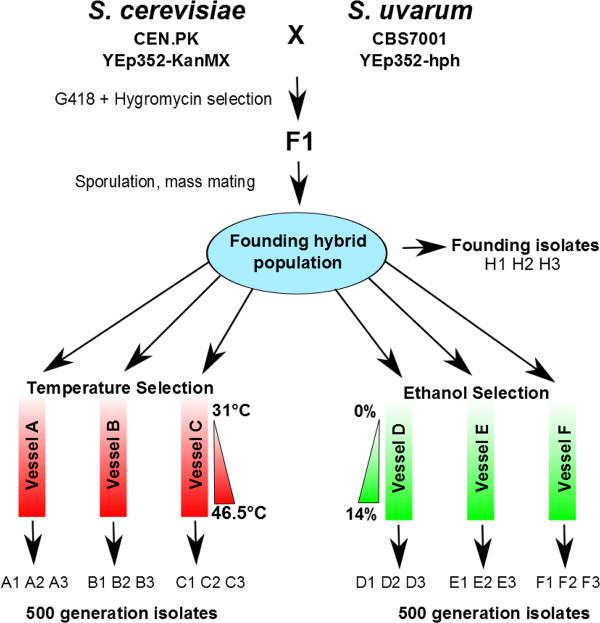
Interspecific hybridization occurs in every eukaryotic kingdom. While hybrid progeny are frequently at a selective disadvantage, in some instances their increased genome size and complexity may result in greater stress resistance than their ancestors, which can be adaptively advantageous at the edges of their ancestors' ranges. While this phenomenon has been repeatedly documented in the field, the response of hybrid populations to long-term selection has not often been explored in the lab. To fill this knowledge gap we crossed the two most distantly related members of the Saccharomyces sensu stricto group, S. cerevisiae and S. uvarum, and established a mixed population of homoploid and aneuploid hybrids to study how different types of selection impact hybrid genome structure.
RESULTS
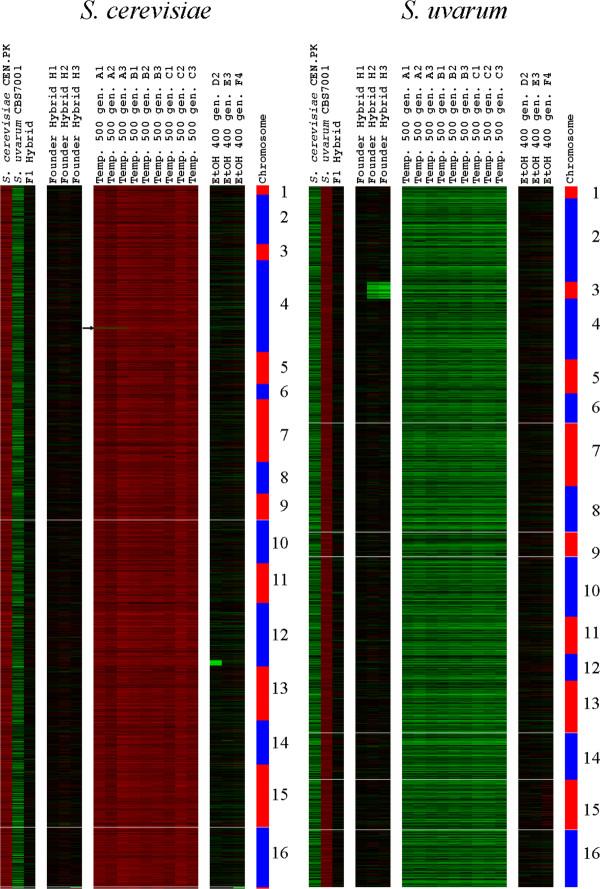
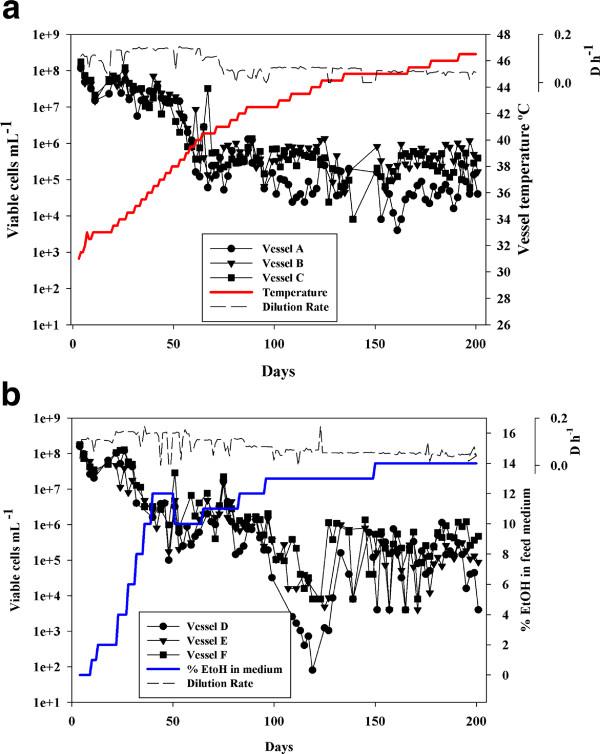
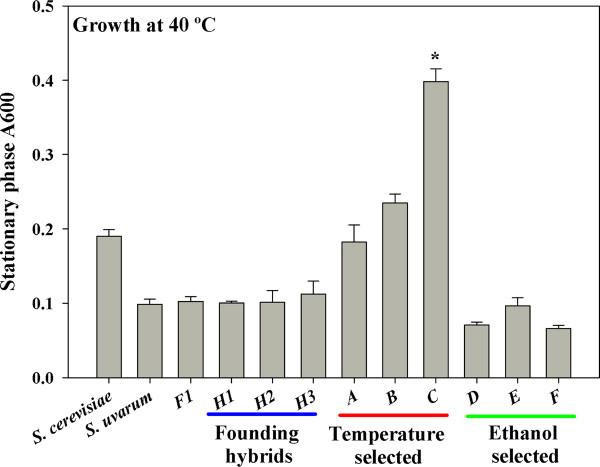
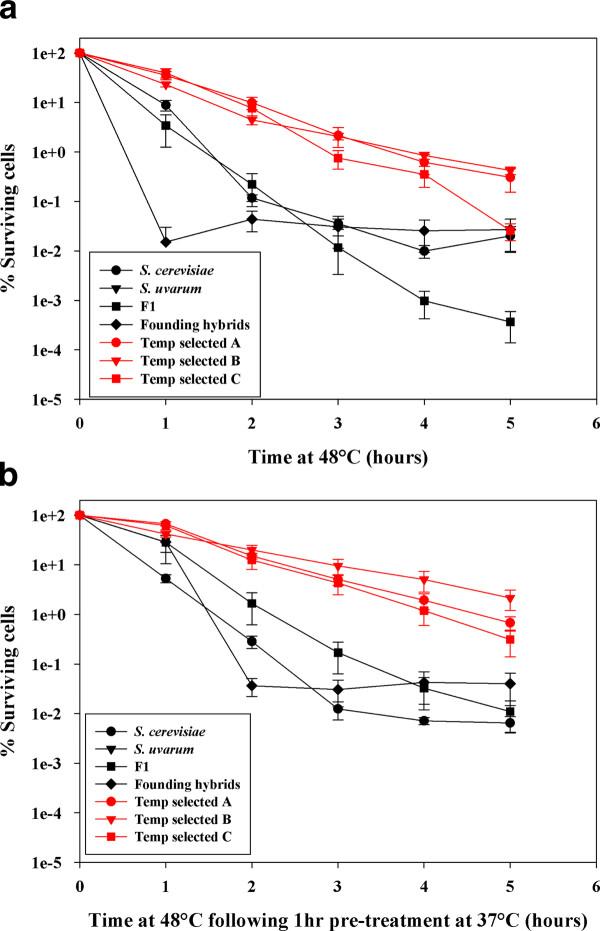
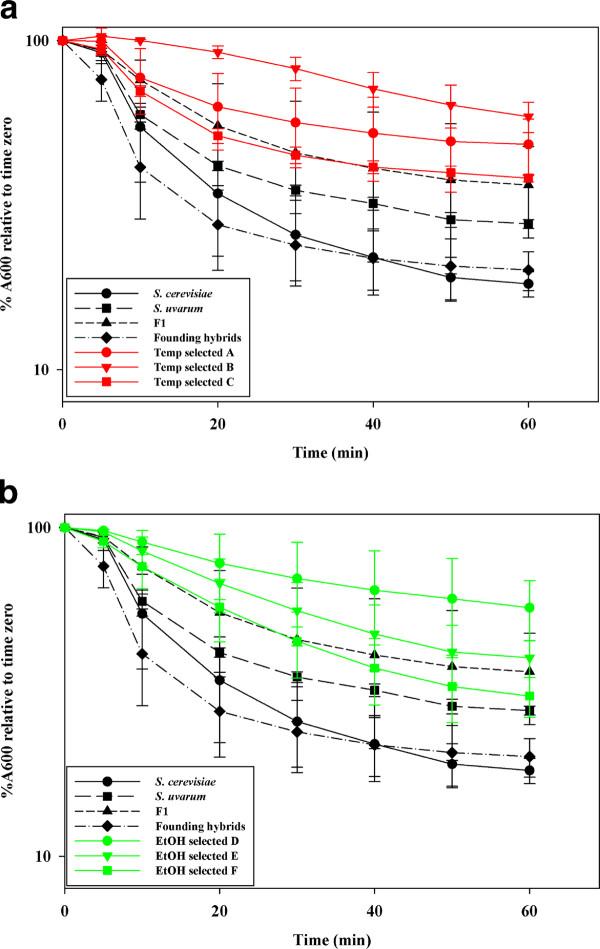
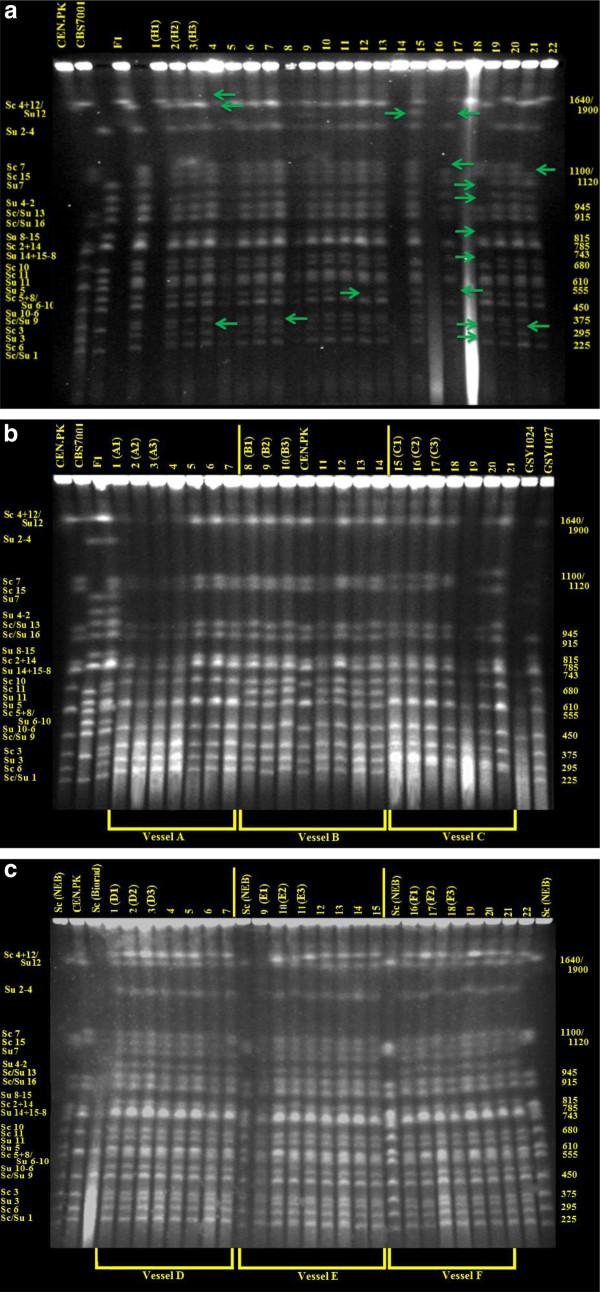
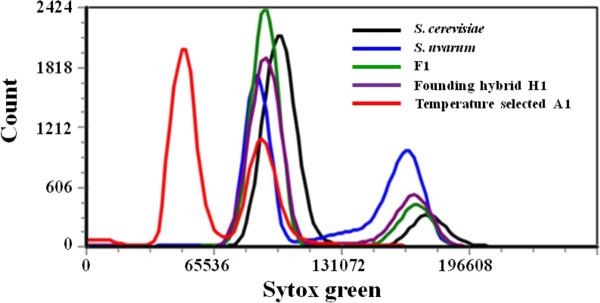
As temperature was raised incrementally from 31°C to 46.5°C over 500 generations of continuous culture, selection favored loss of the S. uvarum genome, although the kinetics of genome loss differed among independent replicates. Temperature-selected isolates exhibited greater inherent and induced thermal tolerance than parental species and founding hybrids, and also exhibited ethanol resistance. In contrast, as exogenous ethanol was increased from 0% to 14% over 500 generations of continuous culture, selection favored euploid S. cerevisiae x S. uvarum hybrids. Ethanol-selected isolates were more ethanol tolerant than S. uvarum and one of the founding hybrids, but did not exhibit resistance to temperature stress. Relative to parental and founding hybrids, temperature-selected strains showed heritable differences in cell wall structure in the forms of increased resistance to zymolyase digestion and Micafungin, which targets cell wall biosynthesis.
CONCLUSIONS
This is the first study to show experimentally that the genomic fate of newly-formed interspecific hybrids depends on the type of selection they encounter during the course of evolution, underscoring the importance of the ecological theatre in determining the outcome of the evolutionary play.
背景
种间杂交发生在每个真核生物界。虽然杂种后代经常处于选择劣势,但在某些情况下,它们增加的基因组大小和复杂性可能导致比其祖先更强的抗逆性,这在其祖先分布范围的边缘可能具有适应性优势。虽然这种现象在野外已经被反复记录,但杂交种群对长期选择的反应在实验室中并没有经常被探索。为了填补这一知识空白,我们将酿酒酵母属中亲缘关系最远的两个成员 S. cerevisiae 和 S. uvarum 进行杂交,并建立了同源和非整倍体杂种的混合种群,以研究不同类型的选择如何影响杂种基因组结构。
结果
在连续培养 500 代的过程中,将温度从 31°C 逐渐升高到 46.5°C,选择有利于 S. uvarum 基因组的丢失,尽管不同独立重复的基因组丢失动力学不同。经过温度选择的分离株比亲本种和奠基杂种表现出更高的固有和诱导耐热性,同时也表现出对乙醇的抗性。相比之下,在连续培养 500 代的过程中,随着外源乙醇从 0%增加到 14%,选择有利于 S. cerevisiae x S. uvarum 杂种的整倍体。经过乙醇选择的分离株比 S. uvarum 和一个奠基杂种更能耐受乙醇,但对温度胁迫没有抗性。与亲本和奠基杂种相比,经过温度选择的菌株在细胞壁结构方面表现出可遗传的差异,表现为对几丁质酶消化和米卡芬净(一种靶向细胞壁生物合成的药物)的抗性增加。
结论
这是首次通过实验证明,新形成的种间杂种的基因组命运取决于它们在进化过程中遇到的选择类型,这突显了生态环境在决定进化结果中的重要性。
 Zotero 插件