Centre for Chronobiology, Faculty of Health and Medical Sciences, University of Surrey, Guildford, Surrey, UK.
Chronobiol Int. 2012 May;29(4):379-94. doi: 10.3109/07420528.2012.668997. Epub 2012 Apr 12.
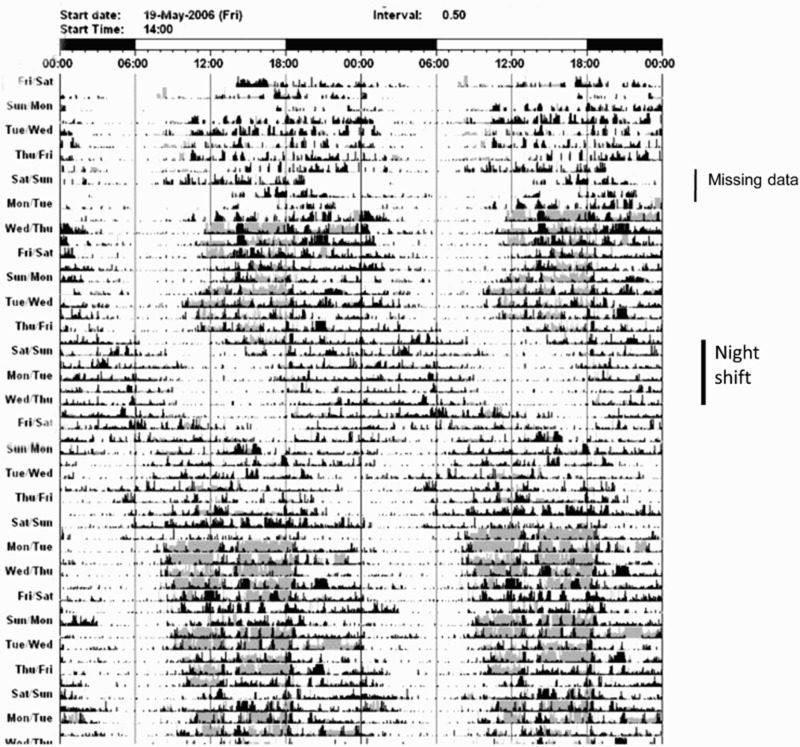
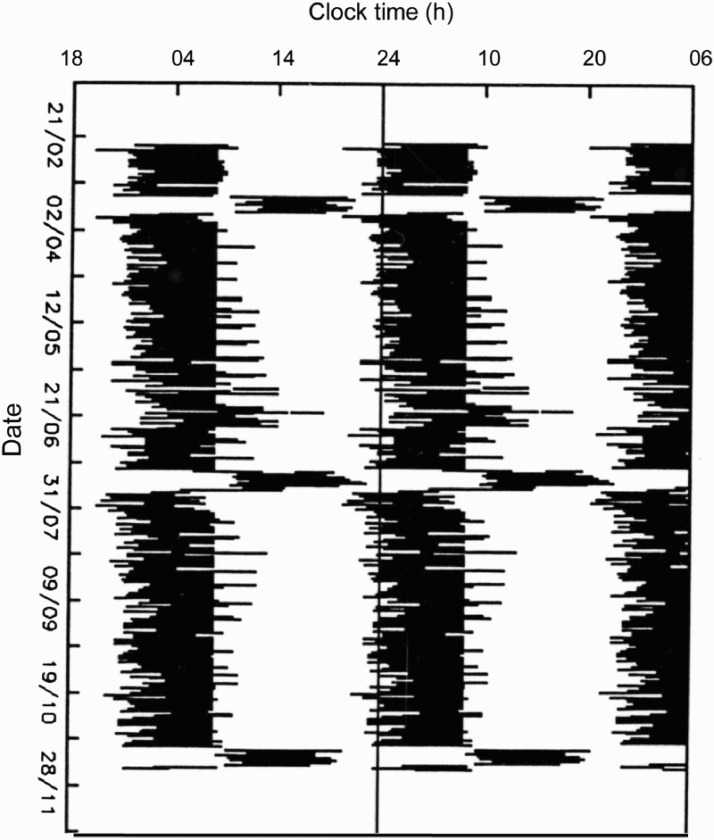
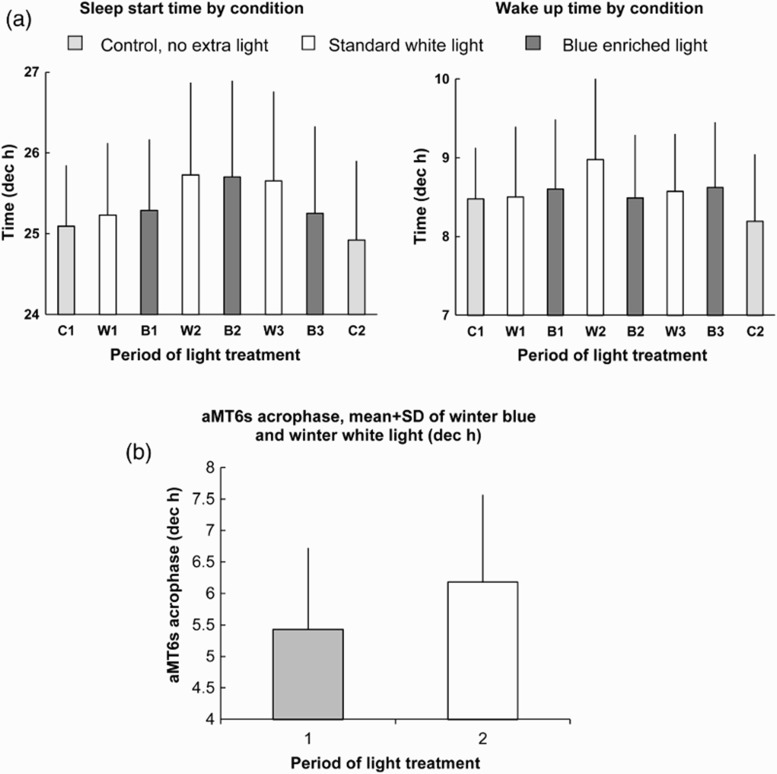
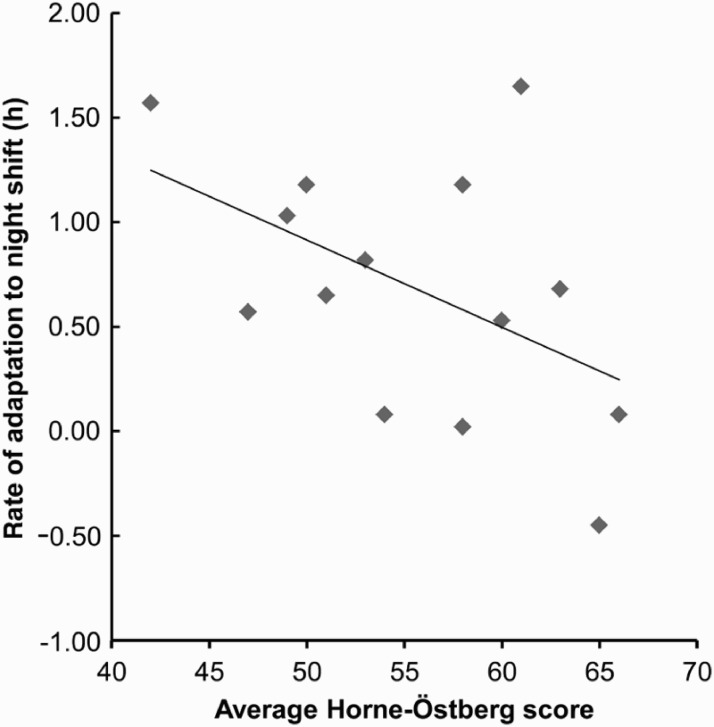
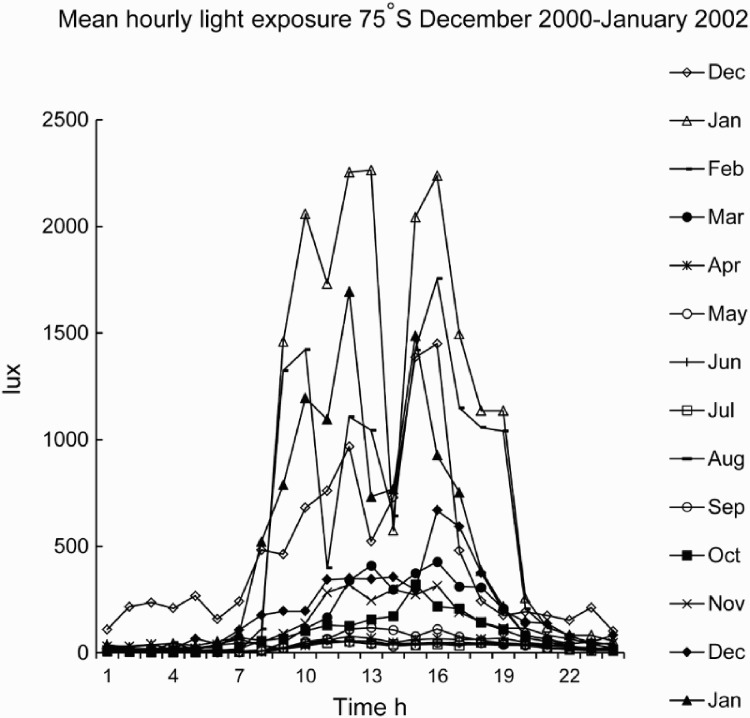
At Arctic and Antarctic latitudes, personnel are deprived of natural sunlight in winter and have continuous daylight in summer: light of sufficient intensity and suitable spectral composition is the main factor that maintains the 24-h period of human circadian rhythms. Thus, the status of the circadian system is of interest. Moreover, the relatively controlled artificial light conditions in winter are conducive to experimentation with different types of light treatment. The hormone melatonin and/or its metabolite 6-sulfatoxymelatonin (aMT6s) provide probably the best index of circadian (and seasonal) timing. A frequent observation has been a delay of the circadian system in winter. A skeleton photoperiod (2 × 1-h, bright white light, morning and evening) can restore summer timing. A single 1-h pulse of light in the morning may be sufficient. A few people desynchronize from the 24-h day (free-run) and show their intrinsic circadian period, usually >24 h. With regard to general health in polar regions, intermittent reports describe abnormalities in various physiological processes from the point of view of daily and seasonal rhythms, but positive health outcomes are also published. True winter depression (SAD) appears to be rare, although subsyndromal SAD is reported. Probably of most concern are the numerous reports of sleep problems. These have prompted investigations of the underlying mechanisms and treatment interventions. A delay of the circadian system with "normal" working hours implies sleep is attempted at a suboptimal phase. Decrements in sleep efficiency, latency, duration, and quality are also seen in winter. Increasing the intensity of ambient light exposure throughout the day advanced circadian phase and was associated with benefits for sleep: blue-enriched light was slightly more effective than standard white light. Effects on performance remain to be fully investigated. At 75°S, base personnel adapt the circadian system to night work within a week, in contrast to temperate zones where complete adaptation rarely occurs. A similar situation occurs on high-latitude North Sea oil installations, especially when working 18:00-06:00 h. Lack of conflicting light exposure (and "social obligations") is the probable explanation. Many have problems returning to day work, showing circadian desynchrony. Timed light treatment again has helped to restore normal phase/sleep in a small number of people. Postprandial response to meals is compromised during periods of desynchrony with evidence of insulin resistance and elevated triglycerides, risk factors for heart disease. Only small numbers of subjects have been studied intensively in polar regions; however, these observations suggest that suboptimal light conditions are deleterious to health. They apply equally to people living in temperate zones with insufficient light exposure.
在北极和南极地区,冬季人员会失去自然光,夏季则会持续有日光:足够强度和适宜光谱组成的光,是维持人类 24 小时昼夜节律的主要因素。因此,昼夜节律系统的状态很重要。此外,冬季相对可控的人工光照条件有利于不同类型的光照治疗实验。激素褪黑素和/或其代谢产物 6-硫酸褪黑素(aMT6s)可能是昼夜节律(和季节性)计时的最佳指标。经常观察到的是冬季昼夜节律系统的延迟。一个骨架光周期(2×1 小时,明亮的白光,早晚各一次)可以恢复夏季的时间安排。早上单次 1 小时的光脉冲可能就足够了。少数人会与 24 小时的一天不同步(自由运行),显示出他们的固有昼夜周期,通常 >24 小时。关于极地地区的一般健康,间歇性报告从日常和季节性节律的角度描述了各种生理过程的异常,但也有积极的健康结果发表。真正的冬季抑郁(SAD)似乎很少见,尽管有亚综合征 SAD 的报道。最令人关注的可能是大量睡眠问题的报告。这促使人们对潜在机制和治疗干预措施进行了调查。昼夜节律系统的延迟与“正常”工作时间意味着试图在不合适的阶段入睡。冬季还会出现睡眠效率、潜伏期、持续时间和质量的下降。白天增加环境光照暴露强度可以提前昼夜节律相位,并对睡眠有益:富含蓝光的光比标准白光更有效。对性能的影响仍有待充分研究。在南纬 75°处,基础人员在一周内适应夜间工作的昼夜节律系统,而在温带地区,很少能完全适应。在高纬度北海石油设施中也会出现类似的情况,尤其是当工作时间为 18:00-06:00 时。缺乏冲突的光照暴露(和“社会义务”)可能是原因。许多人在返回白天工作时都有问题,表现出昼夜节律不同步。定时光照治疗再次帮助少数人恢复正常相位/睡眠。在不同步期间,餐后对食物的反应会受到影响,证据表明存在胰岛素抵抗和甘油三酯升高,这是心脏病的危险因素。在极地地区,只有少数人被深入研究;然而,这些观察结果表明,光照条件不佳对健康有害。它们同样适用于光照不足的温带地区的人们。