Sindt Christine W, Grout Trudy K, Critser D Brice, Kern Jami R, Meadows David L
University of Iowa Hospitals and Clinics, Iowa City, IA.
Clin Ophthalmol. 2012;6:511-9. doi: 10.2147/OPTH.S28083. Epub 2012 Mar 28.
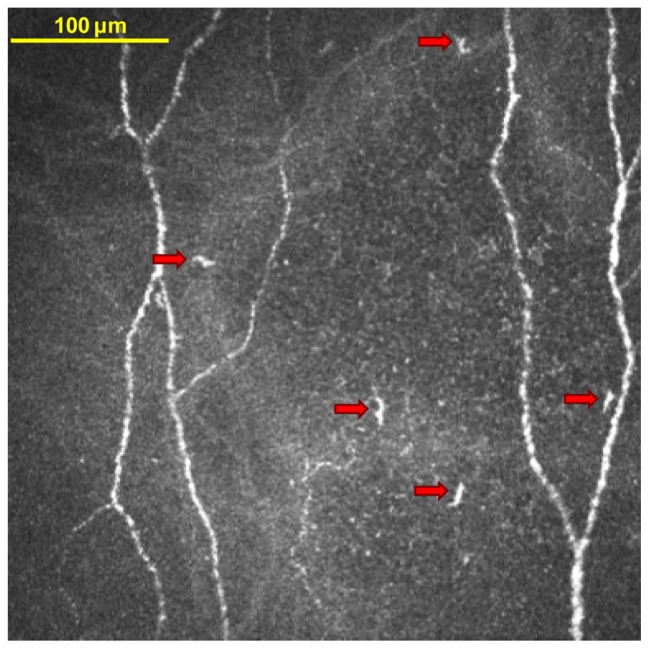
The purpose of this study was to assess whether differences in central corneal dendritic immune cell densities associated with combinations of soft contact lenses and lens care solutions could be detected by in vivo confocal microscopy.
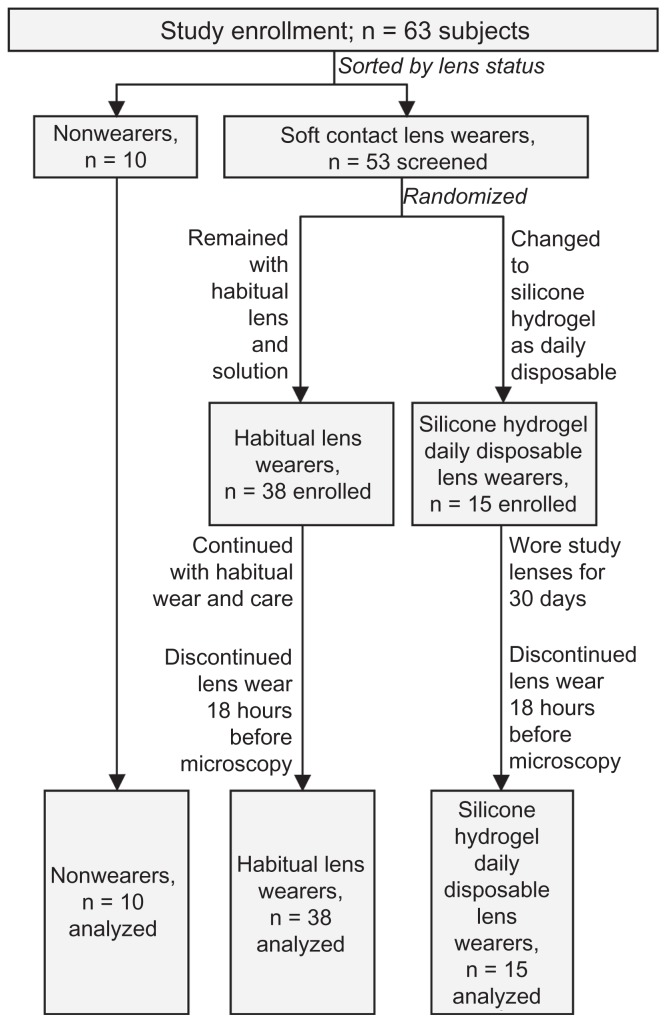
Participants were adults naïve to contact lens wear (n = 10) or who wore soft contact lenses habitually on a daily-wear schedule (n = 38) or on a study-assigned schedule for 30 days with daily disposable silicone hydrogel lenses (n = 15). Central corneas were scanned using an in vivo confocal microscope. Cell densities were compared among groups by demographic parameters, lens materials, and lens care solutions (polyhexamethylene biguanide [PHMB], polyquaternium-1 and myristamidopropyl dimethylamine [PQ/MAPD], peroxide, or blister pack solution [for daily disposable lenses]).
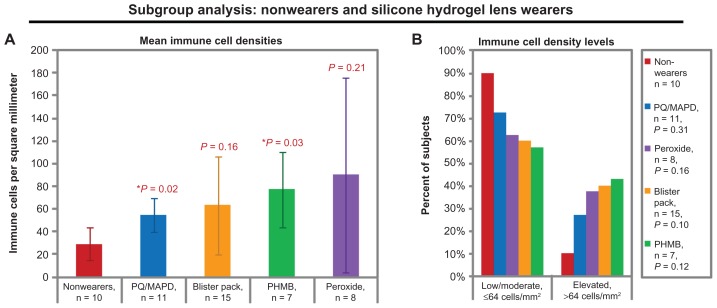
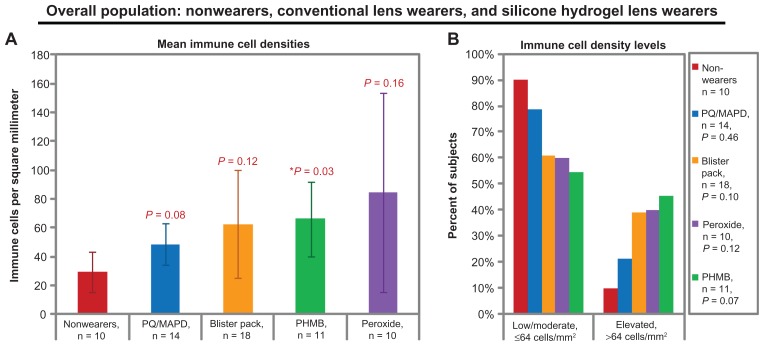
Among lens wearers, no associations were observed between immune cell densities and age, gender, or years of lens-wearing experience. Mean cell density was significantly lower (P < 0.01) in nonwearers (29 ± 23 cells/mm(2), n = 10) than in lens wearers (64 ± 71 cells/mm(2), n = 53). Mean cell density was lower (P = 0.21) with traditional polymer lenses (47 ± 44 cells/mm(2), n = 12) than with silicone hydrogel lenses (69 ± 77 cells/mm(2), n = 41). Lowest to highest mean density of immune cells among lens wearers was as follows: PQ/MAPD solution (49 ± 28 cells/mm(2)), blister pack solution (63 ± 81 cells/mm(2)), PHMB solution (66 ± 44 cells/mm(2)), and peroxide solution (85 ± 112 cells/mm(2)).
In this pilot study, in vivo confocal microscopy was useful for detecting an elevated immune response associated with soft contact lenses, and for identifying lens-related and solution-related immune responses that merit further research.
本研究的目的是评估通过体内共聚焦显微镜是否能够检测到与软性隐形眼镜及镜片护理液组合相关的中央角膜树突状免疫细胞密度差异。
参与者为初次佩戴隐形眼镜的成年人(n = 10),或每天习惯性佩戴软性隐形眼镜的人(n = 38),或按照研究指定方案佩戴日抛型硅水凝胶镜片30天的人(n = 15)。使用体内共聚焦显微镜扫描中央角膜。根据人口统计学参数、镜片材料和镜片护理液(聚六亚甲基双胍[PHMB]、聚季铵盐-1和肉豆蔻酰胺丙基二甲胺[PQ/MAPD]、过氧化物或泡罩包装溶液[用于日抛型镜片])对各组细胞密度进行比较。
在隐形眼镜佩戴者中,未观察到免疫细胞密度与年龄、性别或佩戴隐形眼镜的年限之间存在关联。非佩戴者(29±23个细胞/mm²,n = 10)的平均细胞密度显著低于佩戴者(64±71个细胞/mm²,n = 53)(P < 0.01)。传统聚合物镜片(47±44个细胞/mm²,n = 12)的平均细胞密度低于硅水凝胶镜片(69±77个细胞/mm²,n = 41)(P = 0.21)。佩戴者中免疫细胞平均密度从低到高依次为:PQ/MAPD溶液(49±28个细胞/mm²)、泡罩包装溶液(63±81个细胞/mm²)、PHMB溶液(66±44个细胞/mm²)和过氧化物溶液(85±112个细胞/mm²)。
在这项初步研究中,体内共聚焦显微镜有助于检测与软性隐形眼镜相关的免疫反应增强,并识别值得进一步研究的与镜片及护理液相关的免疫反应。