• 文献检索
  • 文档翻译
  • 深度研究
  • 学术资讯
  • Suppr Zotero 插件Zotero 插件
  • 邀请有礼
  • 套餐&价格
  • 历史记录
应用&插件
Suppr Zotero 插件Zotero 插件浏览器插件Mac 客户端Windows 客户端微信小程序
定价
高级版会员购买积分包购买API积分包
服务
文献检索文档翻译深度研究API 文档MCP 服务
关于我们
关于 Suppr公司介绍联系我们用户协议隐私条款
关注我们

Suppr 超能文献

核心技术专利:CN118964589B侵权必究
粤ICP备2023148730 号-1Suppr @ 2026

文献检索

告别复杂PubMed语法,用中文像聊天一样搜索,搜遍4000万医学文献。AI智能推荐,让科研检索更轻松。

立即免费搜索

文件翻译

保留排版,准确专业,支持PDF/Word/PPT等文件格式,支持 12+语言互译。

免费翻译文档

深度研究

AI帮你快速写综述,25分钟生成高质量综述,智能提取关键信息,辅助科研写作。

立即免费体验

事后选择动态因果模型。

Post-hoc selection of dynamic causal models.

机构信息

Wellcome Trust Centre for Neuroimaging, Institute of Neurology, University College London, 12 Queen Square, WC1N 3BG, UK.

出版信息

J Neurosci Methods. 2012 Jun 30;208(1):66-78. doi: 10.1016/j.jneumeth.2012.04.013. Epub 2012 May 4.

DOI:10.1016/j.jneumeth.2012.04.013
PMID:22561579
原文链接:https://pmc.ncbi.nlm.nih.gov/articles/PMC3401996/
Abstract

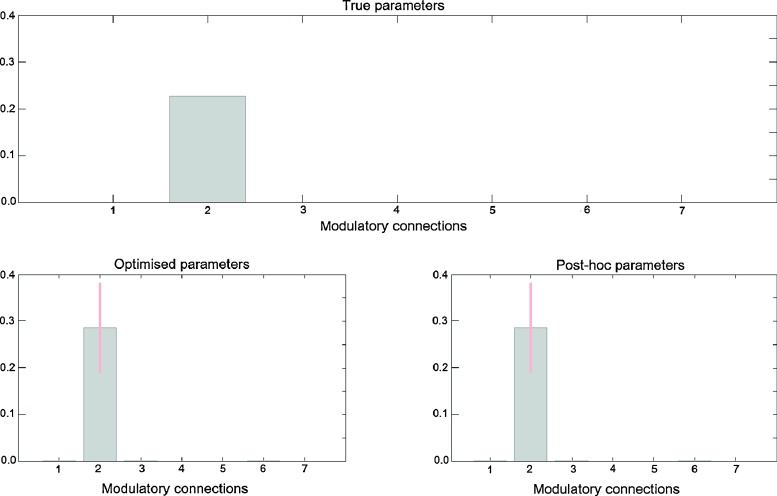
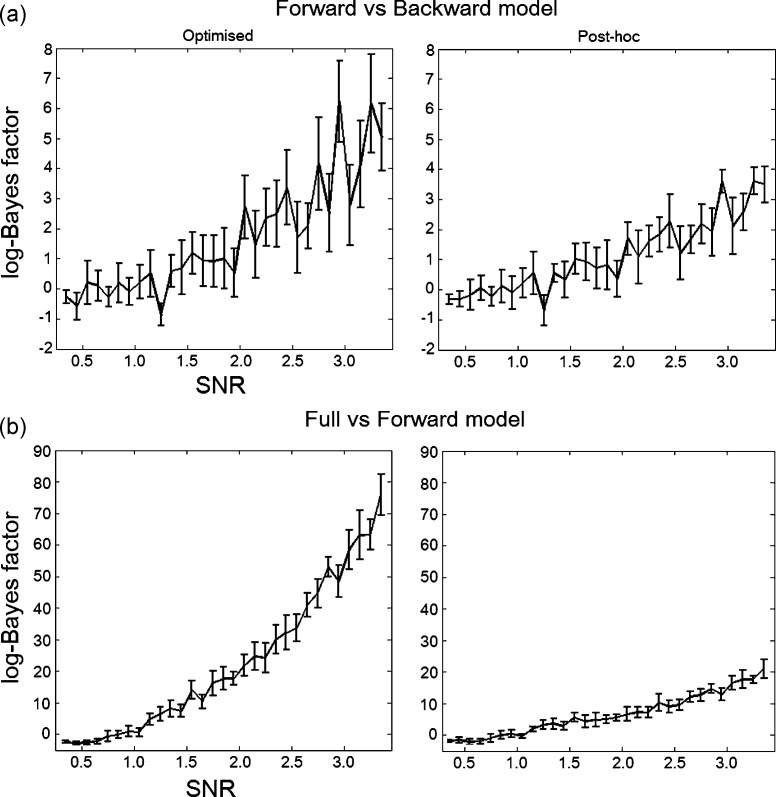
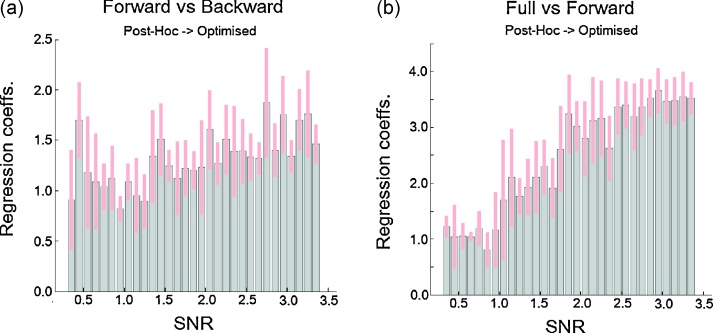
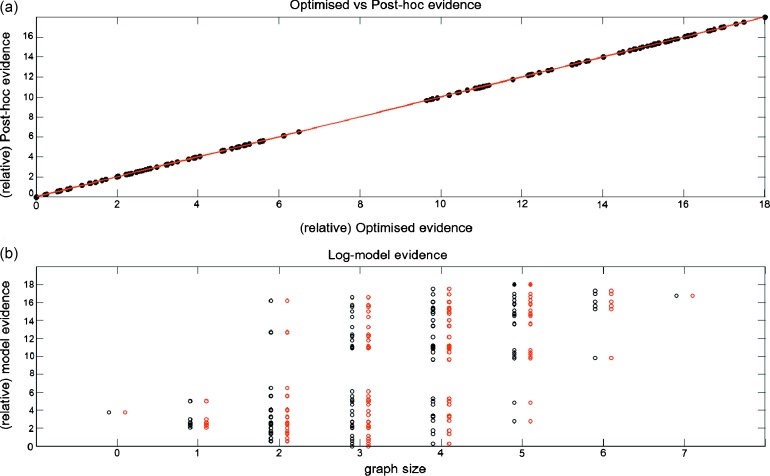
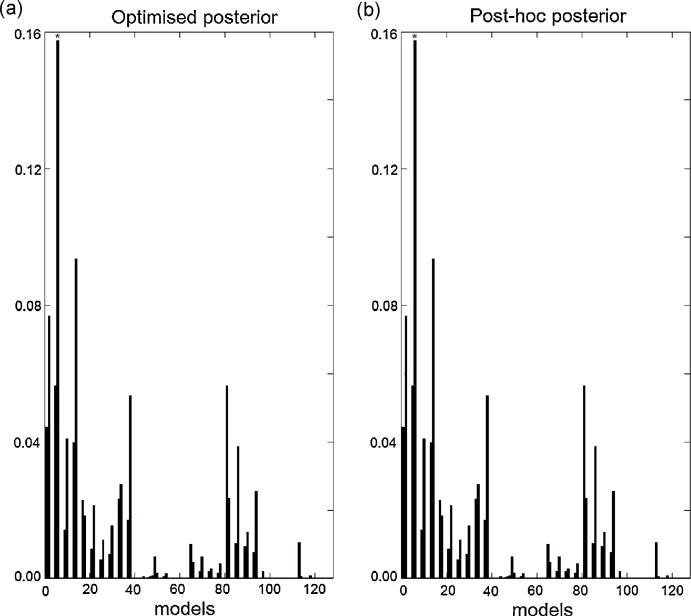
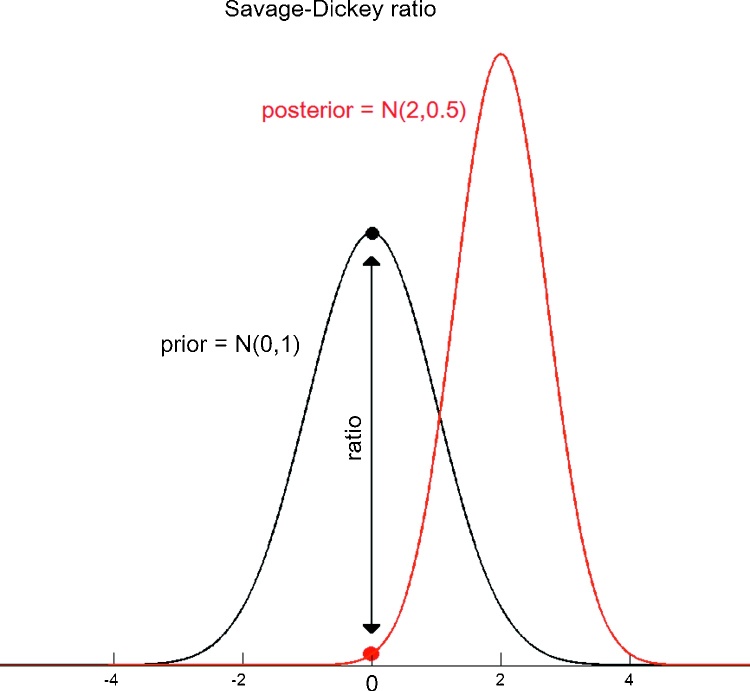
Dynamic causal modelling (DCM) was originally proposed as a hypothesis driven procedure in which a small number of neurobiologically motivated models are compared. Model comparison in this context usually proceeds by individually fitting each model to data and then approximating the corresponding model evidence with a free energy bound. However, a recent trend has emerged for comparing very large numbers of models in a more exploratory manner. This led Friston and Penny (2011) to propose a post-hoc approximation to the model evidence, which is computed by optimising only the largest (full) model of a set of models. The evidence for any (reduced) submodel is then obtained using a generalisation of the Savage-Dickey density ratio (Dickey, 1971). The benefit of this post-hoc approach is a huge reduction in the computational time required for model fitting. This is because only a single model is fitted to data, allowing a potentially huge model space to be searched relatively quickly. In this paper, we explore the relationship between the free energy bound and post-hoc approximations to the model evidence in the context of deterministic (bilinear) dynamic causal models (DCMs) for functional magnetic resonance imaging data.

摘要

动态因果建模 (DCM) 最初被提议作为一种假设驱动的程序,其中比较了少量具有神经生物学动机的模型。在这种情况下,模型比较通常是通过单独拟合每个模型到数据,然后用自由能边界来近似相应的模型证据。然而,最近出现了一种更具探索性的比较大量模型的趋势。这导致 Friston 和 Penny(2011)提出了一种事后近似模型证据的方法,该方法通过仅优化模型集中最大(完整)模型来计算。然后使用 Savage-Dickey 密度比(Dickey,1971)的推广来获得任何(简化)子模型的证据。这种事后方法的好处是大大减少了模型拟合所需的计算时间。这是因为只拟合了一个模型到数据,从而可以相对快速地搜索潜在的巨大模型空间。在本文中,我们在功能磁共振成像数据的确定性(双线性)动态因果模型 (DCM) 背景下探索了自由能边界和模型证据的事后近似之间的关系。
https://cdn.ncbi.nlm.nih.gov/pmc/blobs/d052/3401996/53240dd3f731/gr10.jpg
https://cdn.ncbi.nlm.nih.gov/pmc/blobs/d052/3401996/a1a676a25dde/gr1.jpg
https://cdn.ncbi.nlm.nih.gov/pmc/blobs/d052/3401996/076c3cdcdb0f/gr2.jpg
https://cdn.ncbi.nlm.nih.gov/pmc/blobs/d052/3401996/f24dcd94983c/gr3.jpg
https://cdn.ncbi.nlm.nih.gov/pmc/blobs/d052/3401996/2ae2035319a0/gr4.jpg
https://cdn.ncbi.nlm.nih.gov/pmc/blobs/d052/3401996/17ed66058ce5/gr5.jpg
https://cdn.ncbi.nlm.nih.gov/pmc/blobs/d052/3401996/76f0747b5203/gr6.jpg
https://cdn.ncbi.nlm.nih.gov/pmc/blobs/d052/3401996/e5769eefb949/gr7.jpg
https://cdn.ncbi.nlm.nih.gov/pmc/blobs/d052/3401996/8d5726166dd8/gr8.jpg
https://cdn.ncbi.nlm.nih.gov/pmc/blobs/d052/3401996/941e6918b762/gr9.jpg
https://cdn.ncbi.nlm.nih.gov/pmc/blobs/d052/3401996/53240dd3f731/gr10.jpg
https://cdn.ncbi.nlm.nih.gov/pmc/blobs/d052/3401996/a1a676a25dde/gr1.jpg
https://cdn.ncbi.nlm.nih.gov/pmc/blobs/d052/3401996/076c3cdcdb0f/gr2.jpg
https://cdn.ncbi.nlm.nih.gov/pmc/blobs/d052/3401996/f24dcd94983c/gr3.jpg
https://cdn.ncbi.nlm.nih.gov/pmc/blobs/d052/3401996/2ae2035319a0/gr4.jpg
https://cdn.ncbi.nlm.nih.gov/pmc/blobs/d052/3401996/17ed66058ce5/gr5.jpg
https://cdn.ncbi.nlm.nih.gov/pmc/blobs/d052/3401996/76f0747b5203/gr6.jpg
https://cdn.ncbi.nlm.nih.gov/pmc/blobs/d052/3401996/e5769eefb949/gr7.jpg
https://cdn.ncbi.nlm.nih.gov/pmc/blobs/d052/3401996/8d5726166dd8/gr8.jpg
https://cdn.ncbi.nlm.nih.gov/pmc/blobs/d052/3401996/941e6918b762/gr9.jpg
https://cdn.ncbi.nlm.nih.gov/pmc/blobs/d052/3401996/53240dd3f731/gr10.jpg

相似文献

1
Post-hoc selection of dynamic causal models.事后选择动态因果模型。
J Neurosci Methods. 2012 Jun 30;208(1):66-78. doi: 10.1016/j.jneumeth.2012.04.013. Epub 2012 May 4.
2
Large-scale neural models and dynamic causal modelling.大规模神经模型与动态因果建模。
Neuroimage. 2006 May 1;30(4):1243-54. doi: 10.1016/j.neuroimage.2005.11.007. Epub 2006 Jan 4.
3
Stochastic dynamic causal modelling of fMRI data: should we care about neural noise?fMRI 数据的随机动态因果建模:我们是否应该关注神经噪声?
Neuroimage. 2012 Aug 1;62(1):464-81. doi: 10.1016/j.neuroimage.2012.04.061. Epub 2012 May 9.
4
Dynamic causal modelling: a critical review of the biophysical and statistical foundations.动态因果建模:生物物理和统计基础的批判性回顾。
Neuroimage. 2011 Sep 15;58(2):312-22. doi: 10.1016/j.neuroimage.2009.11.062. Epub 2009 Dec 1.
5
Ten simple rules for dynamic causal modeling.动态因果建模的 10 个简单规则。
Neuroimage. 2010 Feb 15;49(4):3099-109. doi: 10.1016/j.neuroimage.2009.11.015. Epub 2009 Nov 12.
6
Network discovery with large DCMs.使用大型 DCM 进行网络发现。
Neuroimage. 2013 Mar;68:181-91. doi: 10.1016/j.neuroimage.2012.12.005. Epub 2012 Dec 13.
7
Network discovery with DCM.使用 DCM 进行网络发现。
Neuroimage. 2011 Jun 1;56(3):1202-21. doi: 10.1016/j.neuroimage.2010.12.039. Epub 2010 Dec 21.
8
Construct validation of a DCM for resting state fMRI.静息态功能磁共振成像中动态因果模型的结构效度验证。
Neuroimage. 2015 Feb 1;106:1-14. doi: 10.1016/j.neuroimage.2014.11.027. Epub 2014 Nov 21.
9
Probabilistic delay differential equation modeling of event-related potentials.事件相关电位的概率延迟微分方程建模
Neuroimage. 2016 Aug 1;136:227-57. doi: 10.1016/j.neuroimage.2016.04.025. Epub 2016 Apr 22.
10
Bayesian deconvolution of [corrected] fMRI data using bilinear dynamical systems.使用双线性动力系统对[校正后的]功能磁共振成像数据进行贝叶斯反卷积。
Neuroimage. 2008 Oct 1;42(4):1381-96. doi: 10.1016/j.neuroimage.2008.05.052. Epub 2008 Jun 6.

引用本文的文献

1
SPM-30 years and beyond.SPM - 30年及以后。
Cereb Cortex. 2025 Aug 1;35(8). doi: 10.1093/cercor/bhaf234.
2
Altered effective connectivity in leucine-rich glioma-inactivated 1 antibody encephalitis: a spectral dynamic causal modeling study.富含亮氨酸胶质瘤失活1抗体脑炎中有效连接性的改变:一项频谱动态因果模型研究。
Psychoradiology. 2025 Aug 20;5:kkaf022. doi: 10.1093/psyrad/kkaf022. eCollection 2025.
3
Deep brain stimulation modulates directional limbic connectivity in major depressive disorder.深部脑刺激调节重度抑郁症中的定向边缘系统连接。

本文引用的文献

1
Comparing dynamic causal models using AIC, BIC and free energy.使用 AIC、BIC 和自由能比较动态因果模型。
Neuroimage. 2012 Jan 2;59(1):319-30. doi: 10.1016/j.neuroimage.2011.07.039. Epub 2011 Jul 27.
2
Post hoc Bayesian model selection.事后贝叶斯模型选择。
Neuroimage. 2011 Jun 15;56(4):2089-99. doi: 10.1016/j.neuroimage.2011.03.062. Epub 2011 Mar 31.
3
Network discovery with DCM.使用 DCM 进行网络发现。
Psychol Med. 2025 Aug 8;55:e231. doi: 10.1017/S0033291725100767.
4
Dynamic causal modeling of neural responses to an orofacial pneumotactile velocity array.对面部气动触觉速度阵列的神经反应的动态因果模型
Neuroimage Rep. 2022 Jan 16;2(1):100081. doi: 10.1016/j.ynirp.2022.100081. eCollection 2022 Mar.
5
Habenula contributions to negative self-cognitions.缰核对消极自我认知的影响。
Nat Commun. 2025 May 7;16(1):4231. doi: 10.1038/s41467-025-59611-7.
6
Lateral frontoparietal effective connectivity differentiates and predicts state of consciousness in a cohort of patients with traumatic disorders of consciousness.外侧额顶叶有效连接可区分并预测创伤性意识障碍患者队列的意识状态。
PLoS One. 2024 Jul 5;19(7):e0298110. doi: 10.1371/journal.pone.0298110. eCollection 2024.
7
Posterior default mode network is associated with the social performance in male children with autism spectrum disorder: A dynamic causal modeling analysis based on triple-network model.基于三网络模型的静息态功能磁共振研究孤独症谱系障碍男童社会行为的后默认模式网络 **解析**:原文的关键信息为“孤独症谱系障碍男童”“社会行为”和“后默认模式网络”,译文保留了这些关键信息,并对一些较难翻译的词汇如“autism spectrum disorder”“dynamic causal modeling”等进行了处理。
Hum Brain Mapp. 2024 Jun 1;45(8):e26750. doi: 10.1002/hbm.26750.
8
Dynamic causal model application on hierarchical human motor control estimation in visuomotor tasks.动态因果模型在视觉运动任务中分层人体运动控制估计中的应用。
Front Neurol. 2024 Jan 9;14:1302847. doi: 10.3389/fneur.2023.1302847. eCollection 2023.
9
Investigating altered brain functional hubs and causal connectivity in coronary artery disease with cognitive impairment.研究伴有认知障碍的冠心病患者大脑功能枢纽和因果连通性的改变。
PeerJ. 2023 Nov 9;11:e16408. doi: 10.7717/peerj.16408. eCollection 2023.
10
A brain model of altered self-appraisal in social anxiety disorder.社交焦虑障碍中自我评价改变的大脑模型。
Transl Psychiatry. 2023 Nov 11;13(1):344. doi: 10.1038/s41398-023-02644-7.
Neuroimage. 2011 Jun 1;56(3):1202-21. doi: 10.1016/j.neuroimage.2010.12.039. Epub 2010 Dec 21.
4
Dynamic causal modeling with genetic algorithms.基于遗传算法的动态因果建模。
J Neurosci Methods. 2011 Jan 15;194(2):402-6. doi: 10.1016/j.jneumeth.2010.11.007. Epub 2010 Nov 20.
5
Bayesian hypothesis testing for psychologists: a tutorial on the Savage-Dickey method.贝叶斯假设检验对心理学家来说:萨维奇-迪基方法教程。
Cogn Psychol. 2010 May;60(3):158-89. doi: 10.1016/j.cogpsych.2009.12.001. Epub 2010 Jan 12.
6
Ten simple rules for dynamic causal modeling.动态因果建模的 10 个简单规则。
Neuroimage. 2010 Feb 15;49(4):3099-109. doi: 10.1016/j.neuroimage.2009.11.015. Epub 2009 Nov 12.
7
Robust Bayesian estimation of the location, orientation, and time course of multiple correlated neural sources using MEG.使用 MEG 对多个相关神经源的位置、方向和时程进行稳健的贝叶斯估计。
Neuroimage. 2010 Jan 1;49(1):641-55. doi: 10.1016/j.neuroimage.2009.06.083. Epub 2009 Jul 10.
8
Dynamic causal modeling for EEG and MEG.脑电图和脑磁图的动态因果模型
Hum Brain Mapp. 2009 Jun;30(6):1866-76. doi: 10.1002/hbm.20775.
9
Population dynamics under the Laplace assumption.拉普拉斯假设下的种群动态
Neuroimage. 2009 Feb 1;44(3):701-14. doi: 10.1016/j.neuroimage.2008.10.008. Epub 2008 Oct 25.
10
Dynamic causal models of steady-state responses.稳态反应的动态因果模型
Neuroimage. 2009 Feb 1;44(3):796-811. doi: 10.1016/j.neuroimage.2008.09.048. Epub 2008 Oct 17.