• 文献检索
  • 文档翻译
  • 深度研究
  • 学术资讯
  • Suppr Zotero 插件Zotero 插件
  • 邀请有礼
  • 套餐&价格
  • 历史记录
应用&插件
Suppr Zotero 插件Zotero 插件浏览器插件Mac 客户端Windows 客户端微信小程序
定价
高级版会员购买积分包购买API积分包
服务
文献检索文档翻译深度研究API 文档MCP 服务
关于我们
关于 Suppr公司介绍联系我们用户协议隐私条款
关注我们

Suppr 超能文献

核心技术专利:CN118964589B侵权必究
粤ICP备2023148730 号-1Suppr @ 2026

文献检索

告别复杂PubMed语法,用中文像聊天一样搜索,搜遍4000万医学文献。AI智能推荐,让科研检索更轻松。

立即免费搜索

文件翻译

保留排版,准确专业,支持PDF/Word/PPT等文件格式,支持 12+语言互译。

免费翻译文档

深度研究

AI帮你快速写综述,25分钟生成高质量综述,智能提取关键信息,辅助科研写作。

立即免费体验

使用支持向量机和高斯过程从 fMRI 解码半约束脑活动。

Decoding semi-constrained brain activity from FMRI using support vector machines and gaussian processes.

机构信息

Cyclotron Research Centre, University of Liège, Liège, Belgium.

出版信息

PLoS One. 2012;7(4):e35860. doi: 10.1371/journal.pone.0035860. Epub 2012 Apr 26.

DOI:10.1371/journal.pone.0035860
PMID:22563410
原文链接:https://pmc.ncbi.nlm.nih.gov/articles/PMC3338538/
Abstract

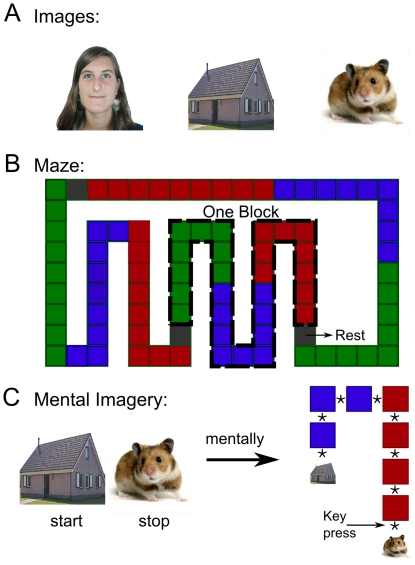
Predicting a particular cognitive state from a specific pattern of fMRI voxel values is still a methodological challenge. Decoding brain activity is usually performed in highly controlled experimental paradigms characterized by a series of distinct states induced by a temporally constrained experimental design. In more realistic conditions, the number, sequence and duration of mental states are unpredictably generated by the individual, resulting in complex and imbalanced fMRI data sets. This study tests the classification of brain activity, acquired on 16 volunteers using fMRI, during mental imagery, a condition in which the number and duration of mental events were not externally imposed but self-generated. To deal with these issues, two classification techniques were considered (Support Vector Machines, SVM, and Gaussian Processes, GP), as well as different feature extraction methods (General Linear Model, GLM and SVM). These techniques were combined in order to identify the procedures leading to the highest accuracy measures. Our results showed that 12 data sets out of 16 could be significantly modeled by either SVM or GP. Model accuracies tended to be related to the degree of imbalance between classes and to task performance of the volunteers. We also conclude that the GP technique tends to be more robust than SVM to model unbalanced data sets.

摘要

从特定的 fMRI 体素值模式预测特定的认知状态仍然是一个方法学挑战。解码大脑活动通常在高度受控的实验范式中进行,这些范式具有一系列由时间受限的实验设计引起的不同状态。在更现实的条件下,个体产生的心理状态的数量、顺序和持续时间是不可预测的,导致 fMRI 数据集复杂且不平衡。本研究测试了使用 fMRI 在 16 名志愿者进行心理意象时的大脑活动分类,在这种情况下,心理事件的数量和持续时间不是外部强加的,而是自我产生的。为了解决这些问题,考虑了两种分类技术(支持向量机 (SVM) 和高斯过程 (GP)),以及不同的特征提取方法(广义线性模型 (GLM) 和 SVM)。这些技术被组合在一起,以确定导致最高精度测量的程序。我们的结果表明,在 16 个数据集中,有 12 个可以通过 SVM 或 GP 显著建模。模型精度往往与类之间的不平衡程度和志愿者的任务表现有关。我们还得出结论,与 SVM 相比,GP 技术更能稳健地对不平衡数据集进行建模。
https://cdn.ncbi.nlm.nih.gov/pmc/blobs/3b40/3338538/5d9689df7b41/pone.0035860.g006.jpg
https://cdn.ncbi.nlm.nih.gov/pmc/blobs/3b40/3338538/d1b86ce4d320/pone.0035860.g001.jpg
https://cdn.ncbi.nlm.nih.gov/pmc/blobs/3b40/3338538/2ecf22032eed/pone.0035860.g002.jpg
https://cdn.ncbi.nlm.nih.gov/pmc/blobs/3b40/3338538/6c4648fc571d/pone.0035860.g003.jpg
https://cdn.ncbi.nlm.nih.gov/pmc/blobs/3b40/3338538/03f5d4774fb2/pone.0035860.g004.jpg
https://cdn.ncbi.nlm.nih.gov/pmc/blobs/3b40/3338538/6483126af8f6/pone.0035860.g005.jpg
https://cdn.ncbi.nlm.nih.gov/pmc/blobs/3b40/3338538/5d9689df7b41/pone.0035860.g006.jpg
https://cdn.ncbi.nlm.nih.gov/pmc/blobs/3b40/3338538/d1b86ce4d320/pone.0035860.g001.jpg
https://cdn.ncbi.nlm.nih.gov/pmc/blobs/3b40/3338538/2ecf22032eed/pone.0035860.g002.jpg
https://cdn.ncbi.nlm.nih.gov/pmc/blobs/3b40/3338538/6c4648fc571d/pone.0035860.g003.jpg
https://cdn.ncbi.nlm.nih.gov/pmc/blobs/3b40/3338538/03f5d4774fb2/pone.0035860.g004.jpg
https://cdn.ncbi.nlm.nih.gov/pmc/blobs/3b40/3338538/6483126af8f6/pone.0035860.g005.jpg
https://cdn.ncbi.nlm.nih.gov/pmc/blobs/3b40/3338538/5d9689df7b41/pone.0035860.g006.jpg

相似文献

1
Decoding semi-constrained brain activity from FMRI using support vector machines and gaussian processes.使用支持向量机和高斯过程从 fMRI 解码半约束脑活动。
PLoS One. 2012;7(4):e35860. doi: 10.1371/journal.pone.0035860. Epub 2012 Apr 26.
2
Ensemble support vector machine classification of dementia using structural MRI and mini-mental state examination.使用结构 MRI 和简易精神状态检查对痴呆进行集成支持向量机分类。
J Neurosci Methods. 2018 May 15;302:66-74. doi: 10.1016/j.jneumeth.2018.01.003. Epub 2018 Feb 3.
3
Decoding fMRI data with support vector machines and deep neural networks.使用支持向量机和深度神经网络对 fMRI 数据进行解码。
J Neurosci Methods. 2024 Jan 1;401:110004. doi: 10.1016/j.jneumeth.2023.110004. Epub 2023 Oct 31.
4
Two-step paretial least square regression classifiers in brain-state decoding using functional magnetic resonance imaging.两步偏最小二乘回归分类器在基于功能磁共振成像的脑状态解码中的应用。
PLoS One. 2019 Apr 10;14(4):e0214937. doi: 10.1371/journal.pone.0214937. eCollection 2019.
5
Effective functional mapping of fMRI data with support-vector machines.使用支持向量机进行 fMRI 数据的有效功能映射。
Hum Brain Mapp. 2010 Oct;31(10):1502-11. doi: 10.1002/hbm.20955.
6
Spatially regularized machine learning for task and resting-state fMRI.用于任务态和静息态功能磁共振成像的空间正则化机器学习
J Neurosci Methods. 2016 Jan 15;257:214-28. doi: 10.1016/j.jneumeth.2015.10.001. Epub 2015 Oct 16.
7
A semi-supervised Support Vector Machine model for predicting the language outcomes following cochlear implantation based on pre-implant brain fMRI imaging.一种基于植入前脑功能磁共振成像预测人工耳蜗植入后语言结果的半监督支持向量机模型。
Brain Behav. 2015 Oct 12;5(12):e00391. doi: 10.1002/brb3.391. eCollection 2015 Dec.
8
Decoding fMRI Data: A Comparison Between Support Vector Machines and Deep Neural Networks.解码功能磁共振成像数据:支持向量机与深度神经网络的比较
bioRxiv. 2023 Jun 1:2023.05.30.542882. doi: 10.1101/2023.05.30.542882.
9
The effect of spatial smoothing on fMRI decoding of columnar-level organization with linear support vector machine.线性支持向量机的空间平滑对 fMRI 解码柱层组织的影响。
J Neurosci Methods. 2013 Jan 30;212(2):355-61. doi: 10.1016/j.jneumeth.2012.11.004. Epub 2012 Nov 19.
10
Decoding of visual activity patterns from fMRI responses using multivariate pattern analyses and convolutional neural network.使用多变量模式分析和卷积神经网络从功能磁共振成像响应中解码视觉活动模式。
J Integr Neurosci. 2017;16(3):275-289. doi: 10.3233/JIN-170016.

引用本文的文献

1
Embedding Anatomical or Functional Knowledge in Whole-Brain Multiple Kernel Learning Models.将解剖学或功能知识嵌入全脑多核学习模型中。
Neuroinformatics. 2018 Jan;16(1):117-143. doi: 10.1007/s12021-017-9347-8.
2
Decoding fMRI events in sensorimotor motor network using sparse paradigm free mapping and activation likelihood estimates.使用稀疏范式自由映射和激活可能性估计解码感觉运动运动网络中的 fMRI 事件。
Hum Brain Mapp. 2017 Nov;38(11):5778-5794. doi: 10.1002/hbm.23767. Epub 2017 Aug 16.
3
Parsing the Roles of the Frontal Lobes and Basal Ganglia in Task Control Using Multivoxel Pattern Analysis.

本文引用的文献

1
Decoding individual episodic memory traces in the human hippocampus.在人类海马体中解码个体情景记忆痕迹。
Curr Biol. 2010 Mar 23;20(6):544-7. doi: 10.1016/j.cub.2010.01.053. Epub 2010 Mar 11.
2
Quantitative prediction of subjective pain intensity from whole-brain fMRI data using Gaussian processes.基于高斯过程的全脑 fMRI 数据对主观疼痛强度的定量预测。
Neuroimage. 2010 Feb 1;49(3):2178-89. doi: 10.1016/j.neuroimage.2009.10.072. Epub 2009 Oct 29.
3
Decoding neuronal ensembles in the human hippocampus.解码人类海马体中的神经元集群。
使用多体素模式分析解析额叶和基底神经节在任务控制中的作用
J Cogn Neurosci. 2017 Aug;29(8):1390-1401. doi: 10.1162/jocn_a_01130. Epub 2017 Apr 7.
4
Sparsity Is Better with Stability: Combining Accuracy and Stability for Model Selection in Brain Decoding.稀疏性与稳定性更佳:在脑解码中结合准确性与稳定性进行模型选择
Front Neurosci. 2017 Feb 17;11:62. doi: 10.3389/fnins.2017.00062. eCollection 2017.
5
Select and Cluster: A Method for Finding Functional Networks of Clustered Voxels in fMRI.选择与聚类:一种在功能磁共振成像中寻找聚类体素功能网络的方法。
Comput Intell Neurosci. 2016;2016:4705162. doi: 10.1155/2016/4705162. Epub 2016 Sep 5.
6
Cross-Modal Decoding of Neural Patterns Associated with Working Memory: Evidence for Attention-Based Accounts of Working Memory.与工作记忆相关的神经模式的跨模态解码:基于注意力的工作记忆理论的证据
Cereb Cortex. 2016 Jan;26(1):166-79. doi: 10.1093/cercor/bhu189. Epub 2014 Aug 21.
7
Multiclass classification of FDG PET scans for the distinction between Parkinson's disease and atypical parkinsonian syndromes.FDG PET 扫描的多类分类,用于区分帕金森病和非典型帕金森综合征。
Neuroimage Clin. 2013 Jun 14;2:883-93. doi: 10.1016/j.nicl.2013.06.004. eCollection 2013.
8
Multivariate decoding of brain images using ordinal regression.使用有序回归对脑图像进行多元解码。
Neuroimage. 2013 Nov 1;81:347-357. doi: 10.1016/j.neuroimage.2013.05.036. Epub 2013 May 17.
9
PRoNTo: pattern recognition for neuroimaging toolbox.PRoNTo:神经影像学工具包的模式识别。
Neuroinformatics. 2013 Jul;11(3):319-37. doi: 10.1007/s12021-013-9178-1.
Curr Biol. 2009 Apr 14;19(7):546-54. doi: 10.1016/j.cub.2009.02.033. Epub 2009 Mar 12.
4
Combining multivariate voxel selection and support vector machines for mapping and classification of fMRI spatial patterns.结合多变量体素选择和支持向量机对功能磁共振成像空间模式进行映射和分类
Neuroimage. 2008 Oct 15;43(1):44-58. doi: 10.1016/j.neuroimage.2008.06.037. Epub 2008 Jul 11.
5
Multivariate analysis of fMRI time series: classification and regression of brain responses using machine learning.功能磁共振成像时间序列的多变量分析:使用机器学习对脑反应进行分类和回归
Magn Reson Imaging. 2008 Sep;26(7):921-34. doi: 10.1016/j.mri.2008.01.052. Epub 2008 May 27.
6
Automatic classification of MR scans in Alzheimer's disease.阿尔茨海默病中磁共振成像扫描的自动分类
Brain. 2008 Mar;131(Pt 3):681-9. doi: 10.1093/brain/awm319. Epub 2008 Jan 17.
7
Using FMRI brain activation to identify cognitive states associated with perception of tools and dwellings.利用功能磁共振成像(fMRI)脑激活来识别与工具和住所感知相关的认知状态。
PLoS One. 2008 Jan 2;3(1):e1394. doi: 10.1371/journal.pone.0001394.
8
Reading hidden intentions in the human brain.解读人类大脑中的隐藏意图。
Curr Biol. 2007 Feb 20;17(4):323-8. doi: 10.1016/j.cub.2006.11.072. Epub 2007 Feb 8.
9
The impact of temporal compression and space selection on SVM analysis of single-subject and multi-subject fMRI data.时间压缩和空间选择对单受试者和多受试者功能磁共振成像数据的支持向量机分析的影响。
Neuroimage. 2006 Dec;33(4):1055-65. doi: 10.1016/j.neuroimage.2006.08.016. Epub 2006 Sep 28.
10
Beyond mind-reading: multi-voxel pattern analysis of fMRI data.超越读心术:功能磁共振成像数据的多体素模式分析
Trends Cogn Sci. 2006 Sep;10(9):424-30. doi: 10.1016/j.tics.2006.07.005. Epub 2006 Aug 8.