UC Davis Genome Center, Metabolomics, Davis, CA 95616, USA.
BMC Bioinformatics. 2012 May 16;13:99. doi: 10.1186/1471-2105-13-99.
Exposure to environmental tobacco smoke (ETS) leads to higher rates of pulmonary diseases and infections in children. To study the biochemical changes that may precede lung diseases, metabolomic effects on fetal and maternal lungs and plasma from rats exposed to ETS were compared to filtered air control animals. Genome- reconstructed metabolic pathways may be used to map and interpret dysregulation in metabolic networks. However, mass spectrometry-based non-targeted metabolomics datasets often comprise many metabolites for which links to enzymatic reactions have not yet been reported. Hence, network visualizations that rely on current biochemical databases are incomplete and also fail to visualize novel, structurally unidentified metabolites.
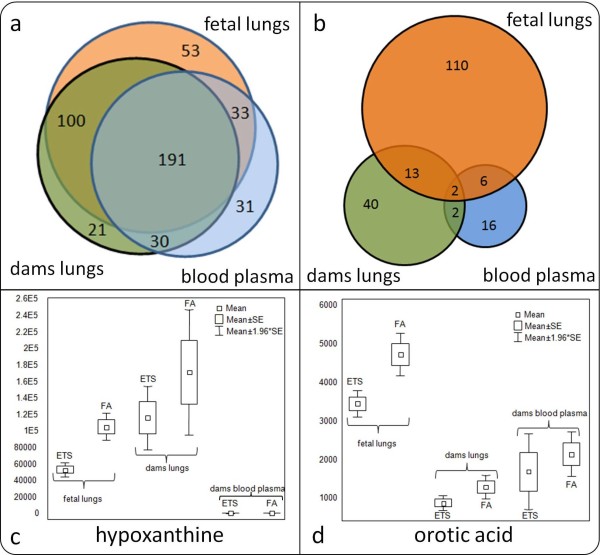
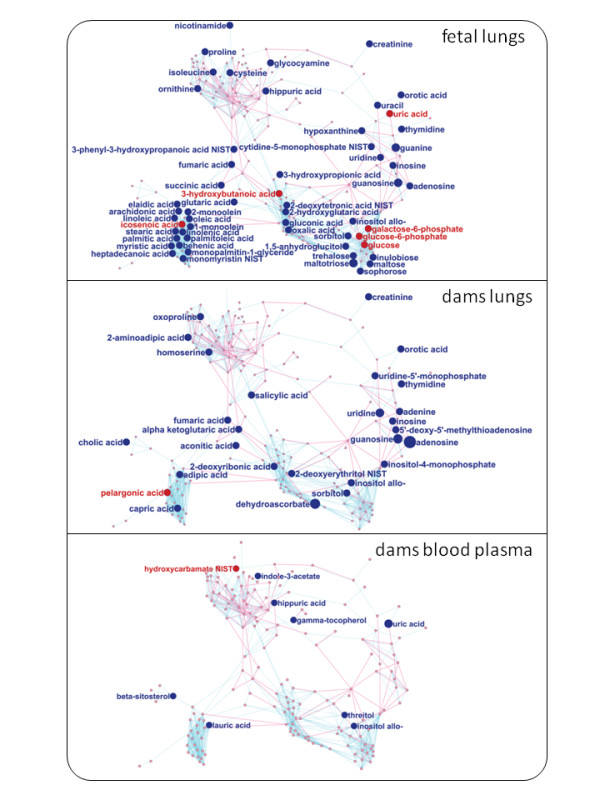
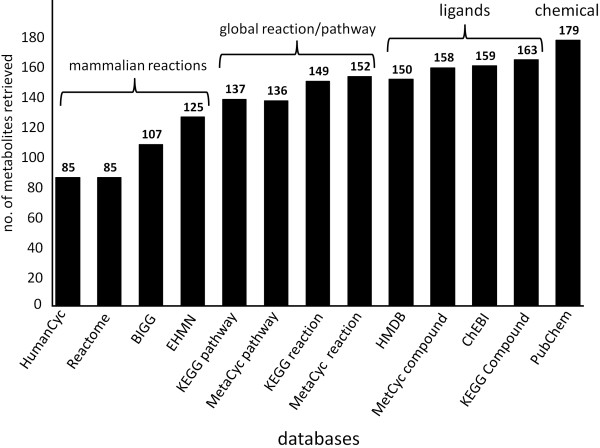
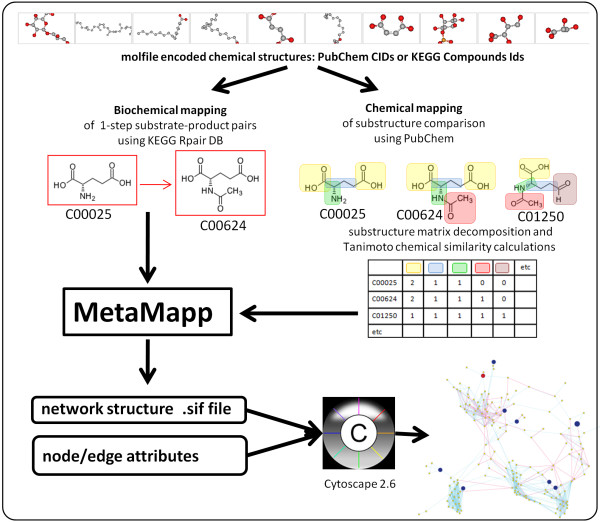
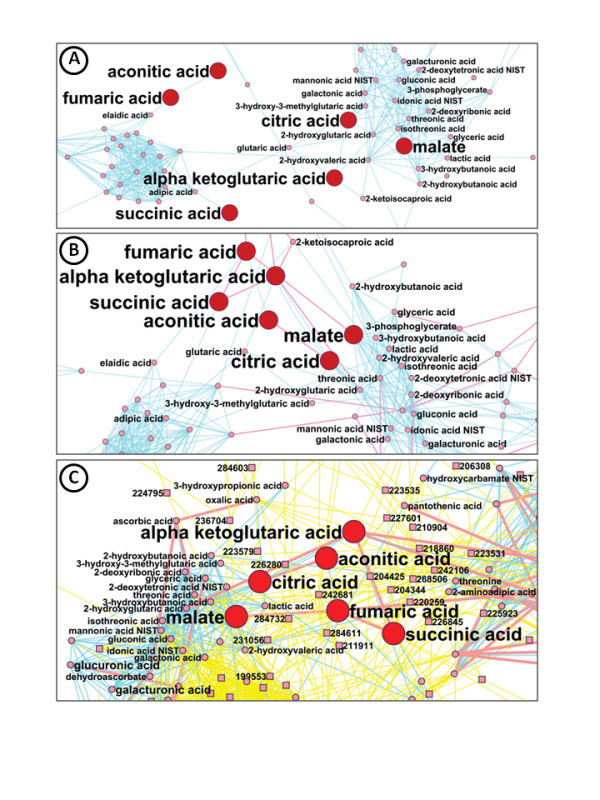
We present a novel approach to integrate biochemical pathway and chemical relationships to map all detected metabolites in network graphs (MetaMapp) using KEGG reactant pair database, Tanimoto chemical and NIST mass spectral similarity scores. In fetal and maternal lungs, and in maternal blood plasma from pregnant rats exposed to environmental tobacco smoke (ETS), 459 unique metabolites comprising 179 structurally identified compounds were detected by gas chromatography time of flight mass spectrometry (GC-TOF MS) and BinBase data processing. MetaMapp graphs in Cytoscape showed much clearer metabolic modularity and complete content visualization compared to conventional biochemical mapping approaches. Cytoscape visualization of differential statistics results using these graphs showed that overall, fetal lung metabolism was more impaired than lungs and blood metabolism in dams. Fetuses from ETS-exposed dams expressed lower lipid and nucleotide levels and higher amounts of energy metabolism intermediates than control animals, indicating lower biosynthetic rates of metabolites for cell division, structural proteins and lipids that are critical for in lung development.
MetaMapp graphs efficiently visualizes mass spectrometry based metabolomics datasets as network graphs in Cytoscape, and highlights metabolic alterations that can be associated with higher rate of pulmonary diseases and infections in children prenatally exposed to ETS. The MetaMapp scripts can be accessed at http://metamapp.fiehnlab.ucdavis.edu.
接触环境烟草烟雾(ETS)会导致儿童肺部疾病和感染的发生率更高。为了研究可能先于肺部疾病发生的生化变化,我们比较了暴露于 ETS 的胎儿和母体肺部以及母体血浆的代谢组学效应与经过过滤的空气对照动物。基因组重建的代谢途径可用于绘制和解释代谢网络的失调。然而,基于质谱的非靶向代谢组学数据集通常包含许多尚未报道与酶反应相关联的代谢物。因此,依赖于当前生化数据库的网络可视化是不完整的,也无法可视化新的、结构未知的代谢物。
我们提出了一种新的方法,使用 KEGG 反应物对数据库、Tanimoto 化学和 NIST 质谱相似性评分,将生化途径和化学关系整合到网络图中以映射所有检测到的代谢物(MetaMapp)。在胎儿和母体肺部以及暴露于环境烟草烟雾(ETS)的妊娠大鼠的母体血浆中,通过气相色谱飞行时间质谱(GC-TOF MS)和 BinBase 数据处理检测到 459 种独特的代谢物,其中包含 179 种结构鉴定化合物。与传统的生化映射方法相比,Cytoscape 中的 MetaMapp 图形显示出更清晰的代谢模块化和完整的内容可视化。使用这些图形的差异统计结果的 Cytoscape 可视化显示,总体而言,胎儿肺代谢受到的损害比母体肺和血液代谢更为严重。与对照动物相比,来自 ETS 暴露的母体的胎儿表达的脂质和核苷酸水平较低,而能量代谢中间体的含量较高,表明细胞分裂、结构蛋白和脂质的代谢物生物合成率降低,而这些对肺发育至关重要。
MetaMapp 图形可有效地将基于质谱的代谢组学数据集可视化为 Cytoscape 中的网络图形,并突出显示与儿童在产前暴露于 ETS 时肺部疾病和感染发生率较高相关的代谢变化。MetaMapp 脚本可在 http://metamapp.fiehnlab.ucdavis.edu 获得。