VTT Technical Research Centre of Finland, PO Box 1000, Espoo, FI-02044 VTT, Finland.
BMC Biotechnol. 2012 May 30;12:26. doi: 10.1186/1472-6750-12-26.
Microbial lipids are a potential source of bio- or renewable diesel and the red yeast Rhodosporidium toruloides is interesting not only because it can accumulate over 50% of its dry biomass as lipid, but also because it utilises both five and six carbon carbohydrates, which are present in plant biomass hydrolysates.
R. toruloides was grown in batch and fed-batch cultures in 0.5 L bioreactors at pH 4 in chemically defined, nitrogen restricted (C/N 40 to 100) media containing glucose, xylose, arabinose, or all three carbohydrates as carbon source. Lipid was extracted from the biomass using chloroform-methanol, measured gravimetrically and analysed by GC.
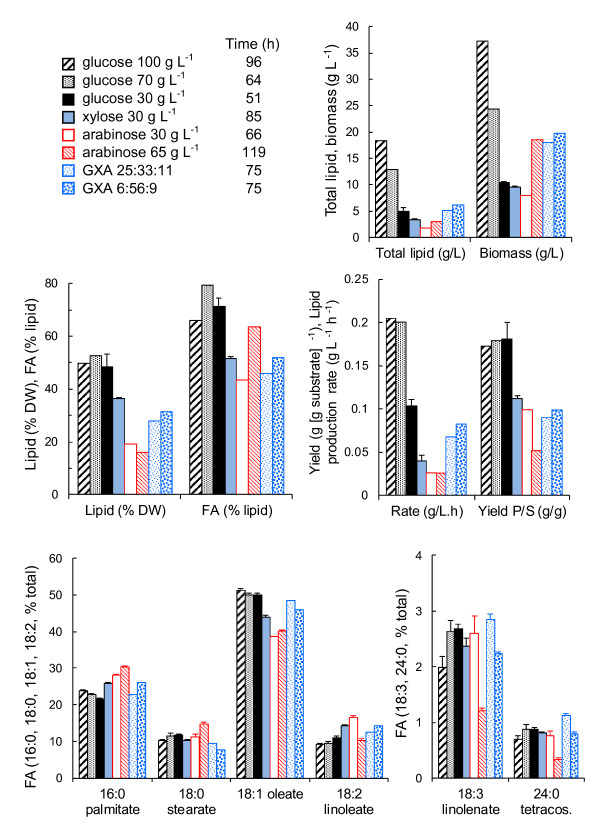
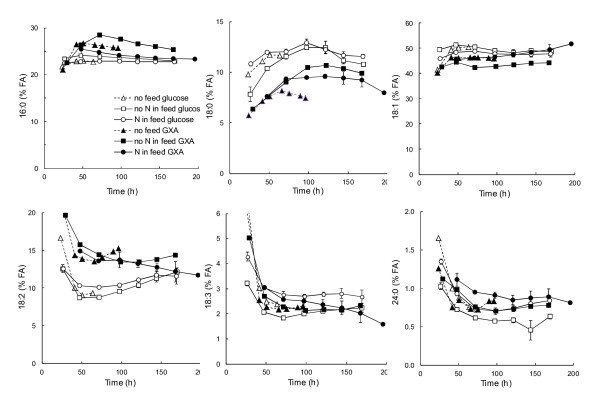
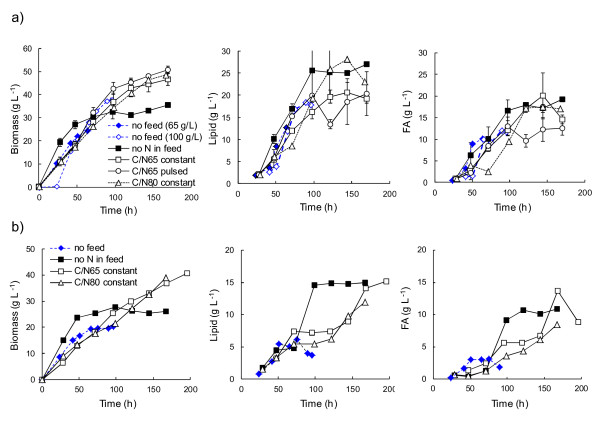
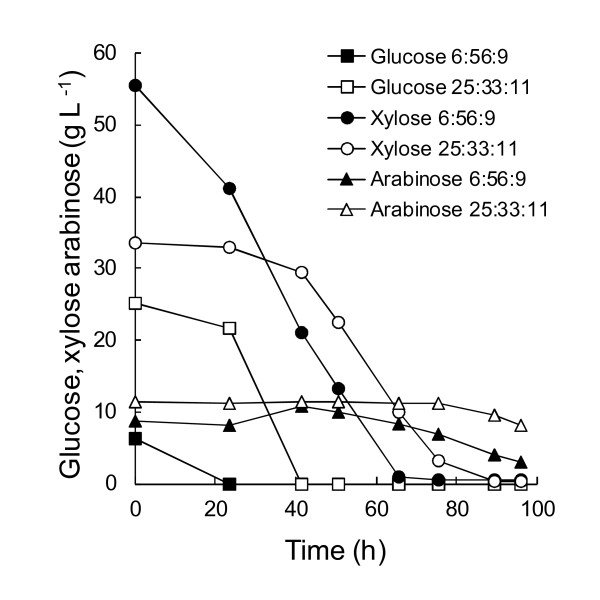
Lipid production was most efficient with glucose (up to 25 g lipid L(-1), 48 to 75% lipid in the biomass, at up to 0.21 g lipid L(-1) h(-1)) as the sole carbon source, but high lipid concentrations were also produced from xylose (36 to 45% lipid in biomass). Lipid production was low (15-19% lipid in biomass) with arabinose as sole carbon source and was lower than expected (30% lipid in biomass) when glucose, xylose and arabinose were provided simultaneously. The presence of arabinose and/or xylose in the medium increased the proportion of palmitic and linoleic acid and reduced the proportion of oleic acid in the fatty acids, compared to glucose-grown cells. High cell densities were obtained in both batch (37 g L(-1), with 49% lipid in the biomass) and fed-batch (35 to 47 g L(-1), with 50 to 75% lipid in the biomass) cultures. The highest proportion of lipid in the biomass was observed in cultures given nitrogen during the batch phase but none with the feed. However, carbohydrate consumption was incomplete when the feed did not contain nitrogen and the highest total lipid and best substrate consumption were observed in cultures which received a constant low nitrogen supply.
Lipid production in R. toruloides was lower from arabinose and mixed carbohydrates than from glucose or xylose. Although high biomass and lipid production were achieved in both batch and fed-batch cultures with glucose as carbon source, for lipid production from mixtures of carbohydrates fed-batch cultivation was preferable. Constant feeding was better than intermittent feeding. The feeding strategy did not affect the relative proportion of different fatty acids in the lipid, but the presence of C5 sugars did.
微生物油脂是生物柴油或可再生柴油的潜在来源,红酵母罗氏菌不仅因其能将其干生物量的 50%以上积累为油脂而引人注目,而且还因其能利用五碳和六碳碳水化合物,这些碳水化合物存在于植物生物质水解物中。
罗氏菌在 pH4 的化学定义、氮限制(C/N40 至 100)培养基中,在 0.5L 生物反应器中进行分批和补料分批培养,培养基中含有葡萄糖、木糖、阿拉伯糖或所有三种碳水化合物作为碳源。用氯仿-甲醇从生物质中提取油脂,称重测量,并通过 GC 分析。
以葡萄糖(高达 25g 油脂 L(-1),高达 0.21g 油脂 L(-1) h(-1)时,生物质中的 48%至 75%为油脂)作为唯一碳源时,油脂生产效率最高,但也能从木糖(生物质中 36%至 45%为油脂)中产生高浓度的油脂。以阿拉伯糖作为唯一碳源时,油脂产量较低(生物质中 15%至 19%为油脂),当同时提供葡萄糖、木糖和阿拉伯糖时,油脂产量低于预期(生物质中 30%为油脂)。与葡萄糖培养的细胞相比,在培养基中存在阿拉伯糖和/或木糖会增加棕榈酸和亚油酸的比例,并降低油酸在脂肪酸中的比例。在分批培养(37g L(-1),生物质中 49%为油脂)和补料分批培养(35 至 47g L(-1),生物质中 50%至 75%为油脂)中均获得了较高的细胞密度。在分批培养阶段给予氮时,观察到生物质中油脂的比例最高,但在补料阶段没有给予氮时,观察到不完全的碳水化合物消耗,在接受恒定低氮供应的培养物中观察到最高的总油脂和最佳的基质消耗。
罗氏菌从阿拉伯糖和混合碳水化合物中生产油脂的效率低于从葡萄糖或木糖中生产油脂。虽然用葡萄糖作为碳源在分批和补料分批培养中均能实现高生物量和油脂生产,但从碳水化合物混合物中生产油脂时,补料分批培养是更好的选择。恒速进料优于间歇进料。进料策略并不影响油脂中不同脂肪酸的相对比例,但 C5 糖的存在会影响。