Department of Microbiology & Immunology, University of British Columbia, Vancouver, British Columbia, Canada.
PLoS One. 2012;7(5):e37689. doi: 10.1371/journal.pone.0037689. Epub 2012 May 23.
Inflammation and infection are major determinants of disease severity and consequently, the quality of life and outcome for patients with cystic fibrosis (CF). Interleukin-1 beta (IL-1β) is a key inflammatory mediator. Secretion of biologically active IL-1β involves inflammasome-mediated processing. Little is known about the contribution of IL-1β and the inflammasomes in CF inflammatory disease. This study examines inflammasome-mediated IL-1β production in CF bronchial epithelial cell lines and human patients with CF.
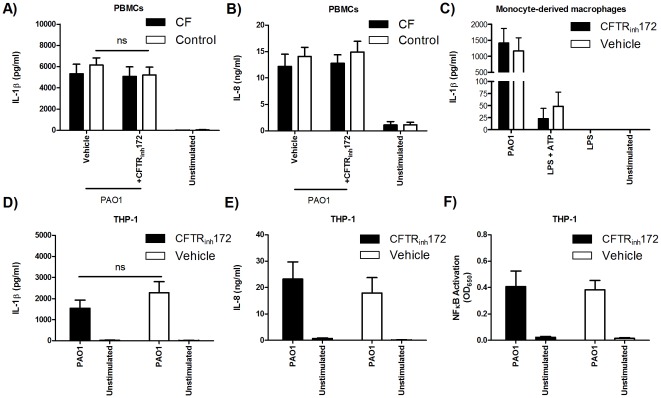
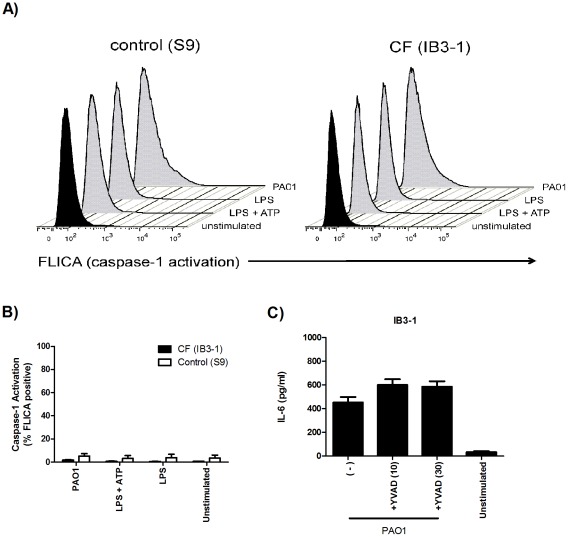
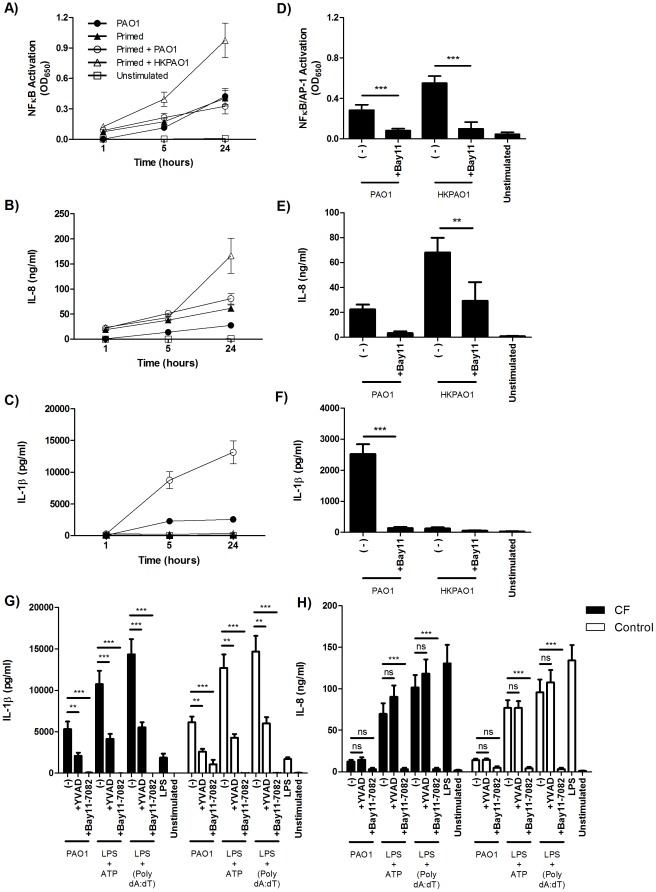
Bronchial epithelial cell lines were found to produce negligible amounts of basal or stimulated IL-1β compared to hematopoeitic cells and they did not significantly upregulate caspase-1 activity upon inflammasome stimulation. In contrast, peripheral blood mononuclear cells (PBMCs) from both CF and healthy control subjects produced large amounts of IL-1β and strongly upregulated caspase-1 activity upon inflammasome stimulation. PBMCs from CF patients and controls displayed similar levels of caspase-1 activation and IL-1β production when stimulated with inflammasome activators. This IL-1β production was dependent on NF-κB activity and could be enhanced by priming with LPS. Finally, chemical inhibition of CFTR activity in control PBMCs and THP-1 cells did not significantly alter IL-1β or IL-8 production in response to P. aeruginosa.
Hematopoeitic cells appear to be the predominant source of inflammasome-induced pro-inflammatory IL-1β in CF. PBMCs derived from CF subjects display preserved inflammasome activation and IL-1β secretion in response to the major CF pathogen Pseudomonas aeruginosa. However, our data do not support the hypothesis that increased IL-1β production in CF subjects is due to an intrinsic increase in NF-κB activity through loss of CFTR function.
炎症和感染是决定囊性纤维化(CF)患者疾病严重程度的主要因素,进而也影响患者的生活质量和预后。白细胞介素-1β(IL-1β)是一种关键的炎症介质。生物活性 IL-1β 的分泌涉及炎症小体介导的加工。关于 CF 炎症性疾病中 IL-1β 和炎症小体的作用知之甚少。本研究检测了 CF 支气管上皮细胞系和 CF 患者的炎症小体介导的 IL-1β 产生。
与造血细胞相比,支气管上皮细胞系产生的基础或刺激的 IL-1β 可忽略不计,并且在炎症小体刺激时它们的半胱天冬酶-1 活性没有显著上调。相比之下,CF 和健康对照者的外周血单核细胞(PBMC)在炎症小体刺激时产生大量的 IL-1β,并强烈上调半胱天冬酶-1 活性。CF 患者和对照者的 PBMC 在受到炎症小体激活剂刺激时显示出相似水平的 caspase-1 激活和 IL-1β 产生。这种 IL-1β 产生依赖于 NF-κB 活性,并用 LPS 预刺激可以增强。最后,在对照 PBMC 和 THP-1 细胞中化学抑制 CFTR 活性,不会显著改变对铜绿假单胞菌的反应中 IL-1β 或 IL-8 的产生。
造血细胞似乎是 CF 中炎症小体诱导的促炎 IL-1β 的主要来源。来自 CF 患者的 PBMC 显示出对主要 CF 病原体铜绿假单胞菌的炎症小体激活和 IL-1β 分泌的保留。然而,我们的数据不支持 CF 患者中 IL-1β 产生增加是由于 CFTR 功能丧失导致 NF-κB 活性固有增加的假设。