University of North Carolina at Chapel Hill, USA.
Clin Trials. 2012 Jun;9(3):340-7. doi: 10.1177/1740774512443594.
Obtaining the definitive data necessary to determine the safety and efficacy of using antiretroviral treatment (ART) to reduce the sexual transmission of HIV in heterosexual couples encountered an array of ethical challenges that threatened to compromise HIV Prevention Trials Network (HPTN) 052, the multinational clinical trial addressing this issue that has profound public health implications.
To describe and analyze the major ethical challenges faced in HPTN 052.
The ethical issues and modifications of HPTN 052 in response to these issues were cataloged by the principal investigator, the lead coordinator, and the ethicist working on the trial. The major ethical issues that were unique to the trial were then described and analyzed in light of the published literature as well as guidances and policies. The ethical challenges that must be addressed in many clinical trials, such as those related to obtaining informed consent and making provisions for ancillary care, are not described.
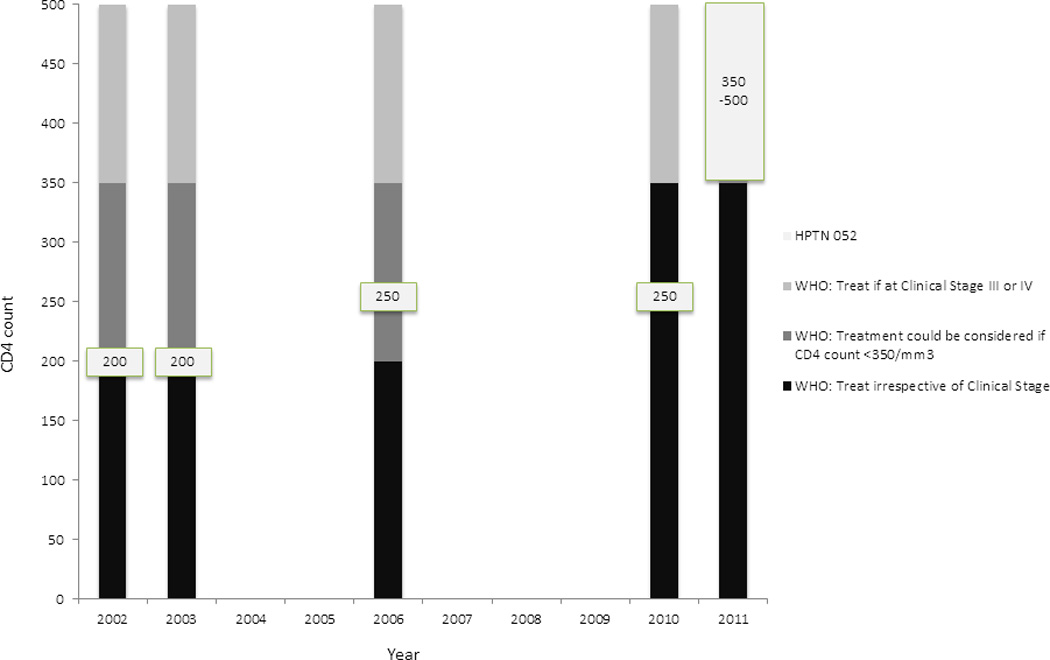
When HPTN 052 was being designed, ethical questions emerged related to the relevance of the research question itself given data from observational research and a range of beliefs about the appropriate means of preventing and treating HIV infection and AIDS. Furthermore, ethical challenges were faced regarding site selection since there was a scientific need to conduct the research in settings where HIV incidence was high, but alternatives to study participation should be available. As in most HIV-prevention research, ethical questions surrounded the determination of the appropriate prevention package for all of those enrolled. During the course of the trial, guidance documents and policies emerged that were of direct relevance to the research questions, calling for a balancing of concerns for the research subjects and trial integrity. When the study results were made public, there was a need to ensure access to the treatment shown to be effective that in some cases differed from the guidelines used at the sites where the research was being conducted. In addition, questions were raised about whether there was an obligation to notify subjects about 'unlinked' transmissions of HIV, that is, infections acquired from someone other than the designated sexual partner enrolled in the study.
The ethical issues described are limited to those discerned by the authors and not those of other stakeholders who may have identified additional issues or had a different perspective in analyzing them.
Understanding the ethical challenges faced in HPTN 052 promises to inform the design and conduct of future complex, long-term clinical trials aimed at addressing critical scientific and public health questions, where data and practice patterns emerge over the course of the trial.
为了确定使用抗逆转录病毒治疗(ART)降低异性恋夫妇中 HIV 性传播的安全性和有效性所需的明确数据,我们遇到了一系列伦理挑战,这些挑战有可能危及 HIV 预防试验网络(HPTN)052,这是一项具有深远公共卫生意义的跨国临床试验,旨在解决这一问题。
描述和分析 HPTN 052 面临的主要伦理挑战。
主要研究者、首席协调员和参与试验的伦理学家对 HPTN 052 中的伦理问题和修改进行了分类。然后,根据已发表的文献以及指南和政策,对该试验特有的主要伦理问题进行了描述和分析。临床试验中必须解决的一些伦理问题,例如获得知情同意和提供辅助护理的问题,不在本文描述范围内。
在设计 HPTN 052 时,出现了一些与研究问题本身的相关性相关的伦理问题,这些问题基于观察性研究的数据和对预防和治疗 HIV 感染和艾滋病的适当方法的一系列看法。此外,由于需要在 HIV 发病率高的环境中进行研究,因此在选择研究地点方面也面临着伦理挑战,但应提供替代参与研究的选择。与大多数 HIV 预防研究一样,围绕为所有入组者确定适当的预防方案的问题也引发了伦理问题。在试验过程中,出现了一些直接与研究问题相关的指南文件和政策,呼吁平衡研究对象和试验完整性的关注。当研究结果公布时,需要确保能够获得被证明有效的治疗方法,而在某些情况下,这种治疗方法与在进行研究的地点使用的指南不同。此外,还提出了是否有义务通知研究对象关于 HIV 的“非关联”传播的问题,即从研究中指定的性伴侣以外的人感染 HIV。
描述的伦理问题仅限于作者发现的问题,而不是其他利益相关者可能发现的其他问题或在分析这些问题时的不同观点。
了解 HPTN 052 面临的伦理挑战有望为未来旨在解决关键科学和公共卫生问题的复杂、长期临床试验的设计和实施提供信息,在这些试验中,数据和实践模式会在试验过程中出现。
