Fernandes Ana Josane Dantas, Ferreira Magda Rhayanny Assunção, Randau Karina Perrelli, de Souza Tatiane Pereira, Soares Luiz Alberto Lira
Programa de Pós-Graduação em Ciências Farmacêuticas, Departamento de Farmácia, UFRN, Avenida Gal. Cordeiro de Farias s/n, 59010-180 Natal, RN, Brazil.
ScientificWorldJournal. 2012;2012:923462. doi: 10.1100/2012/923462. Epub 2012 Jun 4.
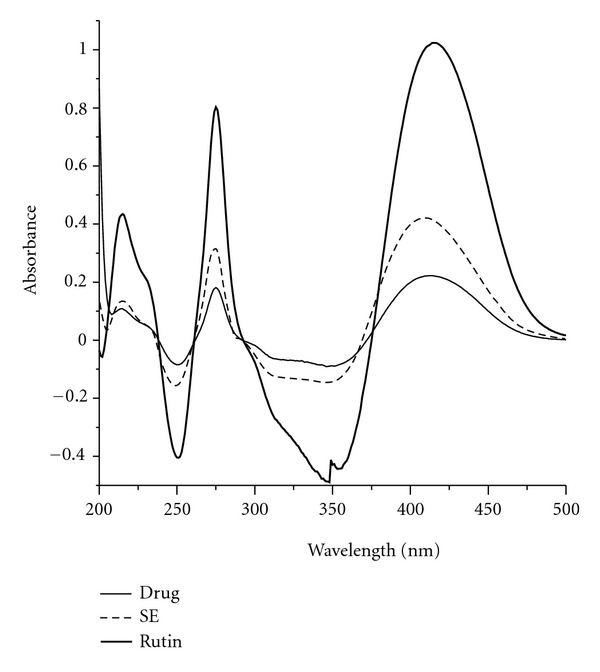
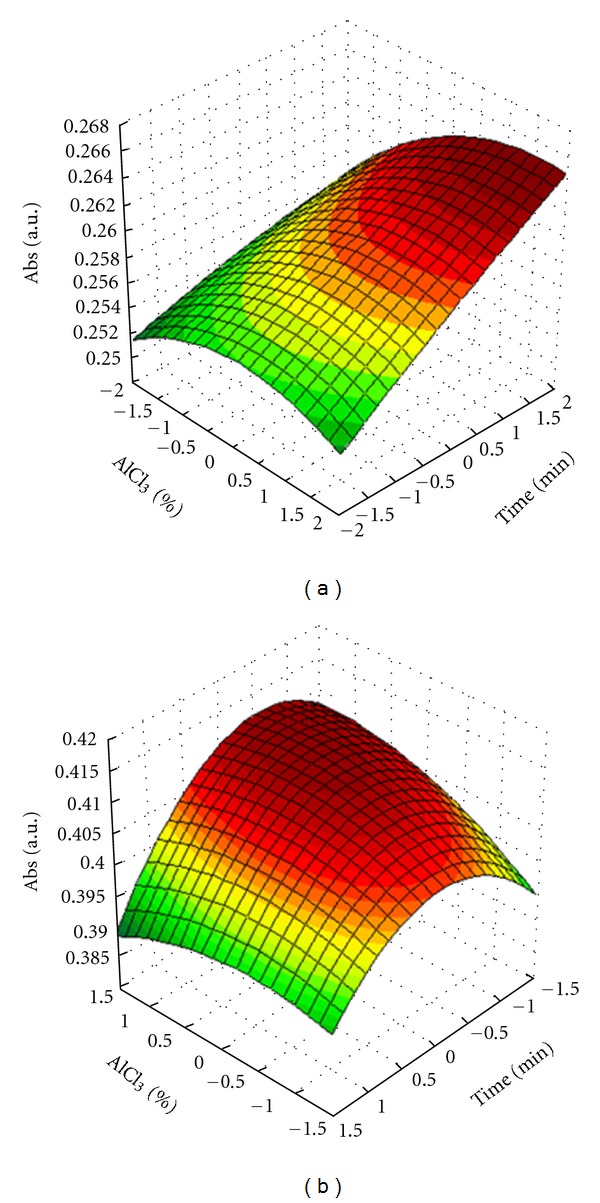
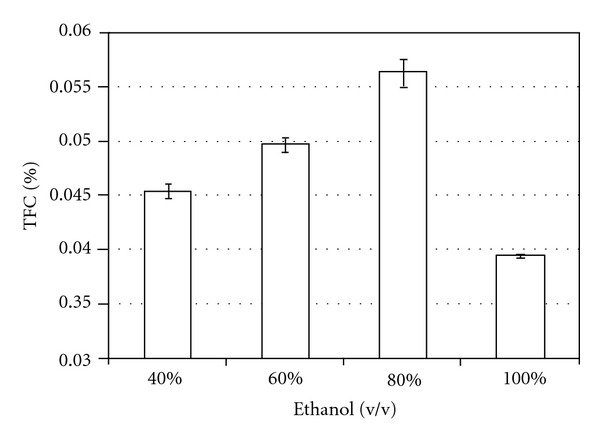
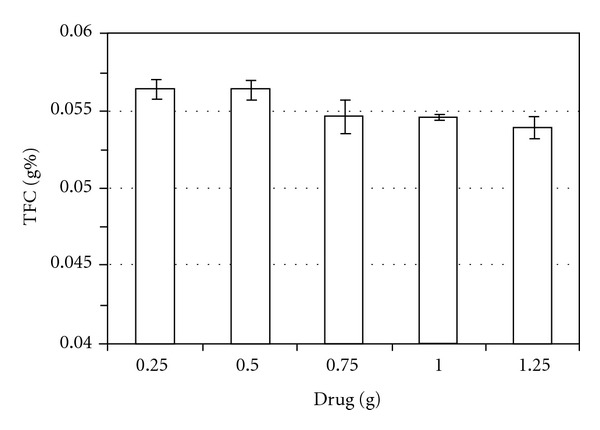
The aim of this work was to evaluate the spectrophotometric methodology for determining the total flavonoid content (TFC) in herbal drug and derived products from Bauhinia monandra Kurz. Several analytical parameters from this method grounded on the complex formed between flavonoids and AlCl₃ were evaluated such as herbal amount (0.25 to 1.25 g); solvent composition (ethanol 40 to 80%, v/v); as well as the reaction time and AlCl₃ concentration (2 to 9%, w/v). The method was adjusted to aqueous extractives and its performance studied through precision, linearity and preliminary robustness. The results showed an important dependence of the method response from reaction time, AlCl₃ concentration, sample amount, and solvent mixture. After choosing the optimized condition, the method was applied for the matrixes (herbal material and extractives), showing precision lower than 5% (for both parameters repeatability and intermediate precision), coefficient of determination higher than 0.99, and no important influence could be observed for slight variations from wavelength or AlCl₃ concentration. Thus, it could be concluded that the evaluated analytical procedure was suitable to quantify the total flavonoid content in raw material and aqueous extractives from leaves of B. monandra.
本研究旨在评估分光光度法测定单蕊羊蹄甲草药及其衍生产品中总黄酮含量(TFC)的方法。对基于黄酮类化合物与AlCl₃形成的络合物的该方法的几个分析参数进行了评估,如草药用量(0.25至1.25 g);溶剂组成(乙醇40%至80%,v/v);以及反应时间和AlCl₃浓度(2%至9%,w/v)。该方法适用于水提取物,并通过精密度、线性和初步稳健性研究了其性能。结果表明,该方法的响应强烈依赖于反应时间、AlCl₃浓度、样品量和溶剂混合物。选择优化条件后,该方法应用于基质(草药原料和提取物),显示精密度低于5%(重复性和中间精密度两个参数),测定系数高于0.99,波长或AlCl₃浓度的微小变化未观察到重要影响。因此,可以得出结论,所评估的分析方法适用于定量单蕊羊蹄甲叶片原料和水提取物中的总黄酮含量。