Nowak Piotr, Abdurahman Samir, Lindkvist Annica, Troseid Marius, Sönnerborg Anders
Department of Infectious Diseases, Institution of Medicine, Karolinska University Hospital and Karolinska Institutet, 14186 Stockholm, Sweden.
Int J Microbiol. 2012;2012:263836. doi: 10.1155/2012/263836. Epub 2012 Jun 6.
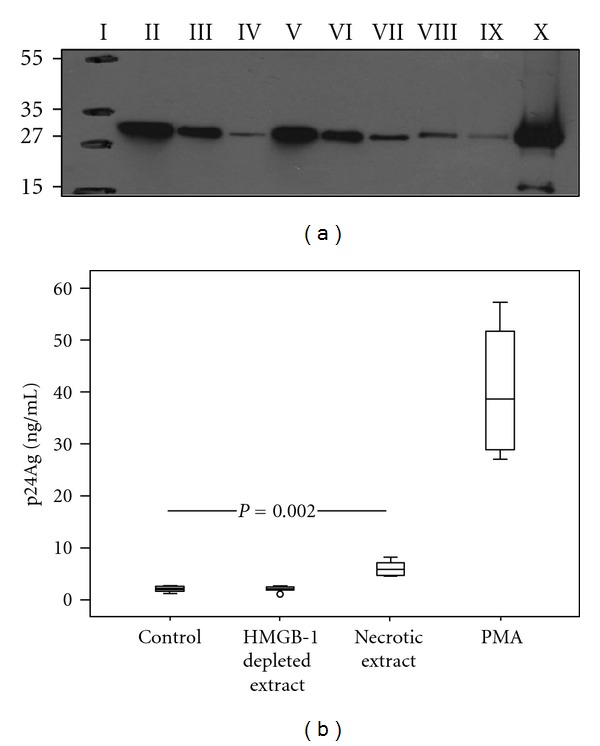
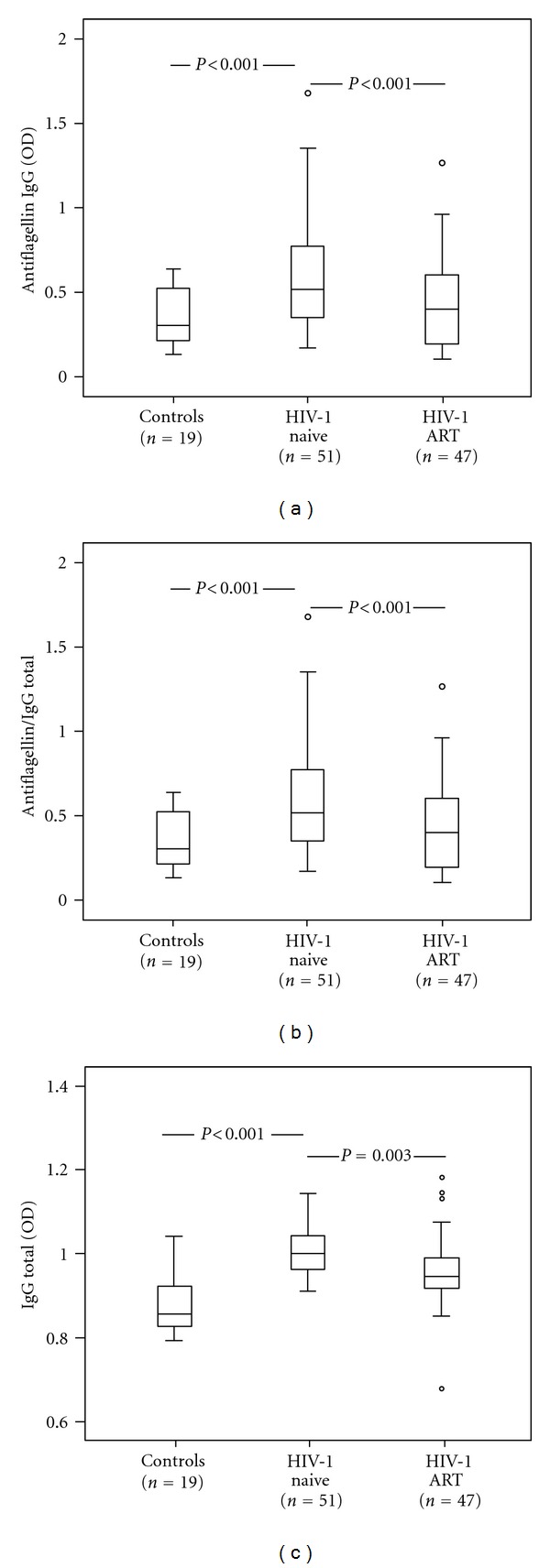
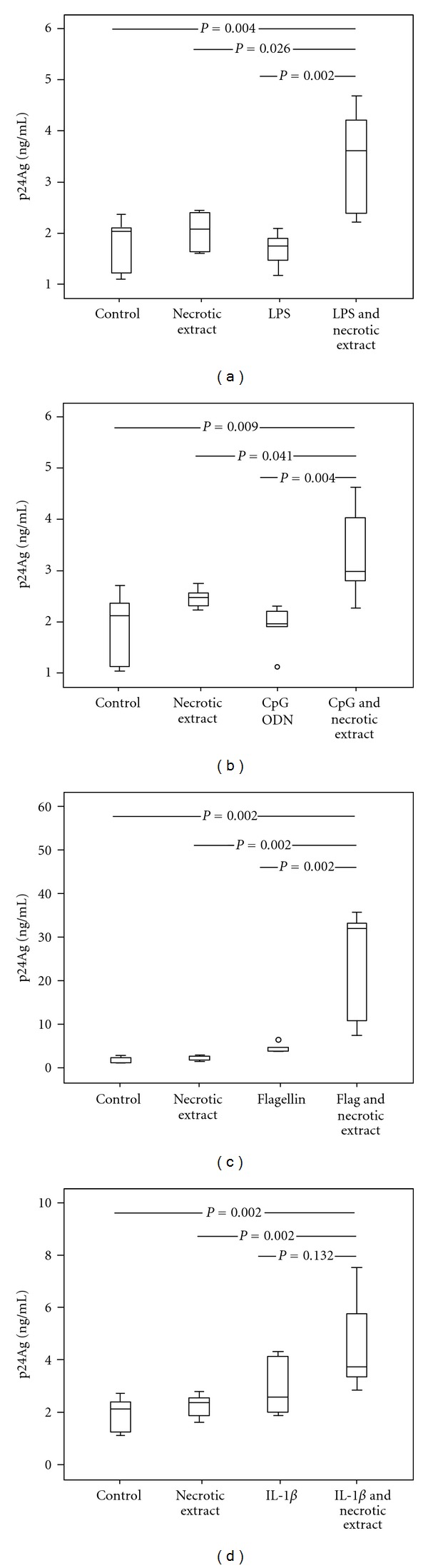
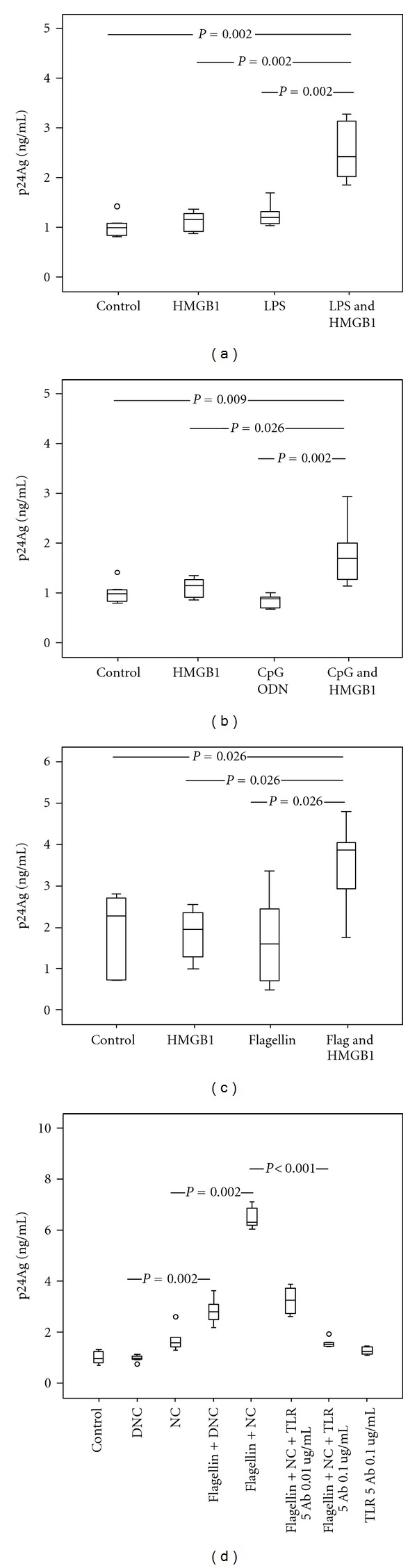
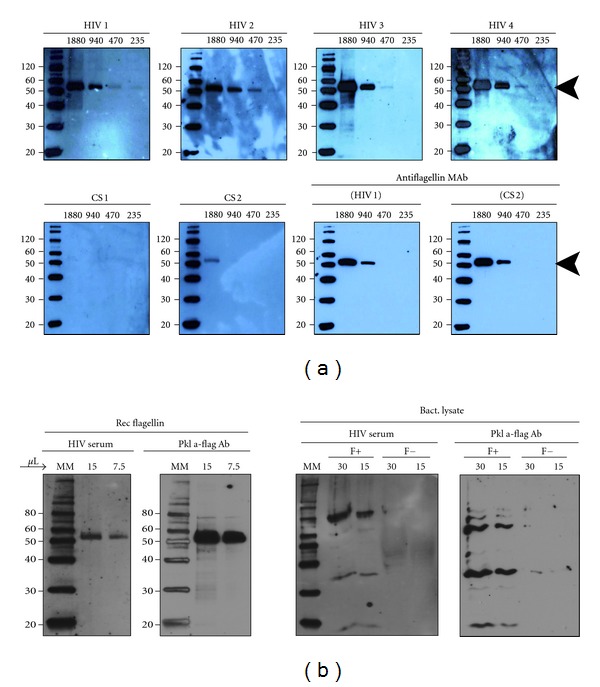
Objective. We hypothesized that HMGB1 in complex with bacterial components, such as flagellin, CpG-ODN, and LPS, promotes HIV-1 replication. Furthermore, we studied the levels of antiflagellin antibodies during HIV-1-infection. Methods. Chronically HIV-1-infected U1 cells were stimulated with necrotic extract/recombinant HMGB1 in complex with TLR ligands or alone. HIV-1 replication was estimated by p24 antigen in culture supernatants 48-72 hours after stimulation. The presence of systemic anti-flagellin IgG was determined in 51 HIV-1-infected patients and 19 controls by immunoblotting or in-house ELISA. Results. Flagellin, LPS, and CpG-ODN induced stronger HIV-1 replication when incubated together with necrotic extract or recombinant HMGB1 than activation by any of the compounds alone. Moreover, the stimulatory effect of necrotic extract was inhibited by depletion of HMGB1. Elevated levels of anti-flagellin antibodies were present in plasma from HIV-1-infected patients and significantly decreased during 2 years of antiretroviral therapy. Conclusions. Our findings implicate a possible role of HGMB1-bacterial complexes, as a consequence of microbial translocation and cell necrosis, for immune activation in HIV-1 pathogenesis. We propose that flagellin is an important microbial product, that modulates viral replication and induces adaptive immune responses in vivo.
目的。我们推测,与鞭毛蛋白、CpG-ODN和脂多糖等细菌成分结合的高迁移率族蛋白B1(HMGB1)可促进HIV-1复制。此外,我们研究了HIV-1感染期间抗鞭毛蛋白抗体的水平。方法。用与Toll样受体(TLR)配体结合的坏死提取物/重组HMGB1或单独使用坏死提取物/重组HMGB1刺激长期感染HIV-1的U1细胞。刺激后48 - 72小时,通过检测培养上清液中的p24抗原评估HIV-1复制情况。通过免疫印迹法或内部酶联免疫吸附测定法(ELISA)检测51例HIV-1感染患者和19例对照者体内系统性抗鞭毛蛋白IgG的存在情况。结果。与单独使用任何一种化合物相比,鞭毛蛋白、脂多糖和CpG-ODN与坏死提取物或重组HMGB1一起孵育时,诱导HIV-1复制的能力更强。此外,HMGB1的缺失可抑制坏死提取物的刺激作用。HIV-1感染患者血浆中抗鞭毛蛋白抗体水平升高,且在抗逆转录病毒治疗的2年期间显著下降。结论。我们的研究结果表明,由于微生物易位和细胞坏死导致的HGMB1-细菌复合物可能在HIV-1发病机制中的免疫激活中发挥作用。我们提出,鞭毛蛋白是一种重要的微生物产物,可调节病毒复制并在体内诱导适应性免疫反应。