Department of Microbiology, National University of Singapore, Singapore, Republic of Singapore.
PLoS One. 2012;7(6):e39199. doi: 10.1371/journal.pone.0039199. Epub 2012 Jun 25.
Ongoing Helicobacter pylori (HP) infection triggers a chronic active gastritis. Eradicating HP reduces gastric inflammation, but does not eliminate it. We sought to characterize this persistent gastritis, and demonstrate the persistence of HP-specific Th17 responses in individuals previously infected with HP but who no longer had evidence of ongoing infection.
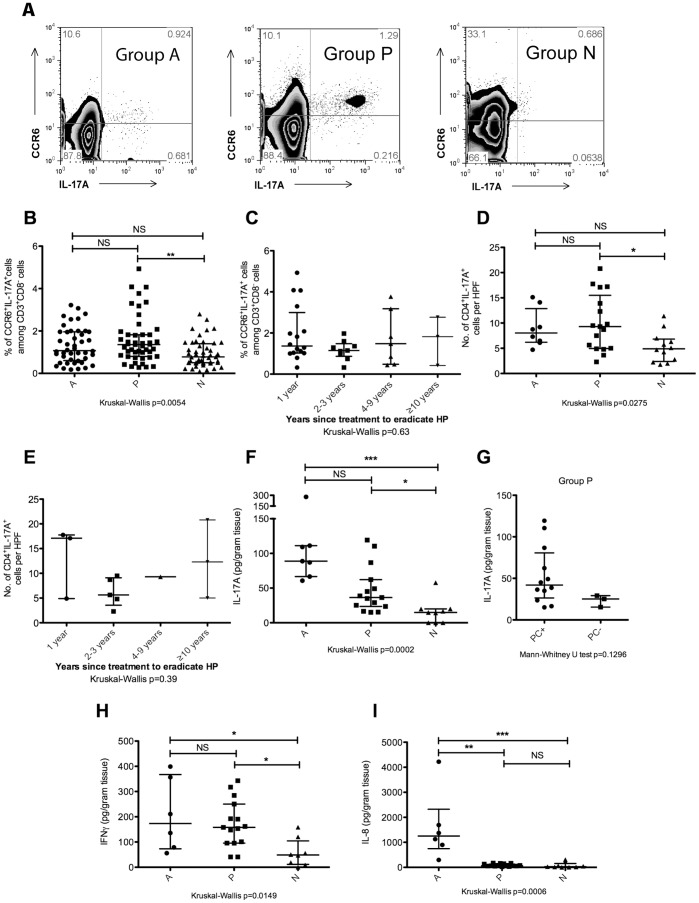
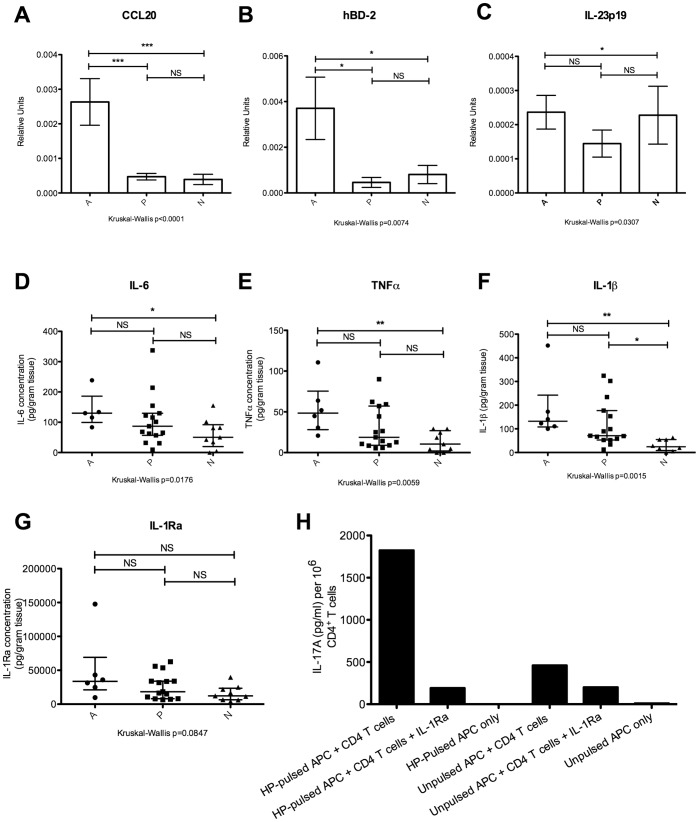
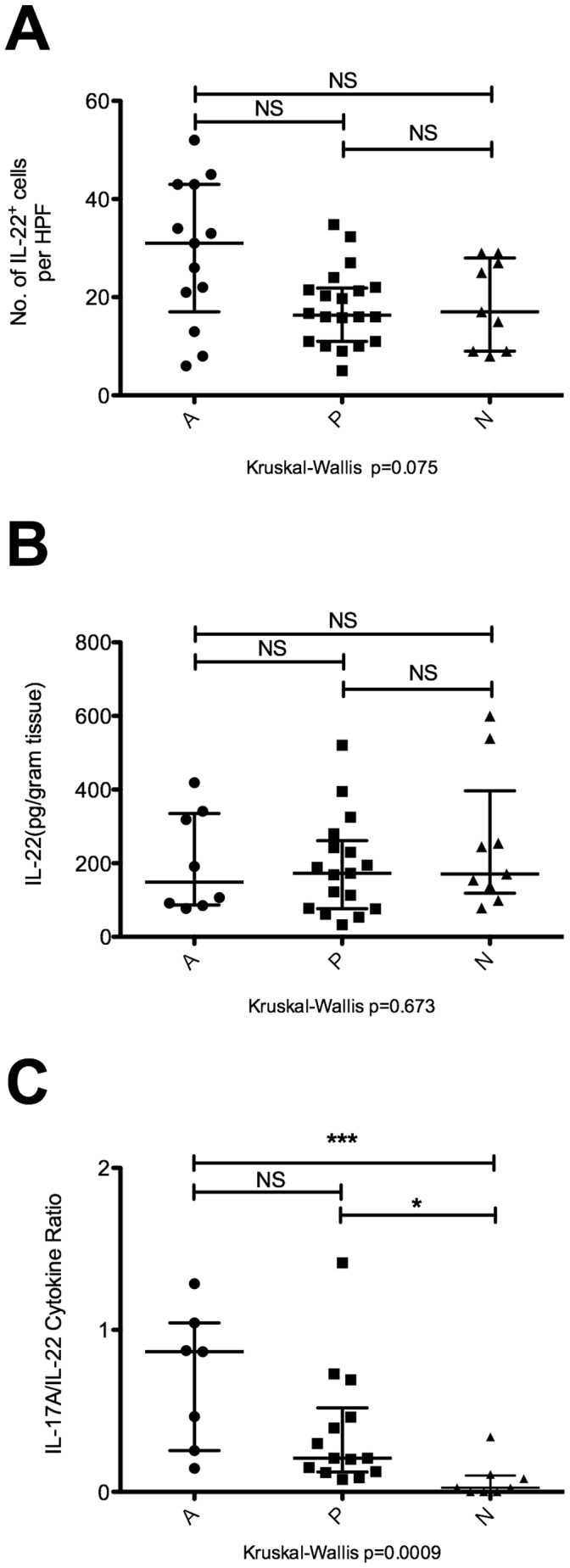
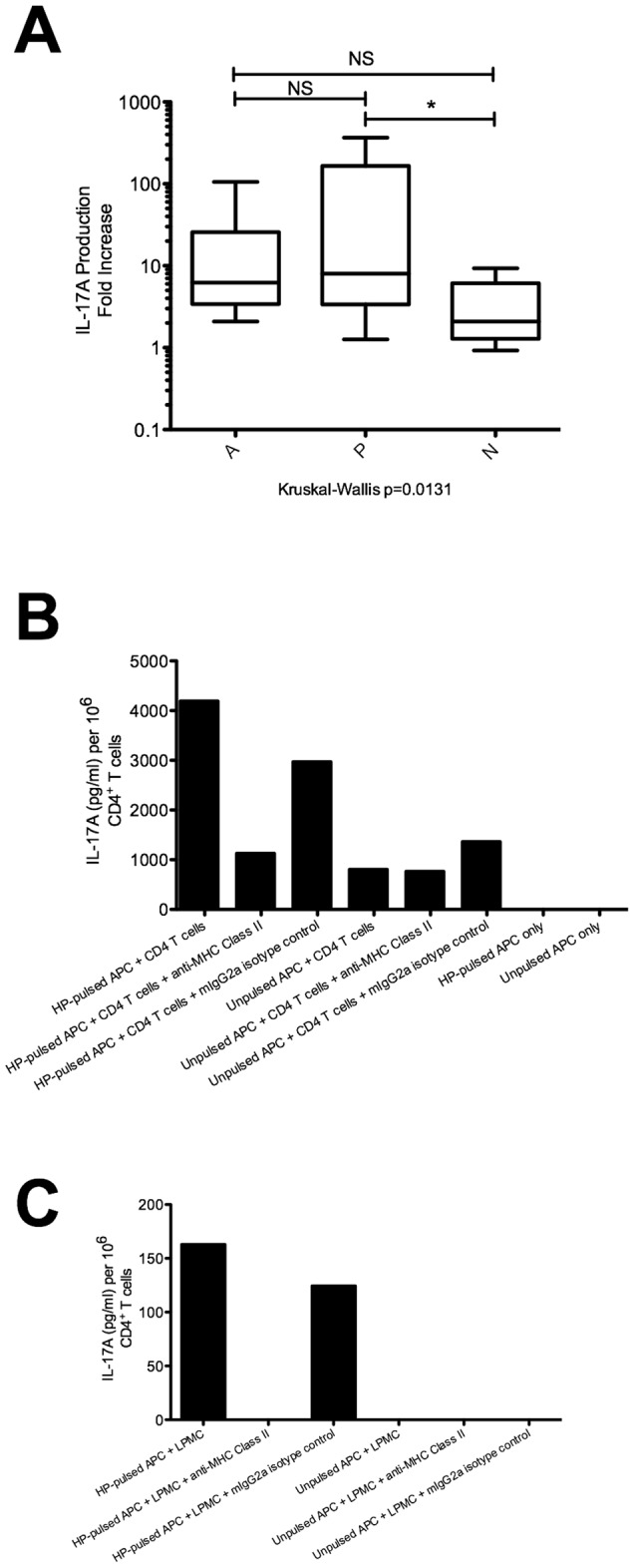
METHODOLOGY/PRINCIPAL FINDINGS: Study subjects were divided into 3 groups 55 individuals had active HP infection (group A), 41 were diagnosed with previous HP infection (group P), and 59 were naïve to HP (group N). Blood and gastric tissue were obtained with written informed consent from all subjects, and immune responses were evaluated using flow cytometry, semi-quantitative real time PCR, immunofluorescent staining, ELISA, and multiplex cytometric bead array for cytokine quantification. Elevated IL-17A responses were observed in patients from group A compared to group N. Interestingly, IL-17A responses remained persistently elevated in the blood and gastric mucosa of individuals from group P, despite the absence of ongoing HP infection. Using purified CD4(+) T cells as effectors and antibodies that blocked antigen presentation by MHC Class II, we showed that these persistent IL-17A responses were mediated primarily by HP-specific Th17 cells, rather than other immune cells that have also been described to secrete IL-17A. Gastric mucosal IL-1β levels were also persistently elevated in group P, and neutralisation of IL-1β reduced the HP-specific IL-17A response of purified CD4(+) T cells to autologous HP-pulsed antigen presenting cells in vitro, suggesting a functional association between IL-1β and the persistent Th17 response in group P patients.
CONCLUSIONS/SIGNIFICANCE: Despite lack of ongoing HP infection, HP-specific Th17 cells persist in the blood and gastric mucosa of individuals with past HP infection. We speculate that this persistent inflammation might contribute to gastric mucosal pathology, for example, persistent increased gastric cancer risk despite eradication of HP.
持续的幽门螺杆菌(HP)感染会引发慢性活动性胃炎。根除 HP 可减轻胃炎症,但不能消除炎症。我们试图描述这种持续存在的胃炎,并证明在既往感染过 HP 但不再有持续感染证据的个体中,存在持续的 HP 特异性 Th17 反应。
方法/主要发现:研究对象分为 3 组:55 人患有活动性 HP 感染(组 A),41 人既往诊断为 HP 感染(组 P),59 人对 HP 无感染(组 N)。所有受试者均签署书面知情同意书,获取血液和胃组织,采用流式细胞术、半定量实时 PCR、免疫荧光染色、ELISA 和多重流式细胞术检测细胞因子定量,评估免疫反应。与组 N 相比,组 A 患者的 IL-17A 反应升高。有趣的是,尽管组 P 个体中不存在持续的 HP 感染,但他们的血液和胃黏膜中 IL-17A 反应仍持续升高。使用纯化的 CD4+T 细胞作为效应细胞,并使用阻断 MHC Ⅱ类抗原呈递的抗体,我们表明这些持续的 IL-17A 反应主要由 HP 特异性 Th17 细胞介导,而不是其他已被描述为分泌 IL-17A 的免疫细胞介导。组 P 患者的胃黏膜 IL-1β 水平也持续升高,体外中和 IL-1β 可降低纯化的 CD4+T 细胞对自体 HP 脉冲抗原呈递细胞的 HP 特异性 IL-17A 反应,提示 IL-1β 与组 P 患者的持续 Th17 反应之间存在功能关联。
结论/意义:尽管缺乏持续的 HP 感染,但既往 HP 感染个体的血液和胃黏膜中仍存在 HP 特异性 Th17 细胞。我们推测这种持续的炎症可能导致胃黏膜病理变化,例如,尽管根除了 HP,但仍持续增加胃癌风险。