Department of Public Health, Erasmus Medical Center, PO Box 2040, Rotterdam 3000 CA, The Netherlands.
Br J Cancer. 2012 Aug 21;107(5):778-84. doi: 10.1038/bjc.2012.317. Epub 2012 Jul 17.
Screening with prostate-specific antigen (PSA) can reduce prostate cancer mortality, but may advance diagnosis and treatment in time and lead to overdetection and overtreatment. We estimated benefits and adverse effects of PSA screening for individuals who are deciding whether or not to be screened.
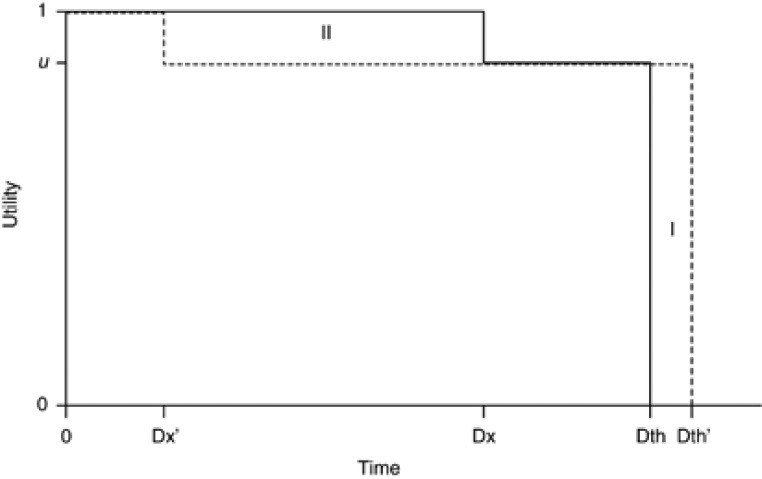
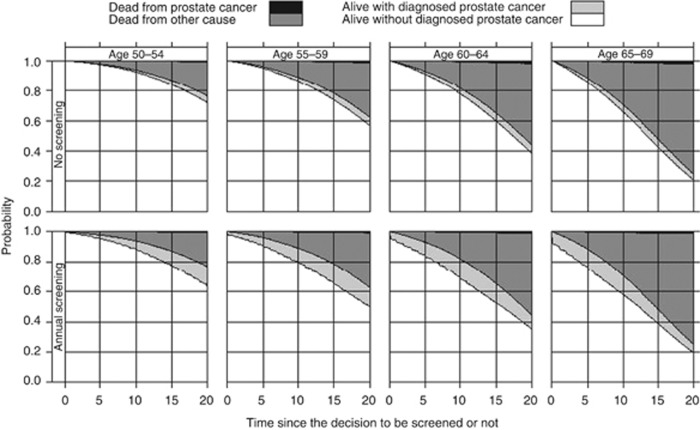
Using a microsimulation model, we estimated lifetime probabilities of prostate cancer diagnosis and death, overall life expectancy and expected time to diagnosis, both with and without screening. We calculated anticipated loss in quality of life due to prostate cancer diagnosis and treatment that would be acceptable to decide in favour of screening.
Men who were screened had a gain in life expectancy of 0.08 years but their expected time to diagnosis decreased by 1.53 life-years. Of the screened men, 0.99% gained on average 8.08 life-years and for 17.43% expected time to diagnosis decreased by 8.78 life-years. These figures imply that the anticipated loss in quality of life owing to diagnosis and treatment should not exceed 4.8%, for screening to have a positive effect on quality-adjusted life expectancy.
The decision to be screened should depend on personal preferences. The negative impact of screening might be reduced by screening men who are more willing to accept the side effects from treatment.
使用前列腺特异性抗原(PSA)进行筛查可以降低前列腺癌死亡率,但也可能及时推进诊断和治疗,导致过度诊断和过度治疗。我们评估了 PSA 筛查对决定是否进行筛查的个体的获益和不良反应。
我们使用微模拟模型,评估了筛查和不筛查时的前列腺癌诊断和死亡的终生概率、总体预期寿命和预期诊断时间。我们计算了因前列腺癌诊断和治疗而导致的预期生活质量损失,这是决定是否进行筛查的可接受损失。
接受筛查的男性预期寿命延长了 0.08 年,但诊断所需时间减少了 1.53 个生命年。在接受筛查的男性中,平均有 0.99%的人获得了 8.08 个生命年的延长,而 17.43%的人诊断所需时间减少了 8.78 个生命年。这意味着,为了使筛查对调整后生命质量预期寿命产生积极影响,因诊断和治疗而导致的预期生活质量损失不应超过 4.8%。
是否进行筛查的决定应取决于个人偏好。通过筛选更愿意接受治疗副作用的男性,可能会减少筛查的负面影响。