• 文献检索
  • 文档翻译
  • 深度研究
  • 学术资讯
  • Suppr Zotero 插件Zotero 插件
  • 邀请有礼
  • 套餐&价格
  • 历史记录
应用&插件
Suppr Zotero 插件Zotero 插件浏览器插件Mac 客户端Windows 客户端微信小程序
定价
高级版会员购买积分包购买API积分包
服务
文献检索文档翻译深度研究API 文档MCP 服务
关于我们
关于 Suppr公司介绍联系我们用户协议隐私条款
关注我们

Suppr 超能文献

核心技术专利:CN118964589B侵权必究
粤ICP备2023148730 号-1Suppr @ 2026

文献检索

告别复杂PubMed语法,用中文像聊天一样搜索,搜遍4000万医学文献。AI智能推荐,让科研检索更轻松。

立即免费搜索

文件翻译

保留排版,准确专业,支持PDF/Word/PPT等文件格式,支持 12+语言互译。

免费翻译文档

深度研究

AI帮你快速写综述,25分钟生成高质量综述,智能提取关键信息,辅助科研写作。

立即免费体验

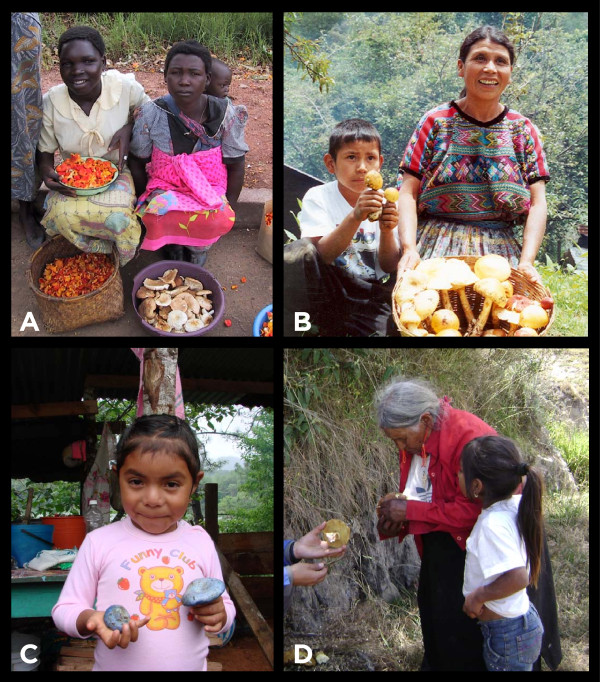
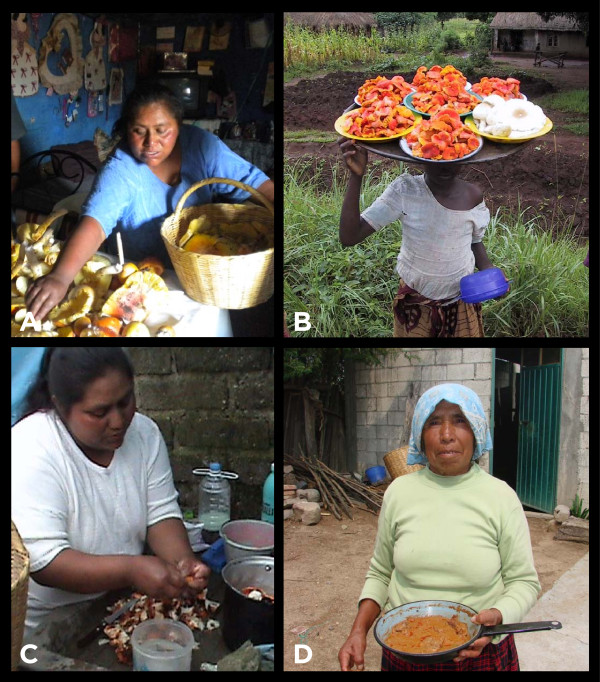
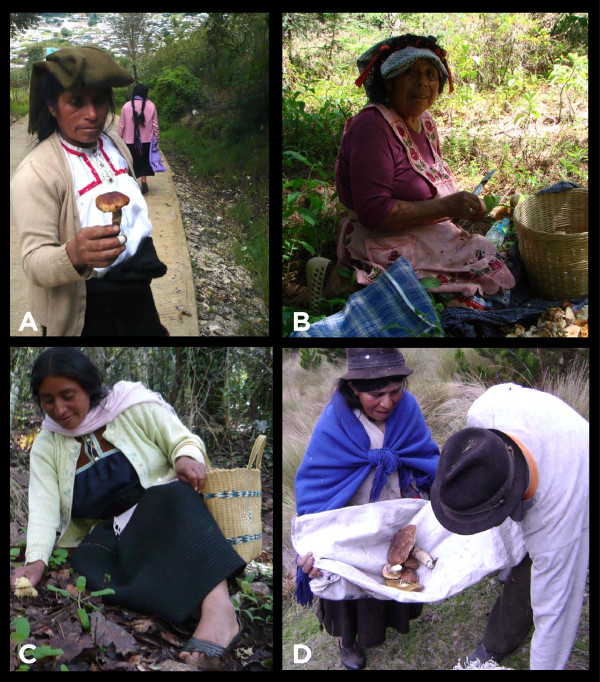
女性关注地方知识、民族真菌学经验。

Women care about local knowledge, experiences from ethnomycology.

机构信息

Laboratorio de Sistemática, Ecología y Aprovechamiento de Hongos Ectomicorrízicos, Departamento de Botánica, Instituto de Biología, Universidad Nacional Autónoma de México, Circuito Exterior s/n, A,P, 70-233, C,P, 04510, Ciudad Universitaria, D,F, Mexico.

出版信息

J Ethnobiol Ethnomed. 2012 Jul 18;8:25. doi: 10.1186/1746-4269-8-25.

DOI:10.1186/1746-4269-8-25
PMID:22809491
原文链接:https://pmc.ncbi.nlm.nih.gov/articles/PMC3487846/
Abstract

Gender is one of the main variables that influence the distribution of local knowledge. We carried out a literature review concerning local mycological knowledge, paying special attention to data concerning women's knowledge and comparative gender data. We found that unique features of local mycological knowledge allow people to successfully manage mushrooms. Women are involved in every stage of mushroom utilization from collection to processing and marketing. Local mycological knowledge includes the use mushrooms as food, medicine, and recreational objects as well as an aid to seasonal household economies. In many regions of the world, women are often the main mushroom collectors and possess a vast knowledge about mushroom taxonomy, biology, and ecology. Local experts play a vital role in the transmission of local mycological knowledge. Women participate in the diffusion of this knowledge as well as in its enrichment through innovation. Female mushroom collectors appreciate their mycological knowledge and pursue strategies and organization to reproduce it in their communities. Women mushroom gatherers are conscious of their knowledge, value its contribution in their subsistence systems, and proudly incorporate it in their cultural identity.

摘要

性别是影响地方知识分布的主要变量之一。我们对地方真菌学知识进行了文献回顾,特别关注有关妇女知识和比较性别数据的资料。我们发现,地方真菌学知识的独特特征使人们能够成功地管理蘑菇。妇女参与了从采集到加工和销售的蘑菇利用的各个阶段。地方真菌学知识包括将蘑菇用作食物、药物和娱乐对象,以及帮助季节性家庭经济。在世界上许多地区,妇女往往是主要的蘑菇采集者,她们拥有丰富的蘑菇分类学、生物学和生态学知识。地方专家在地方真菌学知识的传播中发挥着重要作用。妇女参与传播这种知识,并通过创新使其更加丰富。女性蘑菇采集者欣赏她们的真菌学知识,并采取策略和组织在她们的社区中复制它。女性蘑菇采集者意识到自己的知识,重视其对自己生存系统的贡献,并自豪地将其融入自己的文化认同。
https://cdn.ncbi.nlm.nih.gov/pmc/blobs/9cb4/3487846/96ab0b6837ef/1746-4269-8-25-3.jpg
https://cdn.ncbi.nlm.nih.gov/pmc/blobs/9cb4/3487846/bdaffa7aff6d/1746-4269-8-25-1.jpg
https://cdn.ncbi.nlm.nih.gov/pmc/blobs/9cb4/3487846/3e3987769dc0/1746-4269-8-25-2.jpg
https://cdn.ncbi.nlm.nih.gov/pmc/blobs/9cb4/3487846/96ab0b6837ef/1746-4269-8-25-3.jpg
https://cdn.ncbi.nlm.nih.gov/pmc/blobs/9cb4/3487846/bdaffa7aff6d/1746-4269-8-25-1.jpg
https://cdn.ncbi.nlm.nih.gov/pmc/blobs/9cb4/3487846/3e3987769dc0/1746-4269-8-25-2.jpg
https://cdn.ncbi.nlm.nih.gov/pmc/blobs/9cb4/3487846/96ab0b6837ef/1746-4269-8-25-3.jpg

相似文献

1
Women care about local knowledge, experiences from ethnomycology.女性关注地方知识、民族真菌学经验。
J Ethnobiol Ethnomed. 2012 Jul 18;8:25. doi: 10.1186/1746-4269-8-25.
2
Folk taxonomy and use of mushrooms in communities around Ngorongoro and Serengeti National Park, Tanzania.坦桑尼亚恩戈罗恩戈罗和塞伦盖蒂国家公园周边社区的蘑菇的民俗分类学和使用。
J Ethnobiol Ethnomed. 2012 Sep 21;8:36. doi: 10.1186/1746-4269-8-36.
3
Ethnomycological knowledge among Kaqchikel, indigenous Maya people of Guatemalan Highlands.危地马拉高地的本土玛雅人卡克奇克尔的民族真菌学知识。
J Ethnobiol Ethnomed. 2019 Jul 17;15(1):36. doi: 10.1186/s13002-019-0310-7.
4
Cultural, economic, and ecological factors influencing management of wild plants and mushrooms interchanged in Purépecha markets of Mexico.墨西哥普埃布拉地区市场中野生植物和蘑菇的交换受到文化、经济和生态因素的影响。
J Ethnobiol Ethnomed. 2018 Nov 20;14(1):68. doi: 10.1186/s13002-018-0269-9.
5
Ethnomycological knowledge in three communities in Amealco, Quéretaro, México.墨西哥克雷塔罗州阿梅卡尔的三个社区的民族真菌学知识。
J Ethnobiol Ethnomed. 2018 Jan 26;14(1):7. doi: 10.1186/s13002-017-0202-7.
6
Ethnoecology of the interchange of wild and weedy plants and mushrooms in Phurépecha markets of Mexico: economic motives of biotic resources management.墨西哥普埃布拉地区野生和杂草植物与蘑菇在市场上交流的民族植物学:生物资源管理的经济动机。
J Ethnobiol Ethnomed. 2018 Jan 15;14(1):5. doi: 10.1186/s13002-018-0205-z.
7
Ethnomycological study on wild mushrooms in Pu'er Prefecture, Southwest Yunnan, China.中国云南西南部普洱地区野生蘑菇的民族真菌学研究。
J Ethnobiol Ethnomed. 2022 Aug 10;18(1):55. doi: 10.1186/s13002-022-00551-7.
8
Knowledge and utilization of edible mushrooms by local populations of the rain forest of south Cameroon.喀麦隆南部雨林当地居民对食用蘑菇的认知与利用
Ambio. 2003 Feb;32(1):19-23.
9
Uses and importance of wild fungi: traditional knowledge from the Tshopo province in the Democratic Republic of the Congo.野生真菌的用途和重要性:来自刚果民主共和国的 Tshopo 省的传统知识。
J Ethnobiol Ethnomed. 2018 Feb 12;14(1):13. doi: 10.1186/s13002-017-0203-6.
10
Traditional knowledge and use of wild mushrooms by Mixtecs or Ñuu savi, the people of the rain, from Southeastern Mexico.墨西哥东南部的米斯特克人或Ñuu savi(意为“雨之民”)对野生蘑菇的传统认知与利用。
J Ethnobiol Ethnomed. 2016 Sep 5;12(1):35. doi: 10.1186/s13002-016-0108-9.

引用本文的文献

1
Current use of holy mushrooms of the genus in a Zapotec community in Oaxaca, Mexico.墨西哥瓦哈卡州一个萨波特克社区目前对该属神圣蘑菇的使用情况。
IMA Fungus. 2025 May 23;16:e148070. doi: 10.3897/imafungus.16.148070. eCollection 2025.
2
Diversity of ethnomycological knowledge and mushroom foraging culture in a small nation: case of Lithuania.民族真菌学知识和蘑菇觅食文化的多样性:以立陶宛为例。
J Ethnobiol Ethnomed. 2024 Sep 18;20(1):88. doi: 10.1186/s13002-024-00730-8.
3
The dawn of ethnomicrobiology: an interdisciplinary research field on interactions between humans and microorganisms.

本文引用的文献

1
Collecting and learning to identify edible fungi in southeastern Poland: age and gender differences.波兰东南部可食用真菌的采集与识别学习:年龄和性别差异
Ecol Food Nutr. 2011 Jul-Aug;50(4):319-36. doi: 10.1080/03670244.2011.586314.
2
Traditional knowledge about mushrooms in a Nahua community in the state of Tlaxcala, Mexico.墨西哥特拉斯卡拉州一个纳瓦社区的蘑菇传统知识。
Mycologia. 2003 Sep-Oct;95(5):793-806.
3
Understanding cultural significance, the edible mushrooms case.理解文化意义:食用菌案例
民族微生物学的黎明:一个关于人类与微生物相互作用的跨学科研究领域。
J Ethnobiol Ethnomed. 2024 Sep 16;20(1):86. doi: 10.1186/s13002-024-00725-5.
4
Variation in traditional knowledge of culturally important macromycete species among three indigenous communities of Oaxaca, Mexico.墨西哥瓦哈卡州三个本土社区对文化上重要大型真菌物种的传统知识的差异。
J Ethnobiol Ethnomed. 2024 Mar 22;20(1):38. doi: 10.1186/s13002-024-00679-8.
5
Traditional Uses of Wild Edible Mushrooms among the Local Communities of Swat, Pakistan.巴基斯坦斯瓦特当地社区对野生可食用蘑菇的传统用途。
Foods. 2023 Apr 19;12(8):1705. doi: 10.3390/foods12081705.
6
Ethnomycological study of wild edible and medicinal mushrooms in district Jammu, J&K (UT), India.印度查谟和克什米尔地区(UT)野生食用和药用蘑菇的民族真菌学研究。
J Ethnobiol Ethnomed. 2022 Mar 24;18(1):23. doi: 10.1186/s13002-022-00521-z.
7
Ethnomycological study of edible and medicinal mushrooms in Menge District, Asossa Zone, Benshangul Gumuz Region, Ethiopia.埃塞俄比亚本尚古勒-古马兹州阿索萨地区门盖区可食用和药用蘑菇的民族真菌学研究。
J Ethnobiol Ethnomed. 2020 Mar 4;16(1):11. doi: 10.1186/s13002-020-00361-9.
8
Extreme levels of mycophilia documented in Mazovia, a region of Poland.波兰马佐夫舍地区记录到极高水平的恋木癖。
J Ethnobiol Ethnomed. 2019 Feb 12;15(1):12. doi: 10.1186/s13002-019-0291-6.
9
Traditionally used wild edible plants of district Udhampur, J&K, India.印度查谟和克什米尔乌达姆普尔地区传统上使用的野生食用植物。
J Ethnobiol Ethnomed. 2018 Nov 29;14(1):73. doi: 10.1186/s13002-018-0272-1.
10
Sociodemographic differences in the cultural significance of edible and toxic mushrooms among Tsotsil towns in the Highlands of Chiapas, Mexico.墨西哥恰帕斯高地的 Tsotsil 镇,食用蘑菇和毒蘑菇的文化意义在社会人口统计学方面存在差异。
J Ethnobiol Ethnomed. 2018 May 3;14(1):32. doi: 10.1186/s13002-018-0232-9.
J Ethnobiol Ethnomed. 2007 Jan 11;3:4. doi: 10.1186/1746-4269-3-4.
4
Ethnomycological aspects of the desert truffle among native Bahraini and non-Bahraini peoples of the Kingdom of Bahrain.巴林王国本土巴林人和非巴林人对沙漠松露的民族真菌学研究
J Ethnopharmacol. 2007 Mar 1;110(1):118-29. doi: 10.1016/j.jep.2006.09.014. Epub 2006 Sep 23.
5
Process and dynamics of traditional selling wild edible mushrooms in tropical Mexico.墨西哥热带地区野生食用蘑菇传统销售的过程与动态
J Ethnobiol Ethnomed. 2006 Jan 5;2:3. doi: 10.1186/1746-4269-2-3.
6
Amanita muscaria: chemistry, biology, toxicology, and ethnomycology.毒蝇伞:化学、生物学、毒理学与民族真菌学
Mycol Res. 2003 Feb;107(Pt 2):131-46. doi: 10.1017/s0953756203007305.
7
Knowledge and utilization of edible mushrooms by local populations of the rain forest of south Cameroon.喀麦隆南部雨林当地居民对食用蘑菇的认知与利用
Ambio. 2003 Feb;32(1):19-23.