Center for Primary Health Care Research, Lund University, Skåne University Hospital, CRC, Building 28, Floor 11, Entrance 72, S-205 02, Malmö, Sweden.
BMC Public Health. 2012 Aug 3;12:607. doi: 10.1186/1471-2458-12-607.
Exercise facilities may have the potential to promote physical activity among residents, and to support an active lifestyle throughout the year. We investigated the association between objectively assessed availability of exercise facilities and objectively assessed physical activity outcomes, and whether time of year had a modifying effect on these associations.
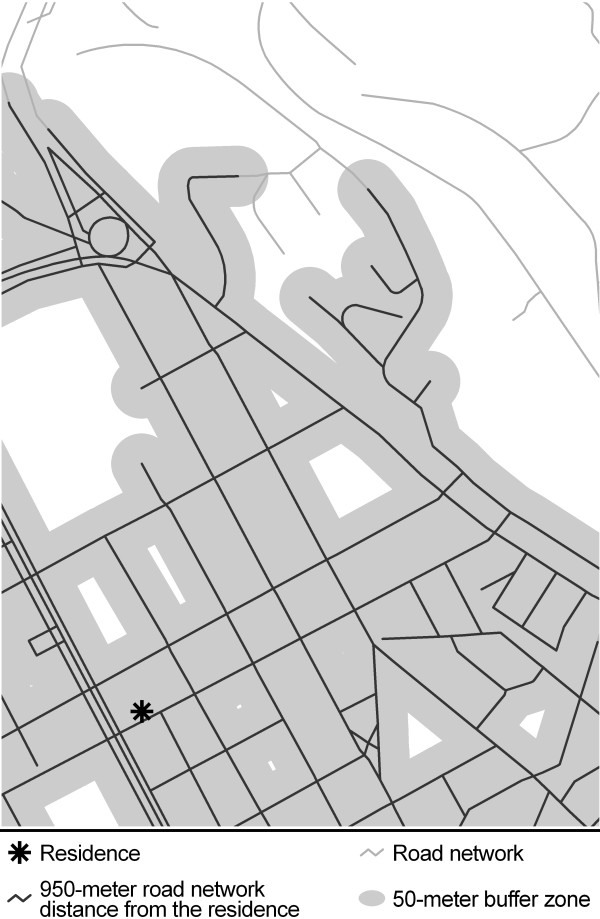
A total of 2,037 adults (55% females) wore an accelerometer for seven days. Time spent in moderate to vigorous physical activity (minutes per day) and meeting the physical activity recommendations (yes/no) were used as outcome variables. Availability of exercise facilities was measured within 1,000-meter line-based road network buffers around participants' residential addresses using Geographic Information Systems. Socio-demographic variables and time of year were included as covariates in the analyses.
Participants with ≥4 exercise facilities within their buffer zones spent 5.4 (confidence interval (CI) = 2.3-8.5) more minutes in moderate to vigorous physical activity per day, and had 69% higher odds (OR = 1.69; CI = 1.39-2.05) of meeting the physical activity recommendations, compared to those with no exercise facilities within their buffer zones. Time of year had no modifying effect on these associations.
Our results show that objective availability of exercise facilities was associated with accelerometer-assessed time spent in moderate to vigorous physical activity and the odds of meeting the recommended levels of physical activity. Neighborhoods may be a logical and potentially significant venue for policy interventions aimed at increasing physical activity in the overall population.
运动设施可能有潜力促进居民的身体活动,并在全年支持积极的生活方式。我们调查了客观评估的运动设施的可用性与客观评估的身体活动结果之间的关联,以及一年中的时间是否对这些关联有修正作用。
共有 2037 名成年人(55%为女性)佩戴加速度计七天。将中等至剧烈身体活动的时间(分钟/天)和是否达到身体活动建议(是/否)作为因变量。使用地理信息系统在参与者居住地址周围的 1000 米线状道路网络缓冲区中测量运动设施的可用性。社会人口统计学变量和一年中的时间被纳入分析的协变量。
与缓冲区中没有运动设施的参与者相比,缓冲区中有≥4 个运动设施的参与者每天多进行 5.4 分钟(置信区间(CI)=2.3-8.5)的中等到剧烈身体活动,并且达到身体活动建议的可能性高 69%(OR=1.69;CI=1.39-2.05)。一年中的时间对这些关联没有修正作用。
我们的结果表明,客观的运动设施可用性与加速度计评估的中等到剧烈身体活动时间以及达到推荐身体活动水平的可能性相关。邻里可能是一个符合逻辑且具有潜在重要意义的政策干预场所,旨在提高整个人群的身体活动水平。