Department of Anesthesiology and Critical Care Medicine, The Johns Hopkins University School of Medicine, Baltimore, Maryland, United States of America.
PLoS One. 2012;7(8):e42194. doi: 10.1371/journal.pone.0042194. Epub 2012 Aug 2.
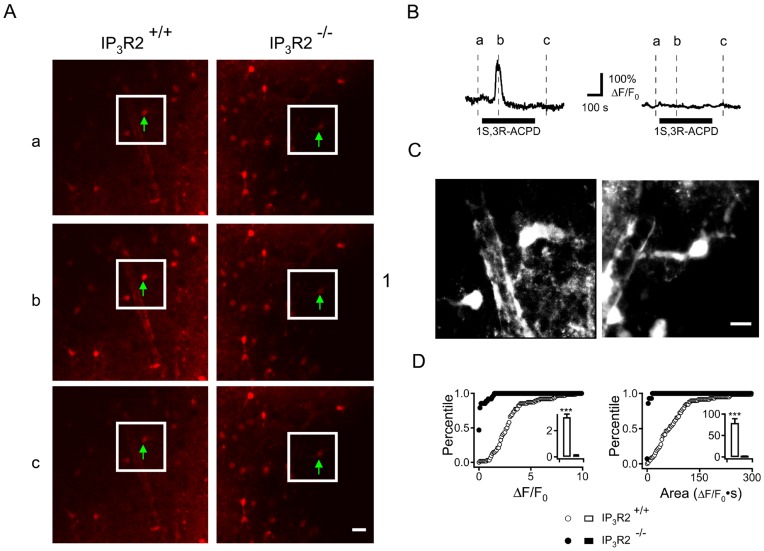
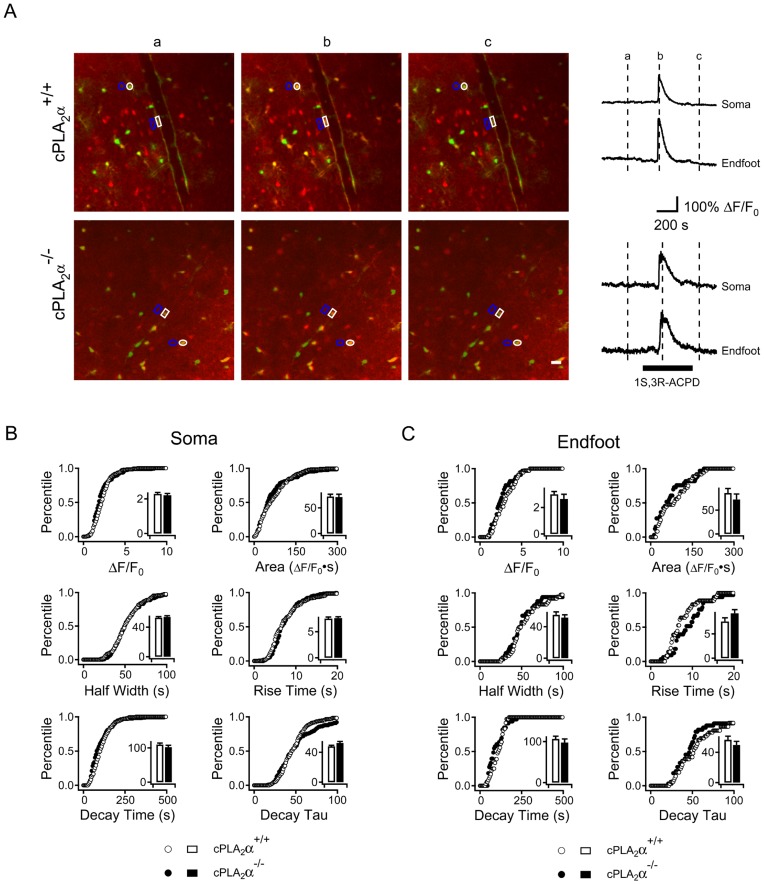
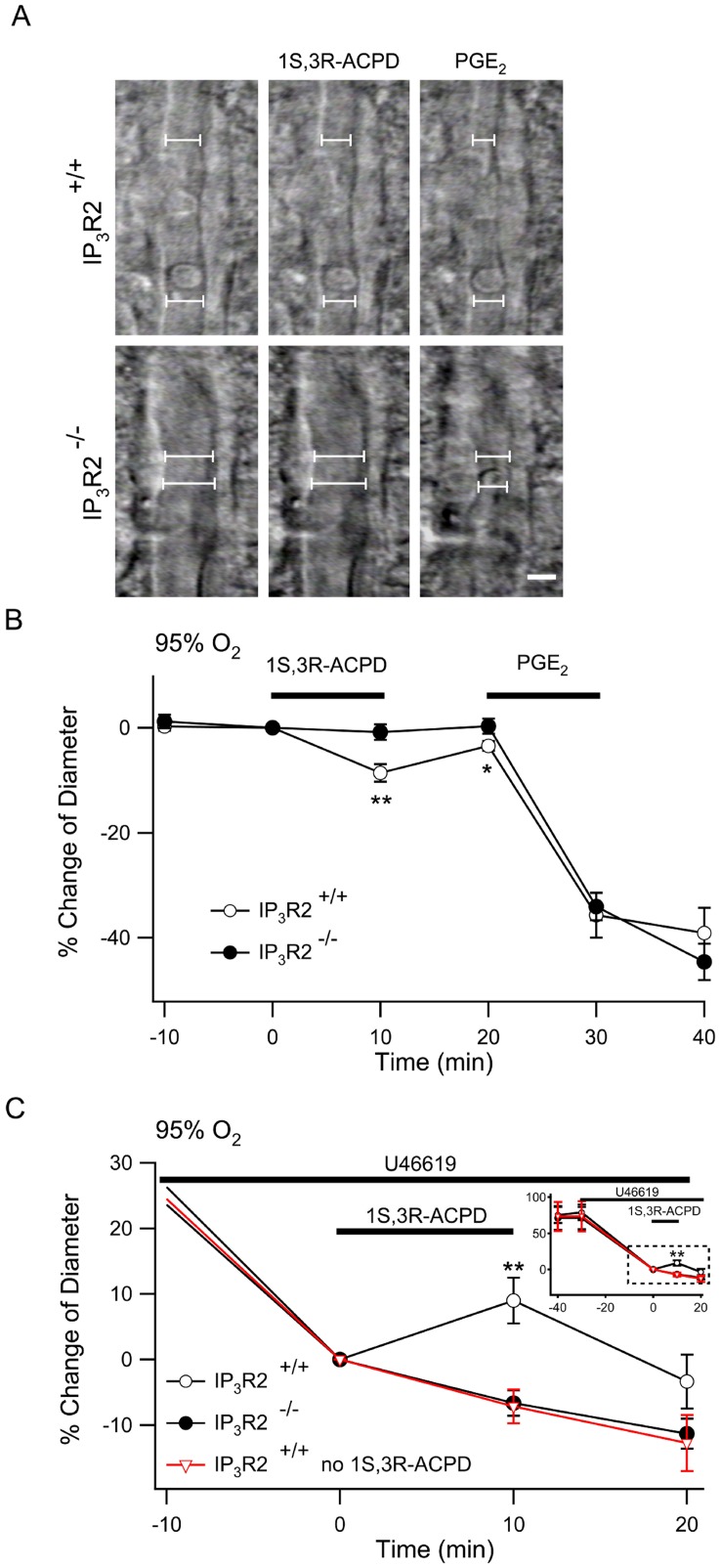
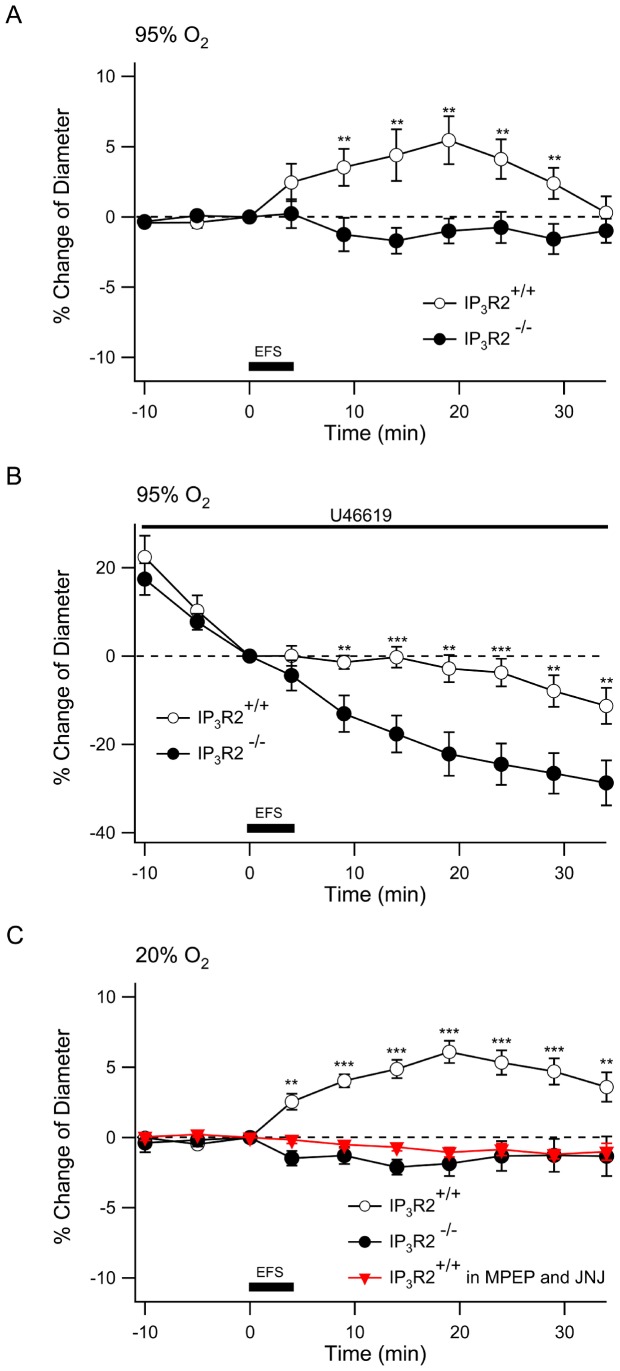
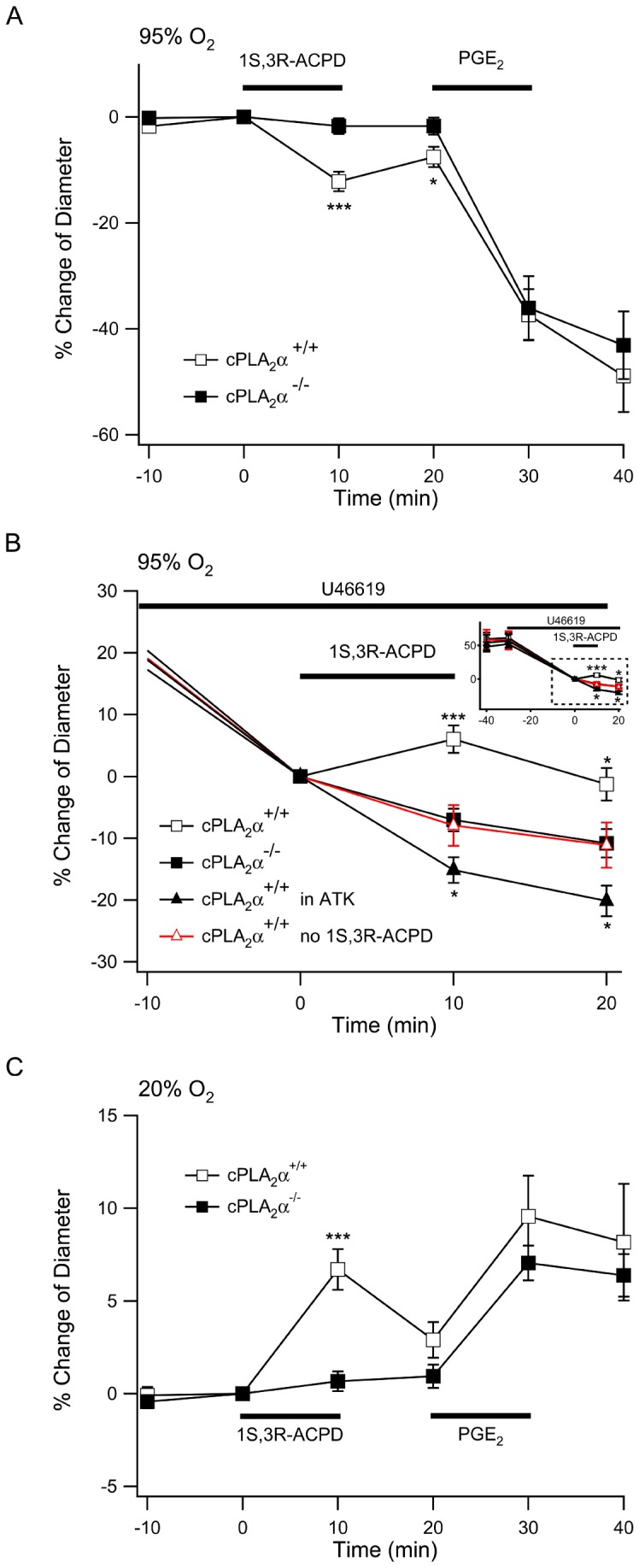
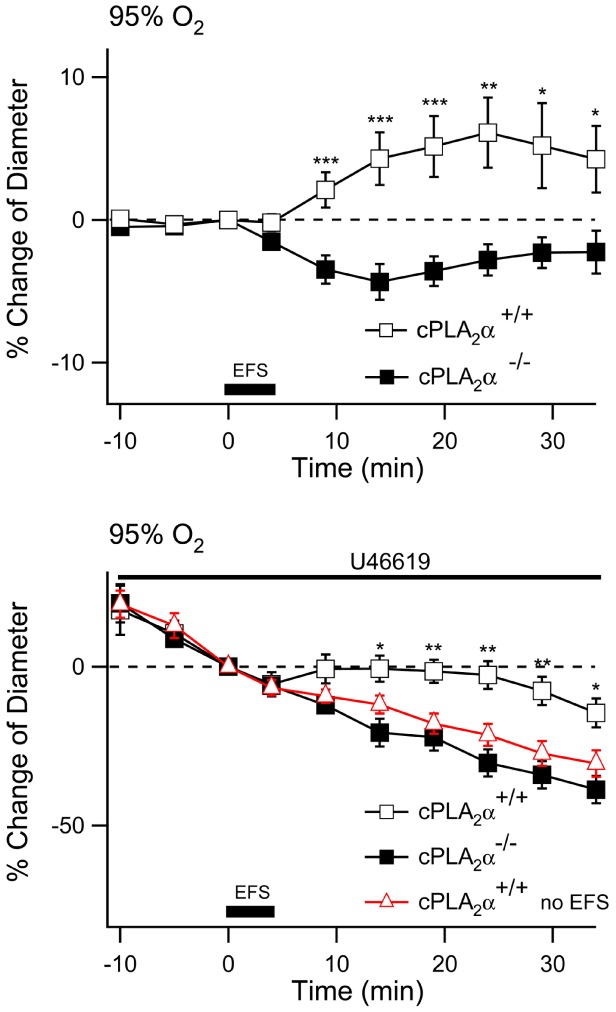
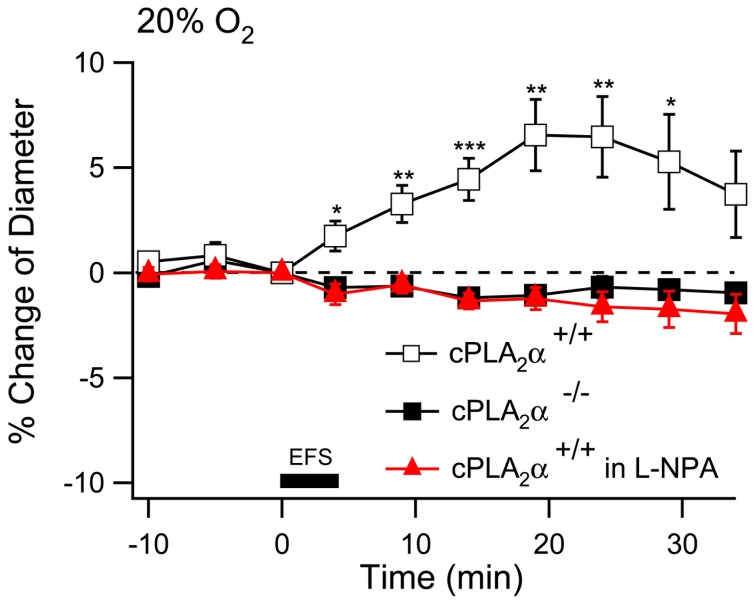
Functional hyperemia of the cerebral vascular system matches regional blood flow to the metabolic demands of the brain. One current model of neurovascular control holds that glutamate released by neurons activates group I metabotropic glutamate receptors (mGluRs) on astrocytes, resulting in the production of diffusible messengers that act to regulate smooth muscle cells surrounding cerebral arterioles. The acute mouse brain slice is an experimental system in which changes in arteriole diameter can precisely measured with light microscopy. Stimulation of the brain slice triggers specific cellular responses that can be correlated to changes in arteriole diameter. Here we used inositol trisphosphate receptor type 2 (IP(3)R2) and cytosolic phospholipase A(2) alpha (cPLA(2)α) deficient mice to determine if astrocyte mGluR activation coupled to IP(3)R2-mediated Ca(2+) release and subsequent cPLA(2)α activation is required for arteriole regulation. We measured changes in astrocyte cytosolic free Ca(2+) and arteriole diameters in response to mGluR agonist or electrical field stimulation in acute neocortical mouse brain slices maintained in 95% or 20% O(2). Astrocyte Ca(2+) and arteriole responses to mGluR activation were absent in IP(3)R2(-/-) slices. Astrocyte Ca(2+) responses to mGluR activation were unchanged by deletion of cPLA(2)α but arteriole responses to either mGluR agonist or electrical stimulation were ablated. The valence of changes in arteriole diameter (dilation/constriction) was dependent upon both stimulus and O(2) concentration. Neuron-derived NO and activation of the group I mGluRs are required for responses to electrical stimulation. These findings indicate that an mGluR/IP(3)R2/cPLA(2)α signaling cascade in astrocytes is required to transduce neuronal glutamate release into arteriole responses.
脑血管系统的功能充血使脑血流与脑代谢需求相匹配。目前的神经血管控制模型认为,神经元释放的谷氨酸激活星形胶质细胞上的 I 型代谢型谷氨酸受体(mGluR),导致扩散信使的产生,从而调节脑小动脉周围的平滑肌细胞。急性小鼠脑切片是一种实验系统,可以用光学显微镜精确测量小动脉直径的变化。刺激脑切片会引发特定的细胞反应,可以将其与小动脉直径的变化相关联。在这里,我们使用肌醇三磷酸受体 2(IP3R2)和细胞质型磷脂酶 A2α(cPLA2α)缺陷小鼠来确定星形胶质细胞 mGluR 激活与 IP3R2 介导的 Ca2+释放和随后的 cPLA2α 激活偶联是否是小动脉调节所必需的。我们在 95%或 20%O2 下维持的急性新皮层小鼠脑切片中,测量了 mGluR 激动剂或电刺激引起的星形胶质细胞细胞浆游离 Ca2+和小动脉直径的变化。在 IP3R2(-/-)切片中,mGluR 激动剂激活引起的星形胶质细胞 Ca2+反应缺失。cPLA2α 的缺失并未改变星形胶质细胞对 mGluR 激活的 Ca2+反应,但对 mGluR 激动剂或电刺激的小动脉反应均被消除。小动脉直径变化的价态(扩张/收缩)取决于刺激和 O2 浓度。神经元衍生的 NO 和 I 型 mGluR 的激活是对电刺激产生反应所必需的。这些发现表明,星形胶质细胞中的 mGluR/IP3R2/cPLA2α 信号级联是将神经元释放的谷氨酸转化为小动脉反应所必需的。