• 文献检索
  • 文档翻译
  • 深度研究
  • 学术资讯
  • Suppr Zotero 插件Zotero 插件
  • 邀请有礼
  • 套餐&价格
  • 历史记录
应用&插件
Suppr Zotero 插件Zotero 插件浏览器插件Mac 客户端Windows 客户端微信小程序
定价
高级版会员购买积分包购买API积分包
服务
文献检索文档翻译深度研究API 文档MCP 服务
关于我们
关于 Suppr公司介绍联系我们用户协议隐私条款
关注我们

Suppr 超能文献

核心技术专利:CN118964589B侵权必究
粤ICP备2023148730 号-1Suppr @ 2026

文献检索

告别复杂PubMed语法,用中文像聊天一样搜索,搜遍4000万医学文献。AI智能推荐,让科研检索更轻松。

立即免费搜索

文件翻译

保留排版,准确专业,支持PDF/Word/PPT等文件格式,支持 12+语言互译。

免费翻译文档

深度研究

AI帮你快速写综述,25分钟生成高质量综述,智能提取关键信息,辅助科研写作。

立即免费体验

通过聚合酶链反应-限制性片段长度多态性对重症监护病房患者血样中的念珠菌进行分子种属鉴定。

Molecular species identification of Candida from blood samples of intensive care unit patients by polymerase chain reaction - restricted fragment length polymorphism.

作者信息

Vijayakumar Ramraj, Giri Sidhartha, Kindo Anupma Jyoti

机构信息

Department of Microbiology, Sri Ramachandra Medical College and Research Institute, Sri Ramachandra University, Porur, Chennai, India.

出版信息

J Lab Physicians. 2012 Jan;4(1):1-4. doi: 10.4103/0974-2727.98661.

DOI:10.4103/0974-2727.98661
PMID:22923914
原文链接:https://pmc.ncbi.nlm.nih.gov/articles/PMC3425257/
Abstract

INTRODUCTION

Candida spp is an emerging cause of blood stream infections worldwide. Delay in speciation of Candida isolates by conventional methods and resistance to antifungal drugs (especially fluconazole, amphotericin B, etc.) in various Candida species are some of the factors responsible for the increase in morbidity and mortality due to candidemia. So, the rapid detection and identification of Candida isolates from blood is very important for the proper management of patients having candidemia.

MATERIALS AND METHODS

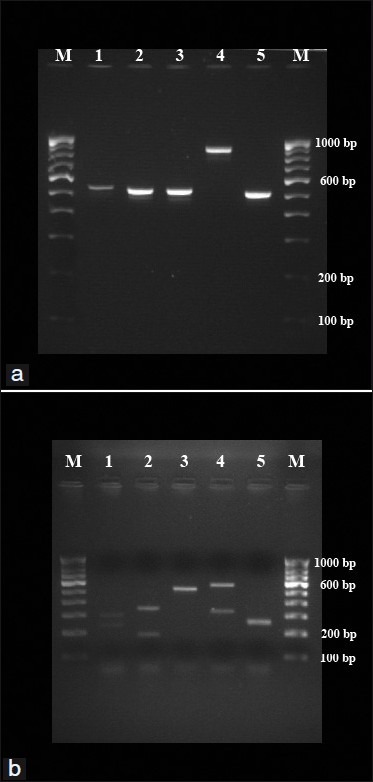
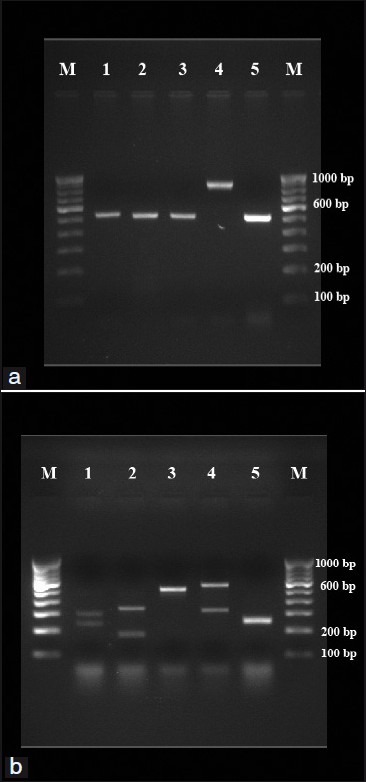
In this study, we have used polymerase chain reaction (PCR) - restriction fragment length polymorphism (RFLP) as a method for the speciation of Candida isolates from blood samples of intensive care unit (ICU) patients. PCR was used to amplify the ITS-1 and ITS-2 regions of Candida spp using universal primers ITS-1 and ITS-4. The amplified product was digested using Msp I restriction enzyme by RFLP.

RESULTS AND DISCUSSION

The method PCR-RFLP helped in identifying five medically important Candida spp (C. tropicalis, C. albicans, C. parapsilosis, C. krusei and C. glabrata) from blood. This method is rapid, reliable, easy and cost-effective and can be used in routine laboratory diagnostics for the rapid identification of Candida isolates from blood.

CONCLUSION

PCR-RFLP is an easy, rapid and highly valuable tool which can be used in routine diagnostic laboratories to speciate Candida isolates obtained from blood. This rapid method of speciation will help clinicians to decide on empirical therapy in candidemia cases before antifungal susceptibility results are available.

摘要

引言

念珠菌属是全球血流感染的一个新兴病因。通过传统方法对念珠菌分离株进行鉴定的延迟以及各种念珠菌属对抗真菌药物(尤其是氟康唑、两性霉素B等)的耐药性是导致念珠菌血症发病率和死亡率增加的一些因素。因此,从血液中快速检测和鉴定念珠菌分离株对于念珠菌血症患者的恰当治疗非常重要。

材料与方法

在本研究中,我们使用聚合酶链反应(PCR)-限制性片段长度多态性(RFLP)作为从重症监护病房(ICU)患者血液样本中鉴定念珠菌分离株种类的方法。使用通用引物ITS-1和ITS-4通过PCR扩增念珠菌属的ITS-1和ITS-2区域。扩增产物通过RFLP用Msp I限制性内切酶进行消化。

结果与讨论

PCR-RFLP方法有助于从血液中鉴定出五种医学上重要的念珠菌属(热带念珠菌、白色念珠菌、近平滑念珠菌、克柔念珠菌和光滑念珠菌)。该方法快速、可靠、简便且具有成本效益,可用于常规实验室诊断以快速鉴定血液中的念珠菌分离株。

结论

PCR-RFLP是一种简便、快速且极具价值的工具,可用于常规诊断实验室对从血液中获得的念珠菌分离株进行分类鉴定。这种快速的分类鉴定方法将有助于临床医生在获得抗真菌药敏结果之前,对念珠菌血症病例做出经验性治疗决策。
https://cdn.ncbi.nlm.nih.gov/pmc/blobs/c3e7/3425257/121edb30d372/JLP-4-1-g002.jpg
https://cdn.ncbi.nlm.nih.gov/pmc/blobs/c3e7/3425257/e54997f55f0c/JLP-4-1-g001.jpg
https://cdn.ncbi.nlm.nih.gov/pmc/blobs/c3e7/3425257/121edb30d372/JLP-4-1-g002.jpg
https://cdn.ncbi.nlm.nih.gov/pmc/blobs/c3e7/3425257/e54997f55f0c/JLP-4-1-g001.jpg
https://cdn.ncbi.nlm.nih.gov/pmc/blobs/c3e7/3425257/121edb30d372/JLP-4-1-g002.jpg

相似文献

1
Molecular species identification of Candida from blood samples of intensive care unit patients by polymerase chain reaction - restricted fragment length polymorphism.通过聚合酶链反应-限制性片段长度多态性对重症监护病房患者血样中的念珠菌进行分子种属鉴定。
J Lab Physicians. 2012 Jan;4(1):1-4. doi: 10.4103/0974-2727.98661.
2
Molecular identification of species isolated from cases of neonatal candidemia using polymerase chain reaction-restriction fragment length polymorphism in a tertiary care hospital.在一家三级护理医院中,使用聚合酶链反应-限制性片段长度多态性对从新生儿念珠菌血症病例中分离出的菌种进行分子鉴定。
Indian J Pathol Microbiol. 2017 Jan-Mar;60(1):61-65. doi: 10.4103/0377-4929.200023.
3
Candida and candidaemia. Susceptibility and epidemiology.念珠菌与念珠菌血症。药敏性与流行病学。
Dan Med J. 2013 Nov;60(11):B4698.
4
A one-enzyme PCR-RFLP assay for identification of six medically important Candida species.一种用于鉴定六种医学上重要念珠菌属物种的单酶PCR-RFLP检测方法。
Nihon Ishinkin Gakkai Zasshi. 2006;47(3):225-9. doi: 10.3314/jjmm.47.225.
5
Polymerase chain reaction and restriction fragment length polymorphism mediated detection and speciation of Candida spp causing intraocular infection.聚合酶链反应和限制性片段长度多态性介导的引起眼内感染的念珠菌属检测及菌种鉴定
Invest Ophthalmol Vis Sci. 1998 May;39(6):859-66.
6
[Investigation of antifungal susceptibilities and some virulence factors of Candida strains isolated from blood cultures and genotyping by RAPD-PCR].[从血培养中分离的念珠菌菌株的抗真菌药敏性及一些毒力因子研究与随机扩增多态性DNA聚合酶链反应基因分型]
Mikrobiyol Bul. 2011 Apr;45(2):306-17.
7
[Evaluation of PNA-FISH method for direct identification of Candida species in blood culture samples and its potential impact on guidance of antifungal therapy].[评估肽核酸荧光原位杂交(PNA-FISH)方法直接鉴定血培养样本中念珠菌属菌种及其对抗真菌治疗指导的潜在影响]
Mikrobiyol Bul. 2016 Oct;50(4):580-589. doi: 10.5578/mb.27948.
8
Emerging Candida species isolated from renal transplant recipients: Species distribution and susceptibility profiles.从肾移植受者中分离出的新型念珠菌:菌种分布和药敏谱。
Microb Pathog. 2018 Dec;125:240-245. doi: 10.1016/j.micpath.2018.09.026. Epub 2018 Sep 18.
9
Epidemiology of candidemia in Shiraz, southern Iran: A prospective multicenter study (2016-2018).伊朗南部设拉子市念珠菌血症的流行病学:一项前瞻性多中心研究(2016-2018 年)。
Med Mycol. 2021 May 4;59(5):422-430. doi: 10.1093/mmy/myaa059.
10
Identification of Candida species using PCR-RFLP in cancer patients in Iran.在伊朗癌症患者中使用聚合酶链反应-限制性片段长度多态性鉴定念珠菌属菌种。
Indian J Med Microbiol. 2010 Apr-Jun;28(2):147-51. doi: 10.4103/0255-0857.62493.

引用本文的文献

1
Standardization of polymerase chain reaction for detection of fluconazole resistance targeting Y132F mutation in gene in .用于检测针对某基因中Y132F突变的氟康唑耐药性的聚合酶链反应标准化。 (你提供的原文中部分信息不完整,比如“in ”后面缺少具体内容,我按照完整可理解的部分进行了翻译)
Curr Med Mycol. 2024 May 7;10. doi: 10.22034/cmm.2024.345209.1517. eCollection 2024.
2
Anticandidal Efficacy of Oral Probiont Against Dental Caries Pathogens in Children, Tamil Nadu, India.印度泰米尔纳德邦口服益生菌对儿童龋齿病原体的抗念珠菌功效
Indian J Microbiol. 2024 Mar;64(1):244-253. doi: 10.1007/s12088-023-01175-5. Epub 2023 Dec 28.
3
Strain Typing of Clinical Isolates by Random Amplification of Polymorphic DNA (RAPD) Analysis.

本文引用的文献

1
Identification of Candida species using PCR-RFLP in cancer patients in Iran.在伊朗癌症患者中使用聚合酶链反应-限制性片段长度多态性鉴定念珠菌属菌种。
Indian J Med Microbiol. 2010 Apr-Jun;28(2):147-51. doi: 10.4103/0255-0857.62493.
2
Epidemiology of candidemia in a tertiary care centre of north India: 5-year study.印度北部一家三级医疗中心念珠菌血症的流行病学:一项为期5年的研究。
Infection. 2007 Jun;35(4):256-9. doi: 10.1007/s15010-007-6144-6. Epub 2007 Jul 23.
3
Epidemiology of invasive candidiasis: a persistent public health problem.侵袭性念珠菌病的流行病学:一个持续存在的公共卫生问题。
通过随机扩增多态性DNA(RAPD)分析对临床分离株进行菌株分型
J Lab Physicians. 2021 Sep;13(3):245-251. doi: 10.1055/s-0041-1731111. Epub 2021 Jul 2.
4
Prevalence and Antifungal Susceptibility Profile of Clinically Relevant Species in Postmenopausal Women with Diabetes.绝经后糖尿病女性中临床相关真菌种属的流行情况及抗真菌药物敏感性分析。
Biomed Res Int. 2020 Nov 26;2020:7042490. doi: 10.1155/2020/7042490. eCollection 2020.
5
Chromogenic medium versus PCR-RFLP in the speciation of Candida: a comparative study.显色培养基与聚合酶链反应-限制性片段长度多态性分析在念珠菌菌种鉴定中的比较研究
BMC Res Notes. 2019 Oct 22;12(1):681. doi: 10.1186/s13104-019-4710-5.
6
Evaluation of 3-(4,5-dimethylthiazol-2-yl)-2,5-diphenyl tetrazolium bromide method for assessing biofilm formation by spp.评估3-(4,5-二甲基噻唑-2-基)-2,5-二苯基溴化四氮唑法用于评估某菌属生物膜形成情况
J Lab Physicians. 2018 Oct-Dec;10(4):380-386. doi: 10.4103/JLP.JLP_37_18.
7
Concordance analysis between different methodologies used for identification of oral isolates of species.用于鉴定物种口腔分离株的不同方法之间的一致性分析。
Colomb Med (Cali). 2018 Sep 30;49(3):193-200. doi: 10.25100/cm.v49i3.3774.
8
Molecular strain typing of ( var. ) using non-transcribed spacer region as a molecular marker.利用非转录间隔区作为分子标记对 (var. )进行分子株型分型。
Indian J Med Res. 2017 Nov;146(5):636-641. doi: 10.4103/ijmr.IJMR_51_15.
9
Molecular Strain Typing of Clinical Isolates, using Non Transcribed Spacer (NTS) Region as a Molecular Marker.使用非转录间隔区(NTS)作为分子标记对临床分离株进行分子菌株分型。
J Clin Diagn Res. 2017 May;11(5):DC04-DC09. doi: 10.7860/JCDR/2017/21994.9843. Epub 2017 May 1.
10
Beyond Blood Culture and Gram Stain Analysis: A Review of Molecular Techniques for the Early Detection of Bacteremia in Surgical Patients.超越血培养和革兰氏染色分析:外科患者菌血症早期检测分子技术综述
Surg Infect (Larchmt). 2016 Jun;17(3):294-302. doi: 10.1089/sur.2015.099. Epub 2016 Feb 26.
Clin Microbiol Rev. 2007 Jan;20(1):133-63. doi: 10.1128/CMR.00029-06.
4
A one-enzyme PCR-RFLP assay for identification of six medically important Candida species.一种用于鉴定六种医学上重要念珠菌属物种的单酶PCR-RFLP检测方法。
Nihon Ishinkin Gakkai Zasshi. 2006;47(3):225-9. doi: 10.3314/jjmm.47.225.
5
Amphotericin B and caspofungin resistance in Candida glabrata isolates recovered from a critically ill patient.从一名重症患者分离出的光滑念珠菌菌株对两性霉素B和卡泊芬净耐药。
Clin Infect Dis. 2006 Apr 1;42(7):938-44. doi: 10.1086/500939. Epub 2006 Feb 27.
6
Candidemia--an under-recognized nosocomial infection in Indian hospitals.念珠菌血症——印度医院中一种未得到充分认识的医院感染。
J Assoc Physicians India. 2005 Jul;53:607-11.
7
[Molecular taxonomy and identification of pathogenic fungi based on DNA sequence analysis].
Nihon Ishinkin Gakkai Zasshi. 2004;45(2):55-8. doi: 10.3314/jjmm.45.55.
8
Phylogenetic relationships among medically important yeasts based on sequences of mitochondrial large subunit ribosomal RNA gene.
Mycoses. 2004 Feb;47(1-2):24-8. doi: 10.1046/j.0933-7407.2003.00942.x.
9
Twelve years of fluconazole in clinical practice: global trends in species distribution and fluconazole susceptibility of bloodstream isolates of Candida.临床实践中12年的氟康唑应用:念珠菌血流感染分离株的菌种分布及氟康唑敏感性的全球趋势
Clin Microbiol Infect. 2004 Mar;10 Suppl 1:11-23. doi: 10.1111/j.1470-9465.2004.t01-1-00844.x.
10
Detection of seven Candida species using the Light-Cycler system.使用Light-Cycler系统检测七种念珠菌属菌种。
J Med Microbiol. 2003 Mar;52(Pt 3):229-238. doi: 10.1099/jmm.0.05049-0.