Centre for Liver Research & NIHR BRU in Liver Disease, Institute of Biomedical Research, University of Birmingham, Birmingham B15 2TT, UK.
Mediators Inflamm. 2012;2012:949157. doi: 10.1155/2012/949157. Epub 2012 Aug 9.
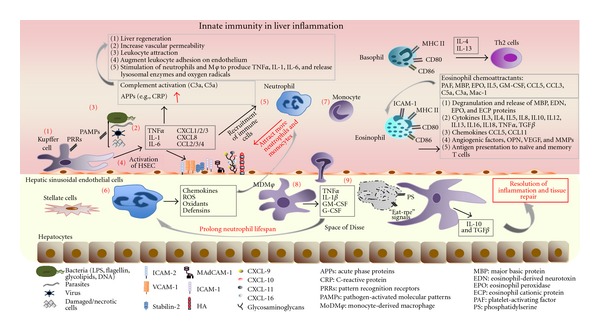
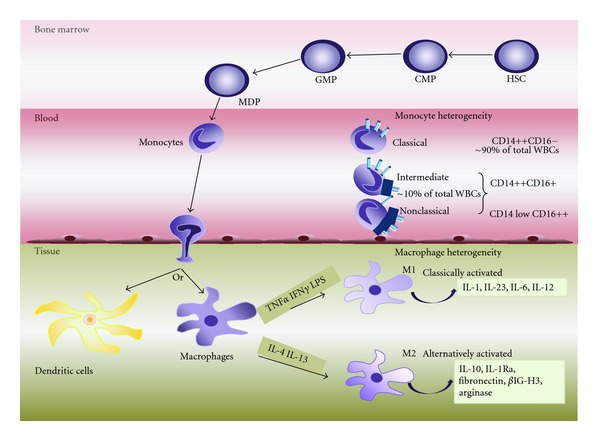
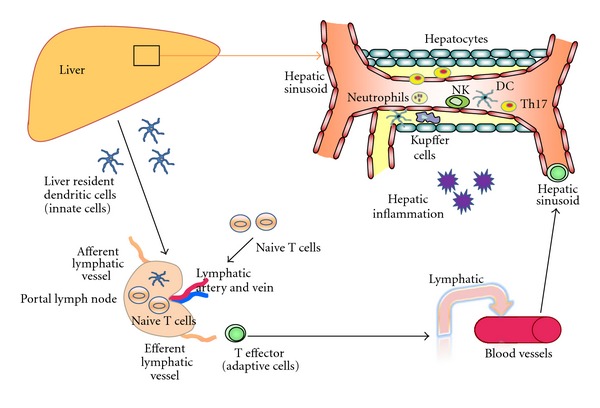
Innate immune system is the first line of defence against invading pathogens that is critical for the overall survival of the host. Human liver is characterised by a dual blood supply, with 80% of blood entering through the portal vein carrying nutrients and bacterial endotoxin from the gastrointestinal tract. The liver is thus constantly exposed to antigenic loads. Therefore, pathogenic microorganism must be efficiently eliminated whilst harmless antigens derived from the gastrointestinal tract need to be tolerized in the liver. In order to achieve this, the liver innate immune system is equipped with multiple cellular components; monocytes, macrophages, granulocytes, natural killer cells, and dendritic cells which coordinate to exert tolerogenic environment at the same time detect, respond, and eliminate invading pathogens, infected or transformed self to mount immunity. This paper will discuss the innate immune cells that take part in human liver inflammation, and their roles in both resolution of inflammation and tissue repair.
先天免疫系统是抵御入侵病原体的第一道防线,对宿主的整体生存至关重要。人类肝脏的特点是双重血液供应,80%的血液通过门静脉进入,携带来自胃肠道的营养物质和细菌内毒素。因此,肝脏不断暴露于抗原负荷下。因此,必须有效地清除致病微生物,同时使来自胃肠道的无害抗原在肝脏中耐受。为了实现这一目标,肝脏先天免疫系统配备了多种细胞成分;单核细胞、巨噬细胞、粒细胞、自然杀伤细胞和树突状细胞,它们协调作用,同时发挥耐受环境,检测、响应和消除入侵病原体、感染或转化自身以产生免疫。本文将讨论参与人类肝脏炎症的先天免疫细胞,以及它们在炎症消退和组织修复中的作用。