HUNT Research Centre, Department of Public Health and General Practice, Norwegian University of Science and Technology, Levanger, Norway.
BMC Med Res Methodol. 2012 Sep 14;12:143. doi: 10.1186/1471-2288-12-143.
Population based studies are important for prevalence, incidence and association studies, but their external validity might be threatened by decreasing participation rates. The 50 807 participants in the third survey of the HUNT Study (HUNT3, 2006-08), represented 54% of the invited, necessitating a nonparticipation study.
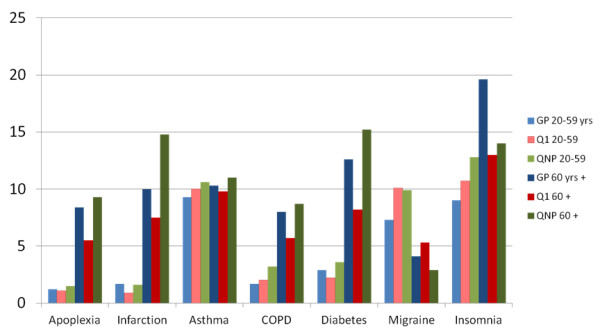
Questionnaire data from HUNT3 were compared with data collected from several sources: a short questionnaire to nonparticipants, anonymous data on specific diagnoses and prescribed medication extracted from randomly selected general practices, registry data from Statistics Norway on socioeconomic factors and mortality, and from the Norwegian Prescription Database on drug consumption.
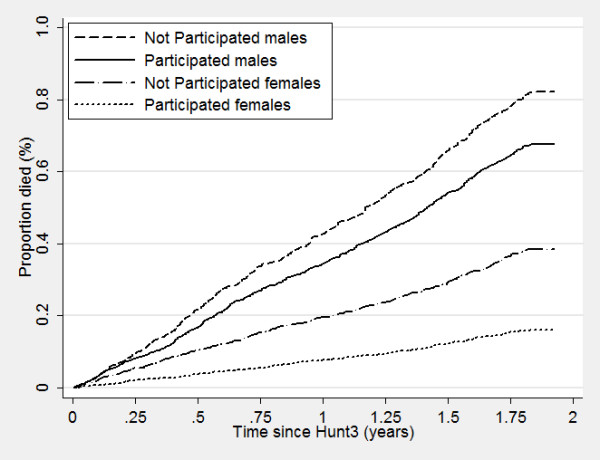
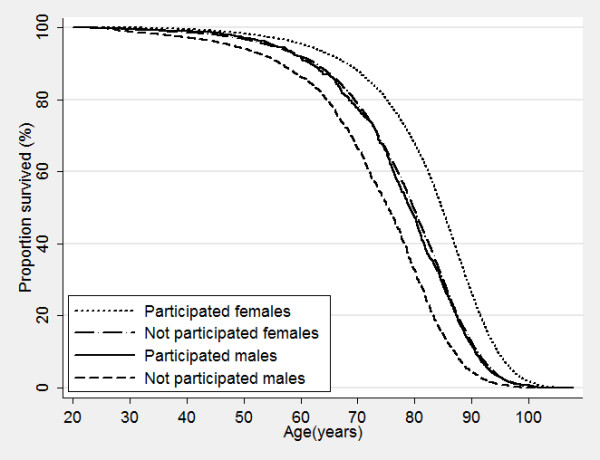
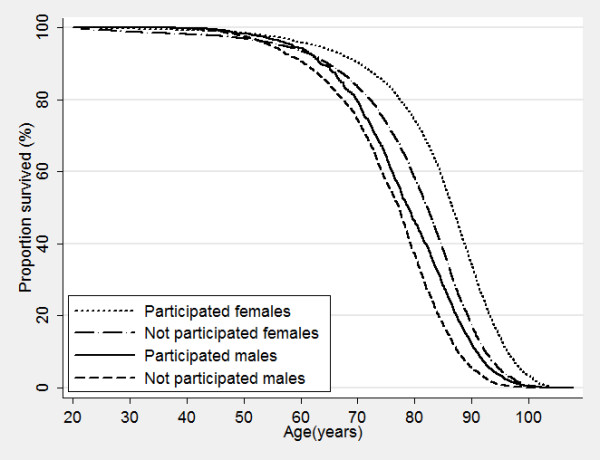
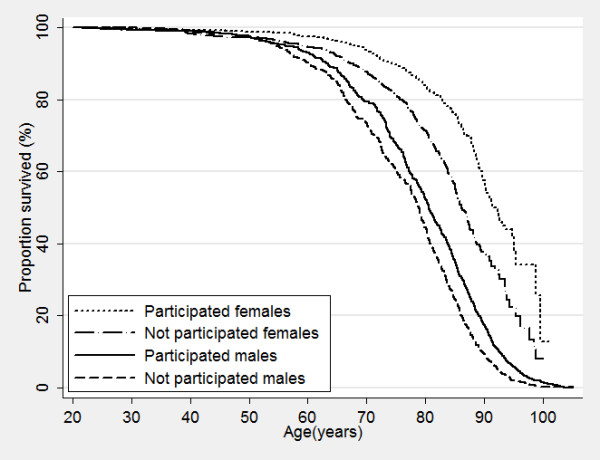
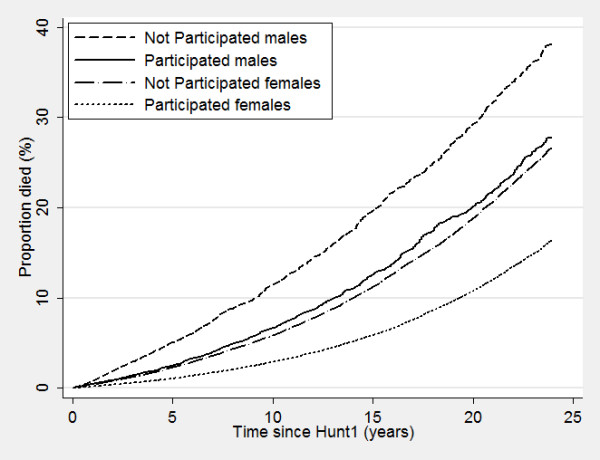
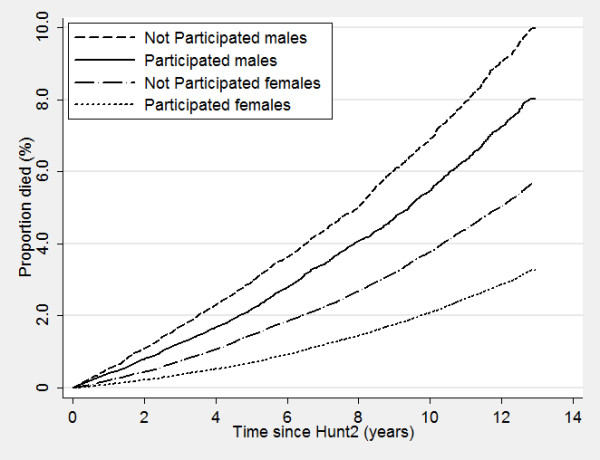
Participation rates for HUNT3 depended on age, sex and type of symptoms and diseases, but only small changes were found in the overall prevalence estimates when including data from 6922 nonparticipants. Among nonparticipants, the prevalences of cardiovascular diseases, diabetes mellitus and psychiatric disorders were higher both in nonparticipant data and data extracted from general practice, compared to that reported by participants, whilst the opposite pattern was found, at least among persons younger than 80 years, for urine incontinence, musculoskeletal pain and headache. Registry data showed that the nonparticipants had lower socioeconomic status and a higher mortality than participants.
Nonparticipants had lower socioeconomic status, higher mortality and showed higher prevalences of several chronic diseases, whilst opposite patterns were found for common problems like musculoskeletal pain, urine incontinence and headache. The impact on associations should be analyzed for each diagnosis, and data making such analyses possible are provided in the present paper.
基于人群的研究对于患病率、发病率和相关性研究很重要,但由于参与率的下降,其外部有效性可能受到威胁。HUNT 研究的第三次调查(HUNT3,2006-08 年)的 50807 名参与者代表了受邀者的 54%,这需要进行一项非参与者研究。
HUNT3 的问卷调查数据与从多个来源收集的数据进行了比较:一份针对非参与者的简短问卷、从随机选择的普通诊所提取的特定诊断和规定药物的匿名数据、挪威统计局关于社会经济因素和死亡率的登记数据,以及挪威处方数据库关于药物消费的数据。
HUNT3 的参与率取决于年龄、性别和症状及疾病类型,但当纳入 6922 名非参与者的数据时,总体患病率估计值仅略有变化。在非参与者中,心血管疾病、糖尿病和精神障碍的患病率在非参与者数据和从普通诊所提取的数据中均高于参与者报告的数据,而在 80 岁以下的人群中,尿失禁、肌肉骨骼疼痛和头痛则出现了相反的模式。登记数据显示,非参与者的社会经济地位较低,死亡率高于参与者。
非参与者的社会经济地位较低,死亡率较高,并且表现出几种慢性疾病的较高患病率,而对于肌肉骨骼疼痛、尿失禁和头痛等常见问题则出现了相反的模式。对于每种诊断,都应分析不参与的影响,并在本文中提供了可进行此类分析的数据。