International Centre for Ecotourism Research, Griffith University, Gold Coast, Queensland, Australia.
PLoS One. 2012;7(9):e44134. doi: 10.1371/journal.pone.0044134. Epub 2012 Sep 12.
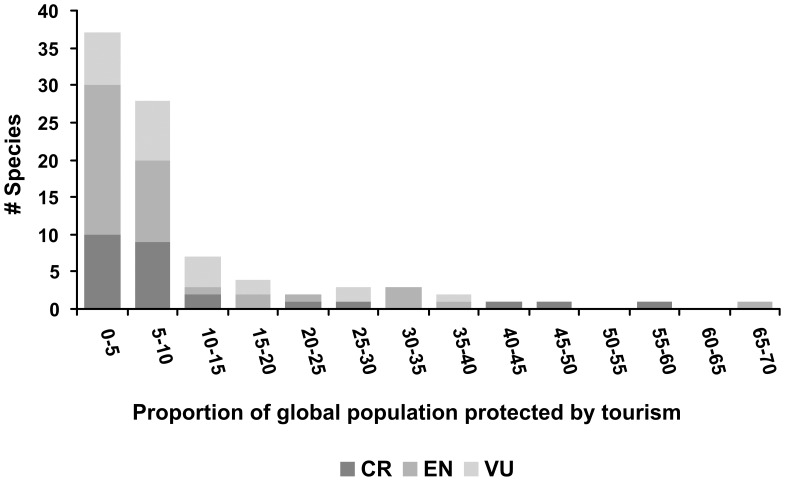
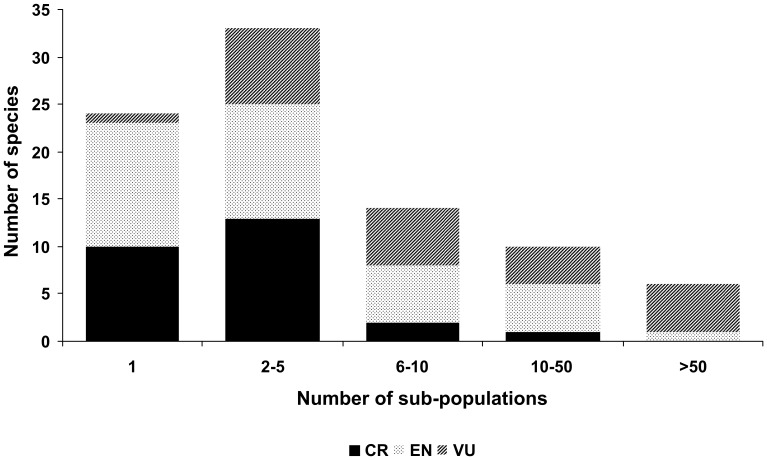
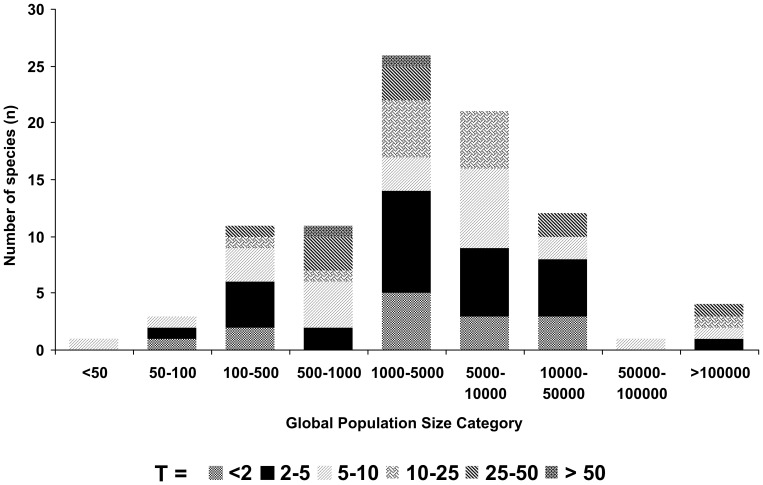
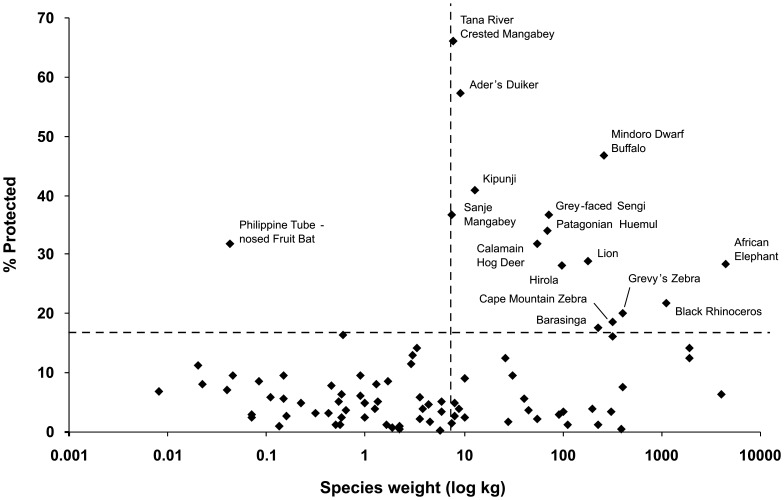
Over 1,000 mammal species are red-listed by IUCN, as Critically Endangered, Endangered or Vulnerable. Conservation of many threatened mammal species, even inside protected areas, depends on costly active day-to-day defence against poaching, bushmeat hunting, invasive species and habitat encroachment. Many parks agencies worldwide now rely heavily on tourism for routine operational funding: >50% in some cases. This puts rare mammals at a new risk, from downturns in tourism driven by external socioeconomic factors. Using the survival of individual animals as a metric or currency of successful conservation, we calculate here what proportions of remaining populations of IUCN-redlisted mammal species are currently supported by funds from tourism. This proportion is ≥ 5% for over half of the species where relevant data exist, ≥ 15% for one fifth, and up to 66% in a few cases. Many of these species, especially the most endangered, survive only in one single remaining subpopulation. These proportions are not correlated either with global population sizes or recognition as wildlife tourism icons. Most of the more heavily tourism-dependent species, however, are medium sized (>7.5 kg) or larger. Historically, biological concern over the growth of tourism in protected areas has centered on direct disturbance to wildlife. These results show that conservation of threatened mammal species has become reliant on revenue from tourism to a previously unsuspected degree. On the one hand, this provides new opportunities for conservation funding; but on the other, dependence on such an uncertain source of funding is a new, large and growing threat to red-listed species.
IUCN 将超过 1000 种哺乳动物列为红色名录,包括极危、濒危和易危物种。许多受威胁的哺乳动物物种的保护,即使在保护区内,也依赖于昂贵的日常积极防御偷猎、猎取野味、入侵物种和栖息地侵占。世界上许多公园机构现在严重依赖旅游业来获得常规运营资金:在某些情况下,超过 50%。这使稀有哺乳动物面临新的风险,因为外部社会经济因素导致旅游业下滑。我们使用个体动物的生存作为成功保护的衡量标准或货币,在这里计算了 IUCN 红色名录中哺乳动物物种的剩余种群目前有多少比例是由旅游业资金支持的。在相关数据存在的情况下,超过一半的物种的这一比例≥5%,五分之一的物种的这一比例≥15%,少数情况下的比例高达 66%。这些物种中的许多物种,尤其是最濒危的物种,仅在一个剩余的亚种群中存活。这些比例与全球种群规模或被视为野生生物旅游标志无关。然而,大多数依赖旅游业程度较高的物种都是中等大小(>7.5 公斤)或更大。历史上,人们对保护区旅游业增长的生物关注主要集中在对野生动物的直接干扰上。这些结果表明,受威胁的哺乳动物物种的保护已经在以前未被怀疑的程度上依赖于旅游业的收入。一方面,这为保护资金提供了新的机会;但另一方面,对这种不确定的资金来源的依赖是对红色名录物种的一个新的、巨大的、不断增长的威胁。