Department of Psychology, University of Iowa, Iowa City, IA 52242-1407, USA.
J Child Psychol Psychiatry. 2013 Mar;54(3):323-32. doi: 10.1111/jcpp.12002. Epub 2012 Oct 11.
Research has shown that interactions between young children's temperament and the quality of care they receive predict the emergence of positive and negative socioemotional developmental outcomes. This multimethod study addresses such interactions, using observed and mother-rated measures of difficult temperament, children's committed, self-regulated compliance and externalizing problems, and mothers' responsiveness in a low-income sample.
In 186 thirty-month-old children, difficult temperament was observed in the laboratory (as poor effortful control and high anger proneness), and rated by mothers. Mothers' responsiveness was observed in lengthy naturalistic interactions at 30 and 33 months. At 40 months, children's committed compliance and externalizing behavior problems were assessed using observations and several well-established maternal report instruments.
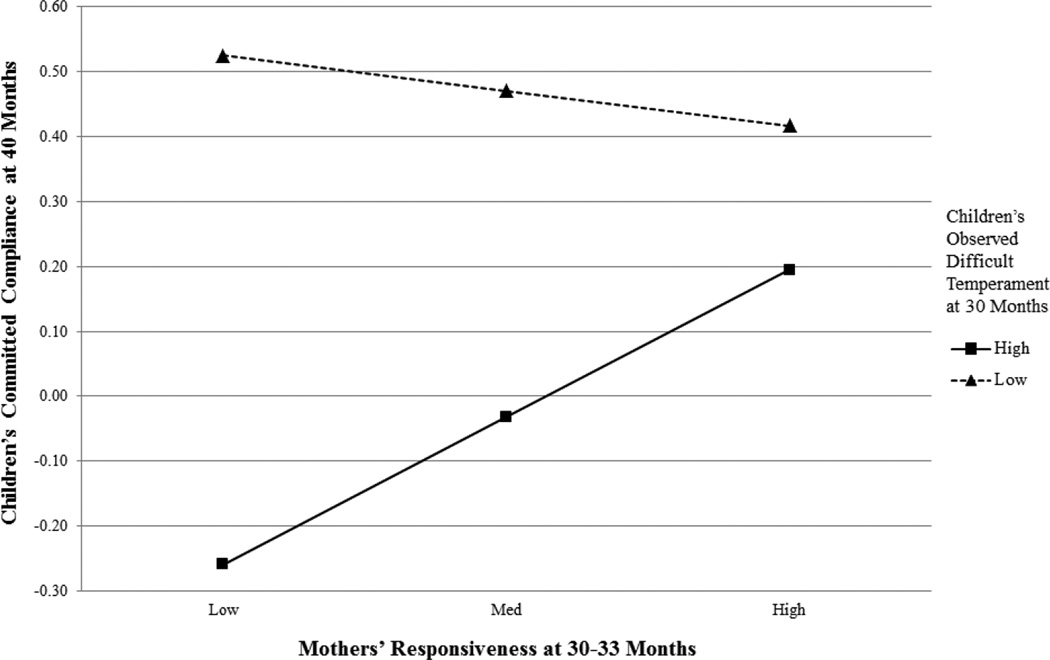
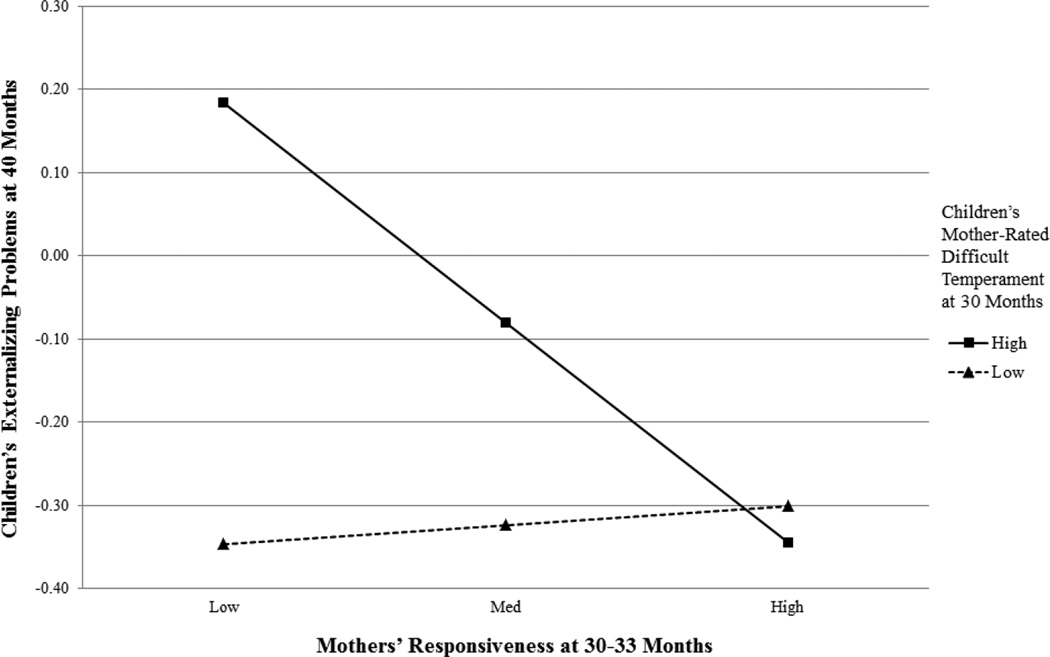
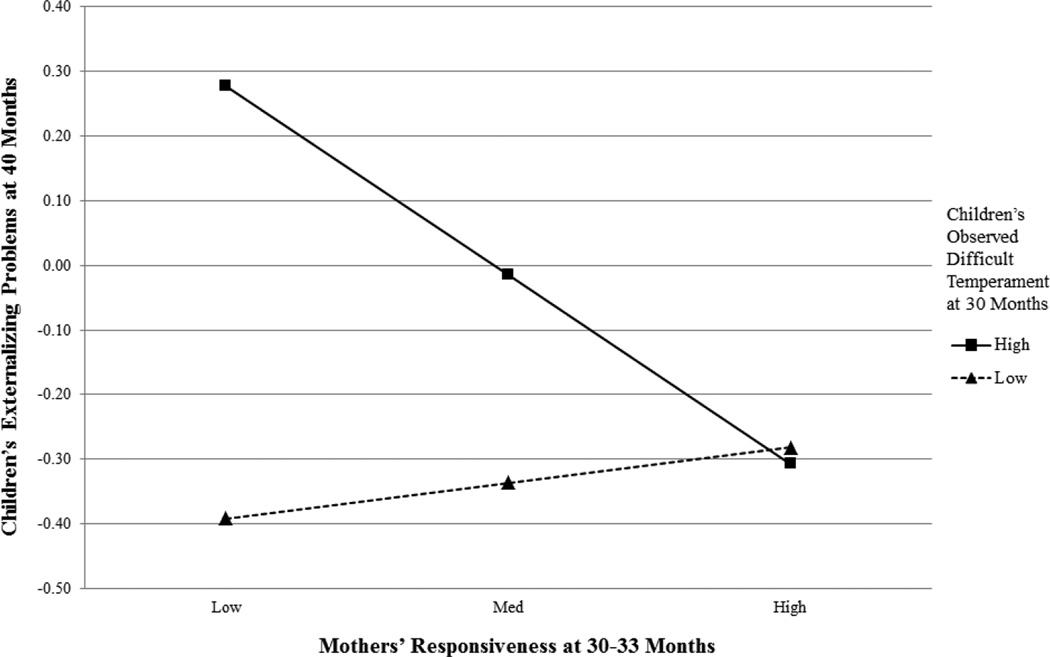
Parallel significant interactions between child difficult temperament and maternal responsiveness were found across both observed and mother-rated measures of temperament. For difficult children, responsiveness had a significant effect such that those children were more compliant and had fewer externalizing problems when they received responsive care, but were less compliant and had more behavior problems when they received unresponsive care. For children with easy temperaments, maternal responsiveness and developmental outcomes were unrelated. All significant interactions reflected the diathesis-stress model. There was no evidence of differential susceptibility, perhaps due to the pervasive stress present in the ecology of the studied families.
Those findings add to the growing body of evidence that for temperamentally difficult children, unresponsive parenting exacerbates risks for behavior problems, but responsive parenting can effectively buffer risks conferred by temperament.
研究表明,幼儿的气质与他们所接受的照顾质量之间的相互作用预测了积极和消极的社会情感发展结果的出现。这项多方法研究通过观察和母亲评定的困难气质、儿童的承诺、自我调节的顺从和外化问题以及母亲在低收入样本中的反应性来解决这些相互作用。
在 186 名 30 个月大的儿童中,实验室观察到困难气质(表现为努力控制能力差和易怒倾向高),并由母亲评定。在 30 个月和 33 个月时,通过长时间的自然互动观察母亲的反应性。在 40 个月时,通过观察和几个成熟的母亲报告工具评估儿童的承诺性顺从和外化行为问题。
在观察和母亲评定的气质测量中都发现了儿童困难气质和母亲反应性之间的平行显著相互作用。对于困难儿童,反应性有显著影响,即当他们得到反应性照顾时,他们更顺从,外化问题更少,但当他们得到不反应性照顾时,他们更不顺从,行为问题更多。对于气质容易的儿童,母亲的反应性与发展结果无关。所有显著的相互作用都反映了素质-压力模型。没有证据表明易感性不同,这可能是由于所研究家庭的生态中存在普遍的压力。
这些发现增加了越来越多的证据,表明对于气质困难的儿童来说,不反应性的育儿会加剧行为问题的风险,但反应性的育儿可以有效地缓冲气质带来的风险。