Durai Priya Cinna, Thappa Devinder Mohan, Kumari Rashmi, Malathi Munisamy
Department of Dermatology, STD and Leprosy, Jawaharlal Institute of Postgraduate Medical Education and Research (JIPMER), Puducherry, India.
Indian J Dermatol. 2012 Sep;57(5):343-52. doi: 10.4103/0019-5154.100473.
Skin is a window to aging changes, a biological reality. There is a dearth of studies regarding the various chronological (intrinsic) aging and photoaging (extrinsic) changes seen in Asians. This study was undertaken to detect the clinical pattern of aging skin changes and dermatoses seen in the elderly.
This was a descriptive study conducted on 500 consecutive elderly individuals attending the Dermatology out-patient department. The severity of photoaging was graded using Glogau scale.
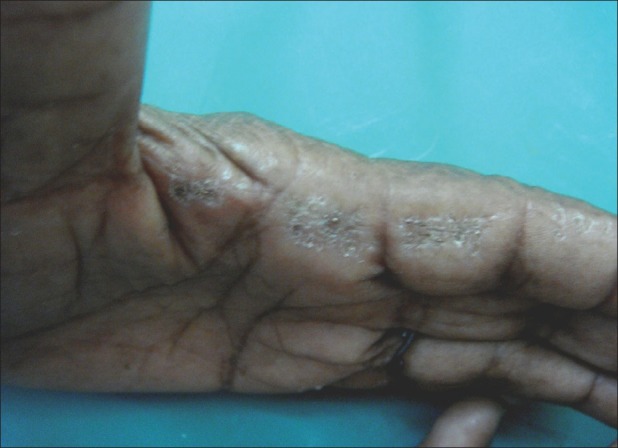
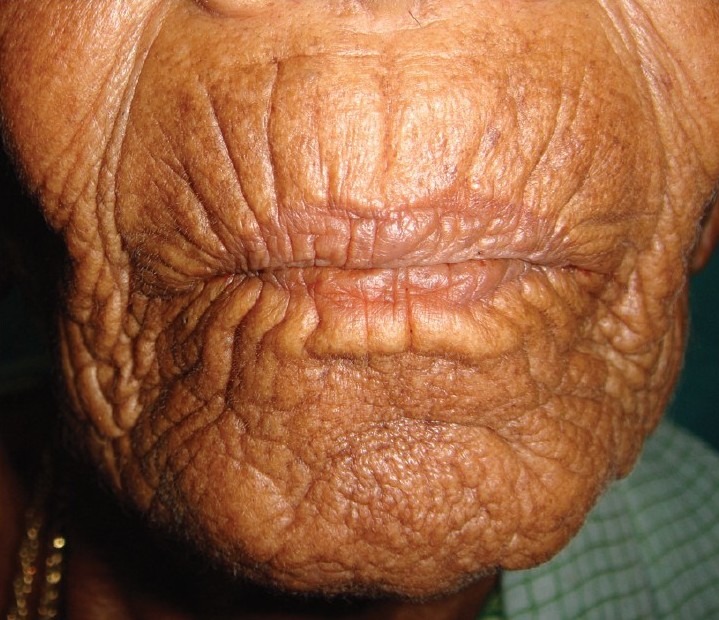
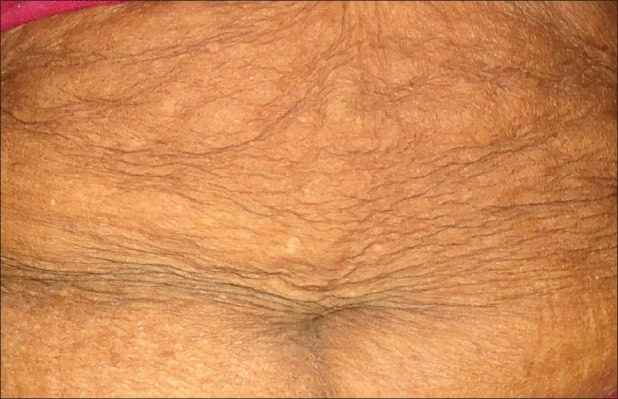
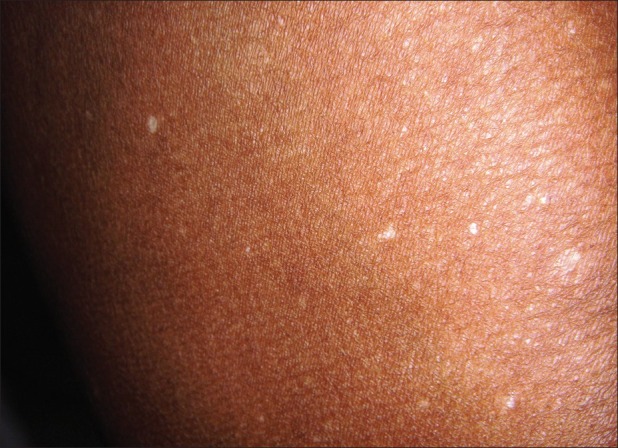
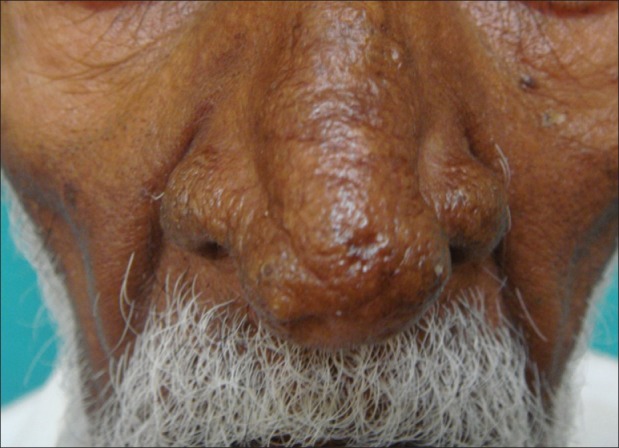
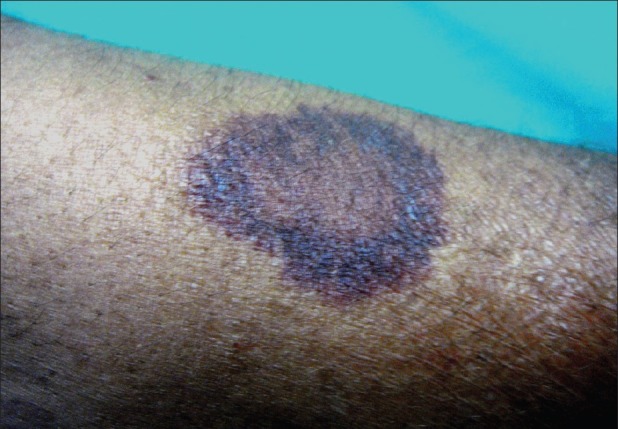
Most of the population had skin type IV and V. Majority (415, 83%) of our cases had chronological aging without photoaging and the remaining 85 (17%) individuals had photoaging along with chronological aging. The common skin changes due to chronological aging were thin skin, fine wrinkles, xerosis, and loss of elasticity. Photoaging changes such as dyspigmentation, freckles, thick skin, deep wrinkles, melasma, citrine skin, senile purpura, pseudostellate scar, acrokeratoelastoidosis marginalis, and lentigines were less frequent in our study. Smoking and prolonged sun exposure was the risk factors aggravating photoaging. The most common dermatosis was pruritus in 248 (49.6%) individuals, of which 149 (29.8%) had pruritus associated with xerosis. Contact dermatitis was more common in males. Fungal infections were frequently seen in females. Seborrhoeic keratosis (253, 50.6%) was the most common benign neoplasm more commonly seen in males. Cutaneous malignancies were less common in our study population.
Photoaging changes were less common than chronological aging changes in skin type IV. Chronological changes were more frequent in females than males, while photoaging was more frequent in males.
皮肤是衰老变化的窗口,这是一个生物学事实。关于亚洲人出现的各种自然(内在)衰老和光老化(外在)变化的研究匮乏。本研究旨在检测老年人皮肤衰老变化和皮肤病的临床模式。
这是一项对500名连续就诊于皮肤科门诊的老年人进行的描述性研究。使用Glogau量表对光老化的严重程度进行分级。
大多数人群的皮肤类型为IV型和V型。我们的病例中,大多数(415例,83%)有自然衰老但无光老化,其余85例(17%)既有自然衰老又有光老化。自然衰老导致的常见皮肤变化有皮肤变薄、细纹、皮肤干燥和弹性丧失。在我们的研究中,诸如色素沉着异常、雀斑、皮肤增厚、深皱纹、黄褐斑、柠檬色皮肤、老年性紫癜、假性星状瘢痕、边缘性肢端角化弹性组织变性和雀斑样痣等光老化变化较少见。吸烟和长时间日晒是加重光老化的危险因素。最常见的皮肤病是瘙痒,有248例(49.6%),其中149例(29.8%)的瘙痒与皮肤干燥有关。接触性皮炎在男性中更常见。真菌感染在女性中较为常见。脂溢性角化病(253例,50.6%)是最常见的良性肿瘤,在男性中更常见。皮肤恶性肿瘤在我们的研究人群中较少见。
在IV型皮肤中,光老化变化比自然衰老变化少见。自然衰老变化在女性中比男性更常见,而光老化在男性中更常见。