Department of Biology, Imperial College London, Silwood Park Campus, Ascot, Berkshire, United Kingdom.
PLoS One. 2012;7(10):e48106. doi: 10.1371/journal.pone.0048106. Epub 2012 Oct 31.
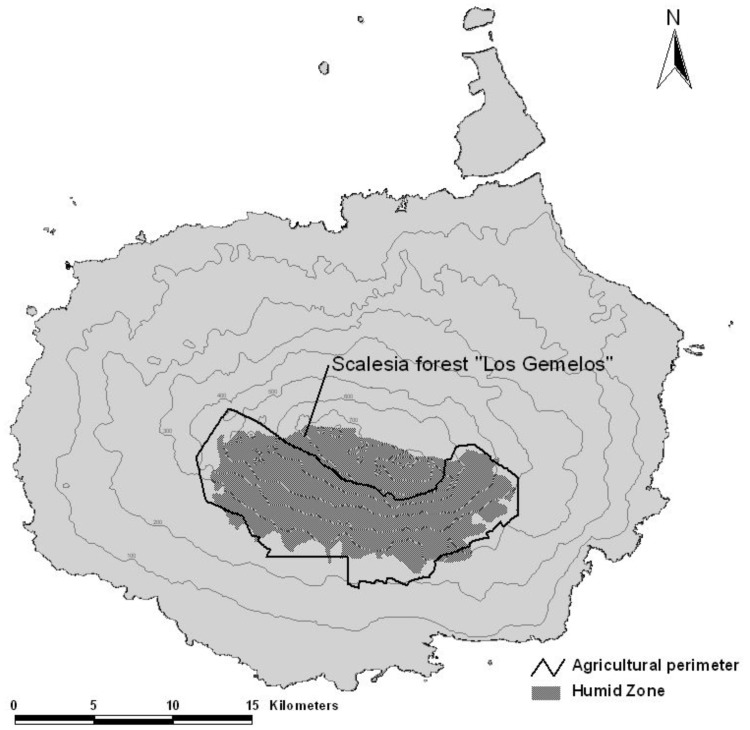
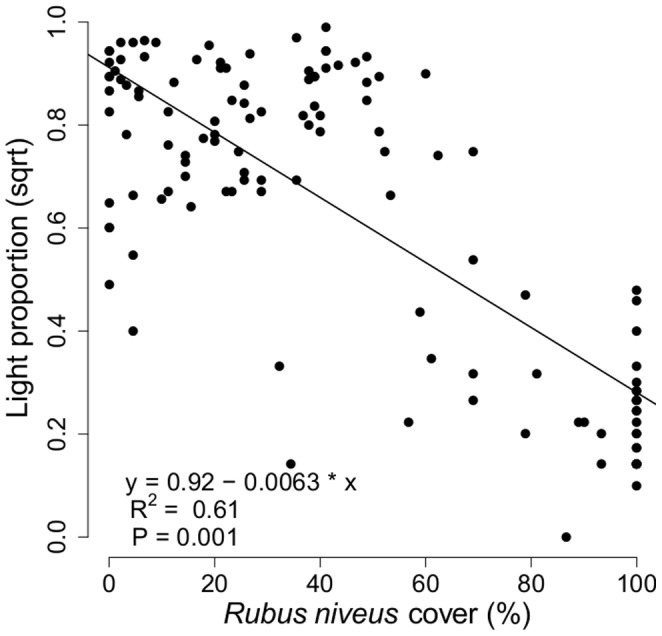
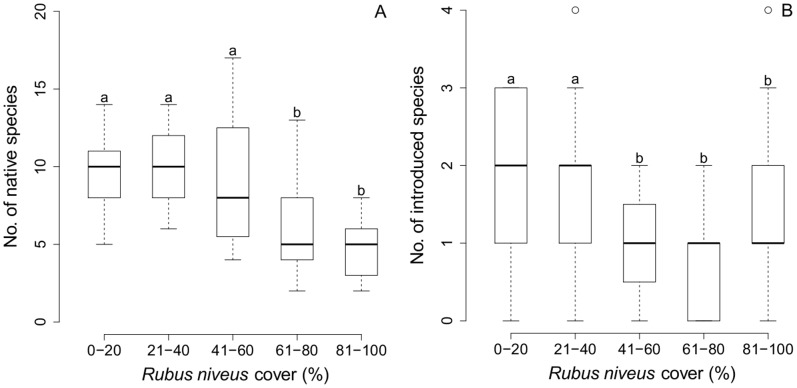
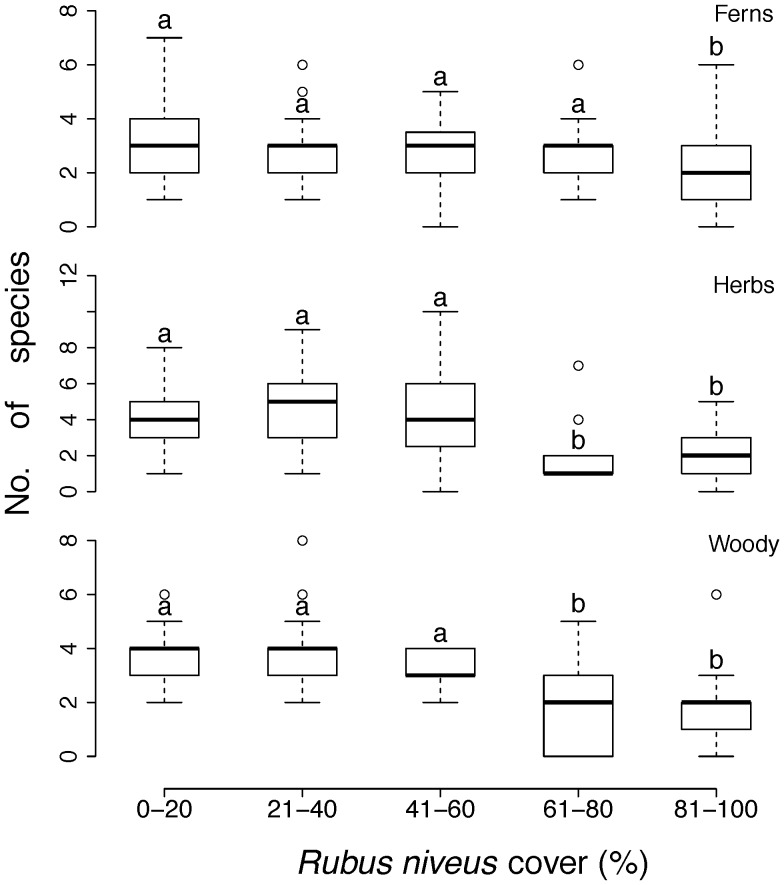
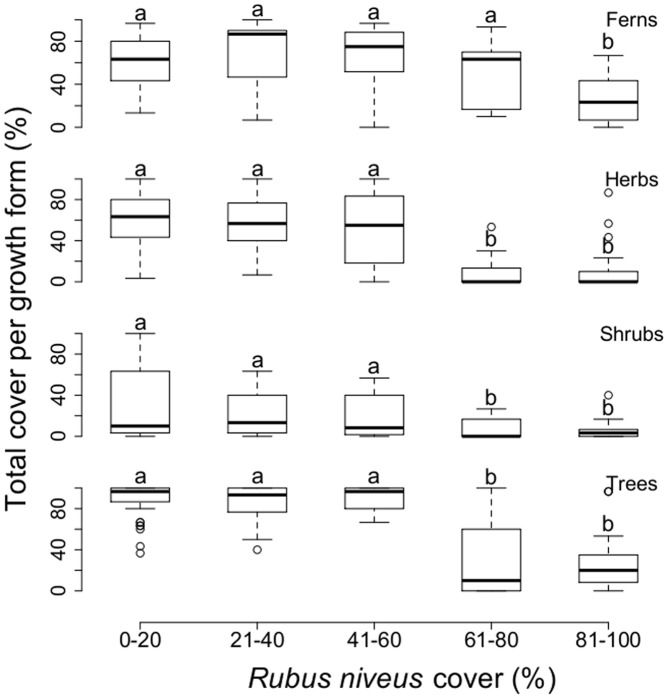
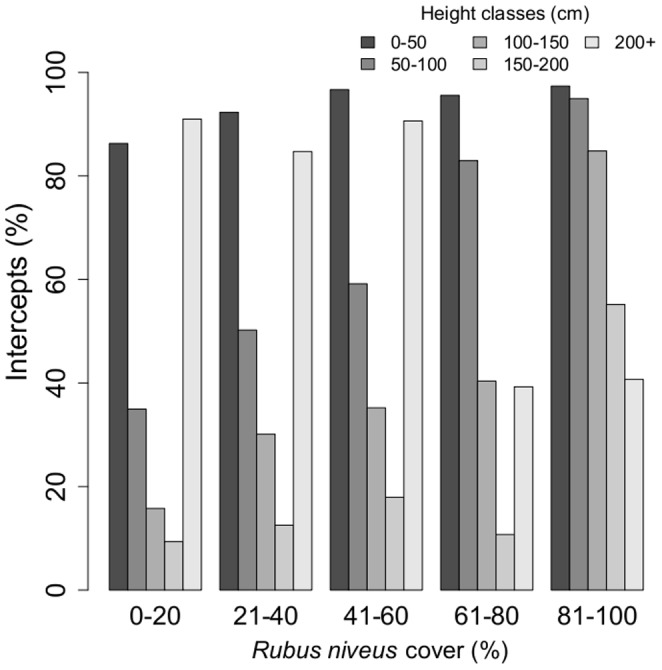
Originally from Asia, Rubus niveus has become one of the most widespread invasive plant species in the Galapagos Islands. It has invaded open vegetation, shrubland and forest alike. It forms dense thickets up to 4 m high, appearing to displace native vegetation, and threaten the integrity of several native communities. This study used correlation analysis between a R. niveus cover gradient and a number of biotic (vascular plant species richness, cover and vegetation structure) and abiotic (light and soil properties) parameters to help understand possible impacts in one of the last remaining fragments of the Scalesia forest in Santa Cruz Island, Galapagos. Higher cover of R. niveus was associated with significantly lower native species richness and cover, and a different forest structure. Results illustrated that 60% R. niveus cover could be considered a threshold for these impacts. We suggest that a maximum of 40% R. niveus cover could be a suitable management target.
原产于亚洲的白毛悬钩子已成为加拉巴戈斯群岛分布最广的入侵植物物种之一。它入侵了开阔的植被、灌木丛和森林。它形成了高达 4 米的茂密灌木丛,似乎取代了本地植被,并威胁到几个本地社区的完整性。本研究采用了白毛悬钩子盖度梯度与生物(维管束植物丰富度、盖度和植被结构)和非生物(光照和土壤特性)参数之间的相关分析,以帮助了解在加拉巴戈斯群岛圣克鲁斯岛的最后一个斯卡莱西亚森林碎片之一可能产生的影响。白毛悬钩子的盖度越高,本地物种的丰富度和盖度越低,森林结构也越不同。结果表明,60%的白毛悬钩子覆盖度可被视为这些影响的一个阈值。我们建议,白毛悬钩子覆盖度最高可达 40%,这是一个合适的管理目标。