Department of Entomology, Center for Vector Biology, Rutgers University, New Brunswick, New Jersey, United States of America.
PLoS One. 2012;7(11):e49181. doi: 10.1371/journal.pone.0049181. Epub 2012 Nov 8.
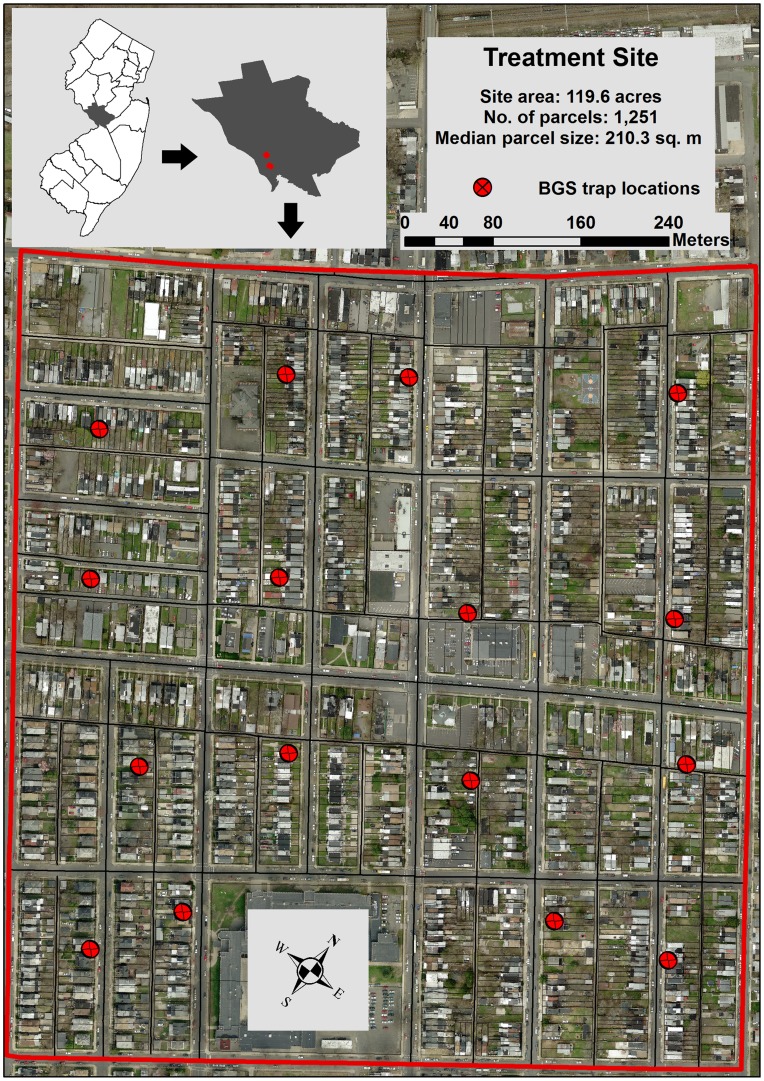
Aedes albopictus, the Asian tiger mosquito, continues expanding its geographic range and involvement in mosquito-borne diseases such as chikungunya and dengue. Vector control programs rarely attempt to suppress this diurnal species with an ultra-low volume (ULV) adulticide because for maximum efficacy applications are conducted at night. During 2009-2011 we performed experimental nighttime applications of a novel adulticide (DUET®) against field populations of Ae. albopictus within an urban site composed of approximately 1,000 parcels (home and yard) in northeastern USA. Dual applications at mid label rate of the adulticide spaced one or two days apart accomplished significantly higher control (85.0 ± 5.4% average reduction) than single full rate applications (73.0 ± 5.4%). Our results demonstrate that nighttime ULV adulticiding is effective in reducing Ae. albopictus abundance and highlight its potential for use as part of integrated pest management programs and during disease epidemics when reducing human illness is of paramount importance.
白纹伊蚊,亚洲虎蚊,持续扩大其地理分布范围,并参与到诸如基孔肯雅热和登革热等蚊媒传染病的传播。由于要达到最大效果,病媒控制项目很少试图使用超低容量(ULV)杀虫剂来抑制这种昼行性物种,因此应用通常在夜间进行。在 2009-2011 年期间,我们在美国东北部的一个由大约 1000 个包裹(家庭和院子)组成的城市地点,对现场的白纹伊蚊种群进行了一种新型杀虫剂(DUET®)的夜间实验性应用。在标签推荐剂量的基础上,间隔一天或两天进行两次双重应用,可显著提高控制效果(平均减少 85.0 ± 5.4%),而单次全剂量应用则为 73.0 ± 5.4%。我们的结果表明,夜间超低容量杀虫剂处理可有效降低白纹伊蚊的数量,并强调了其作为综合虫害管理计划的一部分以及在疾病流行期间使用的潜力,此时减少人类疾病的发生至关重要。