National Institute for Cellular Biotechnology, Dublin City University, Dublin 9, Ireland.
BMC Genomics. 2012 Nov 21;13:656. doi: 10.1186/1471-2164-13-656.
To study the role of microRNA (miRNA) in the regulation of Chinese hamster ovary (CHO) cell growth, qPCR, microarray and quantitative LC-MS/MS analysis were utilised for simultaneous expression profiling of miRNA, mRNA and protein. The sample set under investigation consisted of clones with variable cellular growth rates derived from the same population. In addition to providing a systems level perspective on cell growth, the integration of multiple profiling datasets can facilitate the identification of non-seed miRNA targets, complement computational prediction tools and reduce false positive and false negative rates.
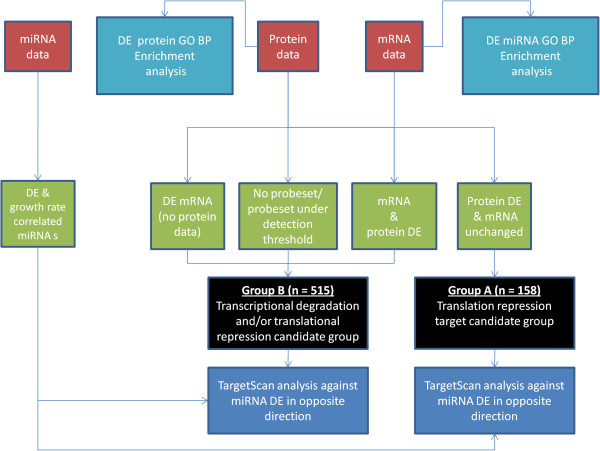
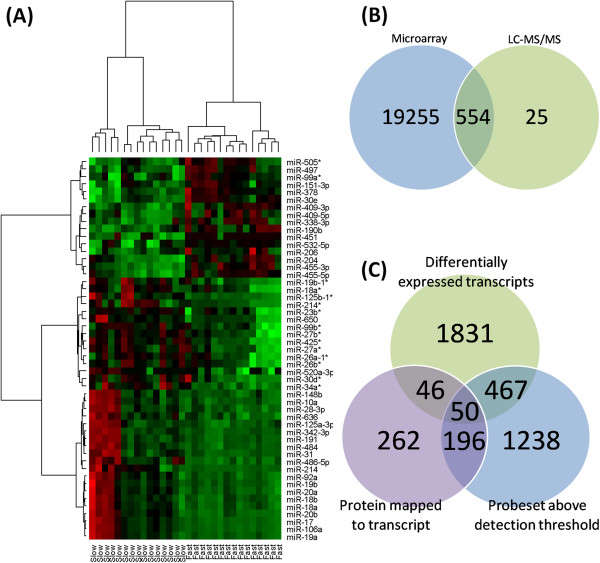
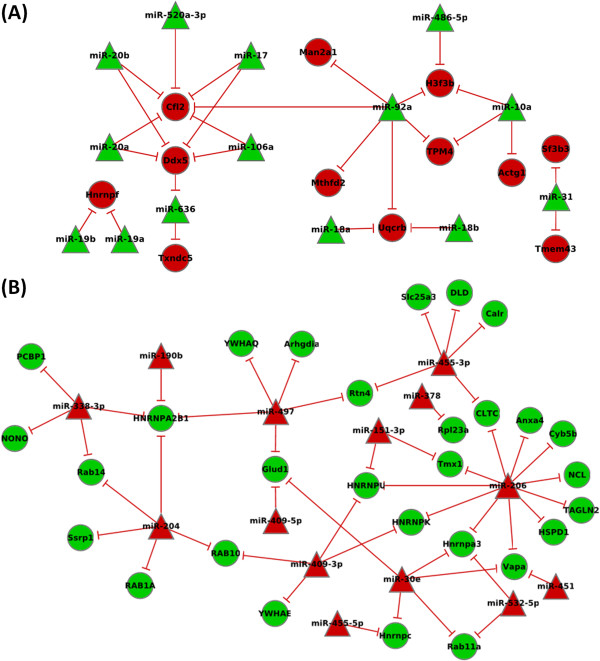
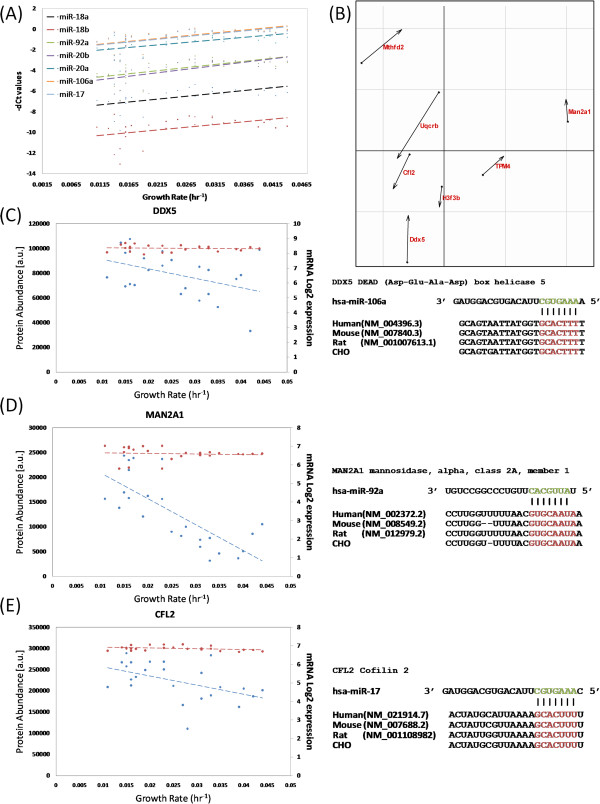
51 miRNAs were associated with increased growth rate (35 miRNAs upregulated and 16 miRNAs downregulated). Gene ontology (GO) analysis of genes (n=432) and proteins (n=285) found to be differentially expressed (DE) identified biological processes driving proliferation including mRNA processing and translation. To investigate the influence of miRNA on these processes we combined the proteomic and transcriptomic data into two groups. The first set contained candidates where evidence of translational repression was observed (n=158). The second group was a mixture of proteins and mRNAs where evidence of translational repression was less clear (n=515). The TargetScan algorithm was utilised to predict potential targets within these two groups for anti-correlated DE miRNAs.
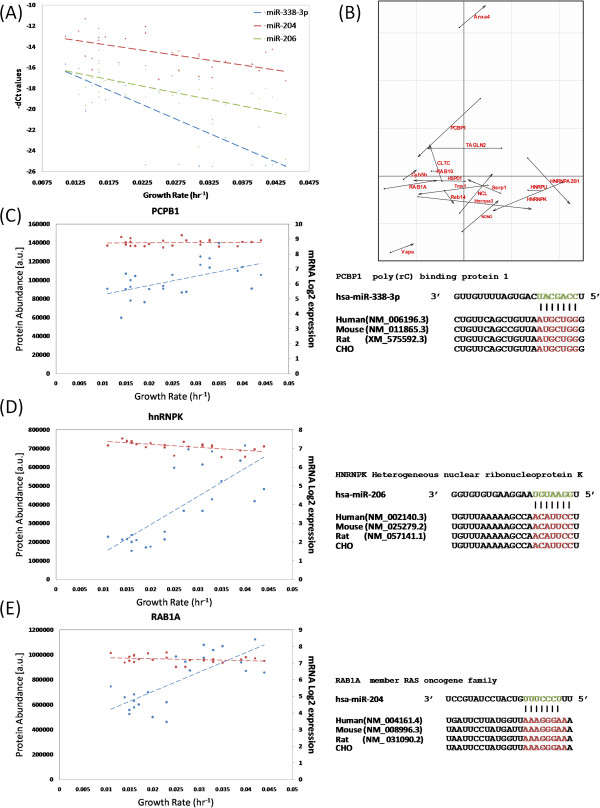
The evidence presented in this study indicates that biological processes such as mRNA processing and protein synthesis are correlated with growth rate in CHO cells. Through the integration of expression data from multiple levels of the biological system a number of proteins central to these processes including several hnRNPs and components of the ribosome were found to be post-transcriptionally regulated. We utilised the expression data in conjunction with in-silico tools to identify potential miRNA-mediated regulation of mRNA/proteins involved in CHO cell growth rate. These data have allowed us to prioritise candidates for cell engineering and/or biomarkers relevant to industrial cell culture. We also expect the knowledge gained from this study to be applicable to other fields investigating the role of miRNAs in mammalian cell growth.
为了研究 microRNA(miRNA)在调控中国仓鼠卵巢(CHO)细胞生长中的作用,利用 qPCR、微阵列和定量 LC-MS/MS 分析方法对 miRNA、mRNA 和蛋白质的同时表达谱进行了研究。所研究的样本集由来自同一群体的具有不同细胞生长速率的克隆组成。除了提供细胞生长的系统水平视角外,整合多个分析数据集还可以促进非种子 miRNA 靶标的识别,补充计算预测工具,并降低假阳性和假阴性率。
有 51 个 miRNA 与细胞生长速率的增加有关(35 个 miRNA 上调,16 个 miRNA 下调)。对差异表达(DE)基因(n=432)和蛋白质(n=285)进行基因本体论(GO)分析,确定了促进增殖的生物学过程,包括 mRNA 加工和翻译。为了研究 miRNA 对这些过程的影响,我们将蛋白质组学和转录组学数据组合成两组。第一组包含观察到翻译抑制证据的候选物(n=158)。第二组是翻译抑制证据不太明确的蛋白质和 mRNA 的混合物(n=515)。利用 TargetScan 算法预测这两组中与反相关 DE miRNA 相关的潜在靶标。
本研究提供的证据表明,mRNA 加工和蛋白质合成等生物学过程与 CHO 细胞的生长速率相关。通过整合生物系统多个层次的表达数据,发现了一些与这些过程相关的蛋白质,包括几个 hnRNPs 和核糖体成分,这些蛋白质是转录后调控的。我们利用表达数据结合计算机工具来识别与 CHO 细胞生长速率相关的 miRNA 介导的 mRNA/蛋白质潜在调控。这些数据使我们能够优先选择与工业细胞培养相关的细胞工程和/或生物标志物的候选物。我们还期望从这项研究中获得的知识可应用于其他研究哺乳动物细胞生长中 miRNA 作用的领域。