
评估越南卒中的死因推断诊断证据质量。
Assessing the quality of evidence for verbal autopsy diagnosis of stroke in Vietnam.
作者信息
Gupta Sachin, Khieu Thi Quynh Trang, Rao Chalapati, Anh Ngo, Hoa Nguyen Phuong
机构信息
School of Population Health, University of Queensland, Australia ; National Technical Officer, Maternal and Child Health Integrated Program/USAID Grantee, India.
出版信息
J Neurosci Rural Pract. 2012 Sep;3(3):267-75. doi: 10.4103/0976-3147.102603.
BACKGROUND
Information on the leading causes of mortality will continue to rely on verbal autopsy (VA) in developing countries. The accuracy of VA methods in correctly ascertaining the cause for each individual death is crucial in order to have confidence in the data collected through the procedure. Accuracy of the VA procedure is generally established by carrying out validation studies involving a comparison of the underlying cause of death derived from the VA with a reference underlying cause from medical records. Such validation is only possible in cases for which clinical records are available, and this is clearly not the case for most deaths in developing countries. We attempt to verify the accuracy of VA evidence by reviewing the responses to specific symptom questions and other information recorded in verbal autopsy questionnaires that were assigned cerebrovascular conditions (stroke) as causes of death upon physician review in Vietnam.
MATERIALS AND METHODS
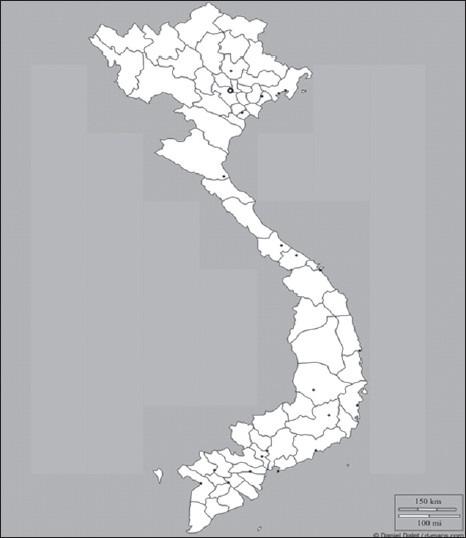
A national sample mortality surveillance activity identified deaths and causes of death that had occurred during 2008 in selected communes in 16 provinces distributed across Vietnam. All cases from the northern provinces of Hanoi, Hai Duong, Quang Ninh and Thanh Hoa with ICD codes pertaining to cerebrovascular diseases were identified. A total of 326 VA questionnaires for deaths from cerebrovascular diseases were reviewed and analysed in detail for the presence of symptoms pertaining to stroke. The respondents' narration of the chronological disease history and the hospital diagnosis was also examined with an aim to explore supporting signs for diagnosis and to verify the quality of VA interview. Differences between responses among cases with and without hospital admission were examined using Chi-squared test of statistical significance.
RESULTS
Ninty percent of the cases diagnosed as stroke were found to have positive response to the key symptoms; viz., paralysis (in structured question or free text) and history of stroke. For the remaining 10% of cases, stroke was assigned as a cause-of-death based on other suggestive cardiac signs and symptoms such as hypertension, unconsciousness, or headache, etc. Community had different perspectives of "paralysis" and "stroke" which might have affected the diagnosis of stroke in some aspects. Respondents of cases with hospital admission or visit were found to have a better recall of disease symptoms than those without hospital admission.
CONCLUSION
The results of this study suggest the possible utility of VA content analysis method to back up the low coverage of conventional validation studies in developing countries owing to nonavailability of medical records. The understanding of the VA content would also form the basis for improvement in the quality of interviews and collection of data to achieve better quality information in future.
背景
在发展中国家,关于主要死因的信息将继续依赖于口头尸检(VA)。为了对通过该程序收集的数据有信心,VA方法在正确确定每例死亡原因方面的准确性至关重要。VA程序的准确性通常通过开展验证研究来确定,该研究涉及将VA得出的潜在死因与病历中的参考潜在死因进行比较。这种验证仅在有临床记录的情况下才有可能,而在发展中国家,大多数死亡显然并非如此。我们试图通过审查对特定症状问题的回答以及口头尸检问卷中记录的其他信息来验证VA证据的准确性,这些问卷在越南经医生审查后被指定为脑血管疾病(中风)导致的死亡。
材料与方法
一项全国性样本死亡率监测活动确定了2008年期间越南16个省选定公社发生的死亡及死因。确定了来自北部省份河内、海阳、广宁和清化且国际疾病分类代码与脑血管疾病相关的所有病例。对总共326份脑血管疾病死亡的VA问卷进行了详细审查和分析,以查找与中风相关的症状。还检查了受访者对疾病病史的按时间顺序叙述以及医院诊断,目的是探索诊断的支持体征并验证VA访谈的质量。使用卡方检验统计显著性来检查有或没有住院治疗的病例之间回答的差异。
结果
被诊断为中风的病例中有90%对关键症状呈阳性反应,即瘫痪(在结构化问题或自由文本中)和中风病史。对于其余10%的病例,中风被指定为死因是基于其他提示性心脏体征和症状,如高血压、昏迷或头痛等。社区对“瘫痪”和“中风”有不同的看法,这可能在某些方面影响了中风的诊断。发现有住院治疗或就诊的病例的受访者比没有住院治疗的受访者对疾病症状的回忆更好。
结论
本研究结果表明,由于缺乏病历,VA内容分析方法可能有助于弥补发展中国家传统验证研究覆盖率低的问题。对VA内容的理解也将为改善访谈质量和数据收集奠定基础,以便在未来获得更高质量的信息。


 Zotero 插件